Construction Material Selector
Select the primary requirement for your project to find the most suitable raw material.
Heavy Load
High compression strength
Vertical Height
High tensile strength
Eco-Friendly
Renewable & insulating
Weather Proof
Corrosion resistance
Material Name
Description goes here.
Use case
Click a category above to explore the material properties!
The Heavy Hitters: Earth and Stone
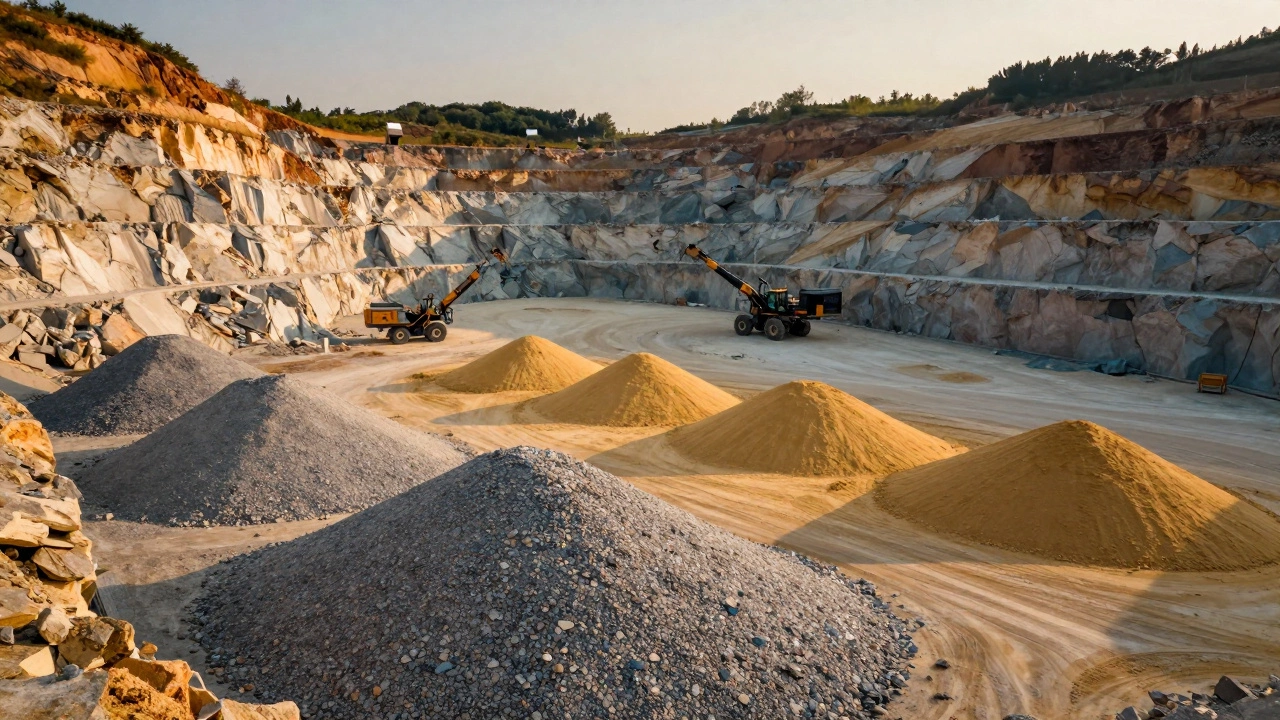
Most of our world is built on things we dig out of the ground. Aggregates are the unsung heroes here. These aren't just 'rocks'; they are categorized by size and function. Coarse aggregates, like crushed stone or gravel, provide the structural skeleton for concrete, while fine aggregates, such as sand, fill the gaps to create a solid mass.
Then we have the limestone. If you look at the modern city, you're basically looking at a limestone museum. Limestone is the primary ingredient in Cement, which is a powdered substance made by heating limestone and clay to create a binder. When you mix cement with water and aggregates, you get Concrete, the most widely used man-made material on Earth. Concrete is great for compression-it can hold immense weight-but it's brittle. That's why we almost always wrap it in steel to stop it from snapping.
Natural stone, like granite and marble, is still used for high-end facades and flooring. While expensive, these materials offer a lifespan that synthetic alternatives can't touch. A granite slab can withstand centuries of weathering, whereas some modern composite panels might warp or fade within twenty years.
The Strength of Metal
Concrete handles the squeezing (compression), but Steel handles the pulling (tension). Steel is an alloy primarily made of iron and carbon. In modern construction, structural steel beams allow us to build vertically. Without the high tensile strength of steel, we'd be limited to very short, thick-walled buildings.
Aluminum is the lighter cousin of steel. It's prized for its corrosion resistance. You'll find it in window frames and curtain walls. Because it doesn't rust like untreated iron, it's the go-to for coastal environments where salt air eats through most metals. Copper, though rarer and more expensive, remains the gold standard for electrical wiring and high-end plumbing due to its conductivity and antimicrobial properties.
| Material | Primary Attribute | Best Use Case | Main Weakness |
|---|---|---|---|
| Concrete | High Compressive Strength | Foundations, Dams | Low Tensile Strength |
| Steel | High Tensile Strength | Skyscrapers, Bridges | Corrosion (Rust) |
| Timber | Renewable & Lightweight | Residential Framing | Fire & Rot Risk |
| Aluminum | Corrosion Resistance | Window Frames, Siding | Lower Strength than Steel |
Wood and Organic Fibers
Wood is the original construction material. From the ancient cedars of Lebanon to the modern pine frames in suburban homes, Timber is valued because it's an insulator and it's relatively easy to work with. However, not all wood is created equal. Softwoods, like pine and spruce, are fast-growing and cheap, making them ideal for structural framing where they'll be hidden behind drywall.
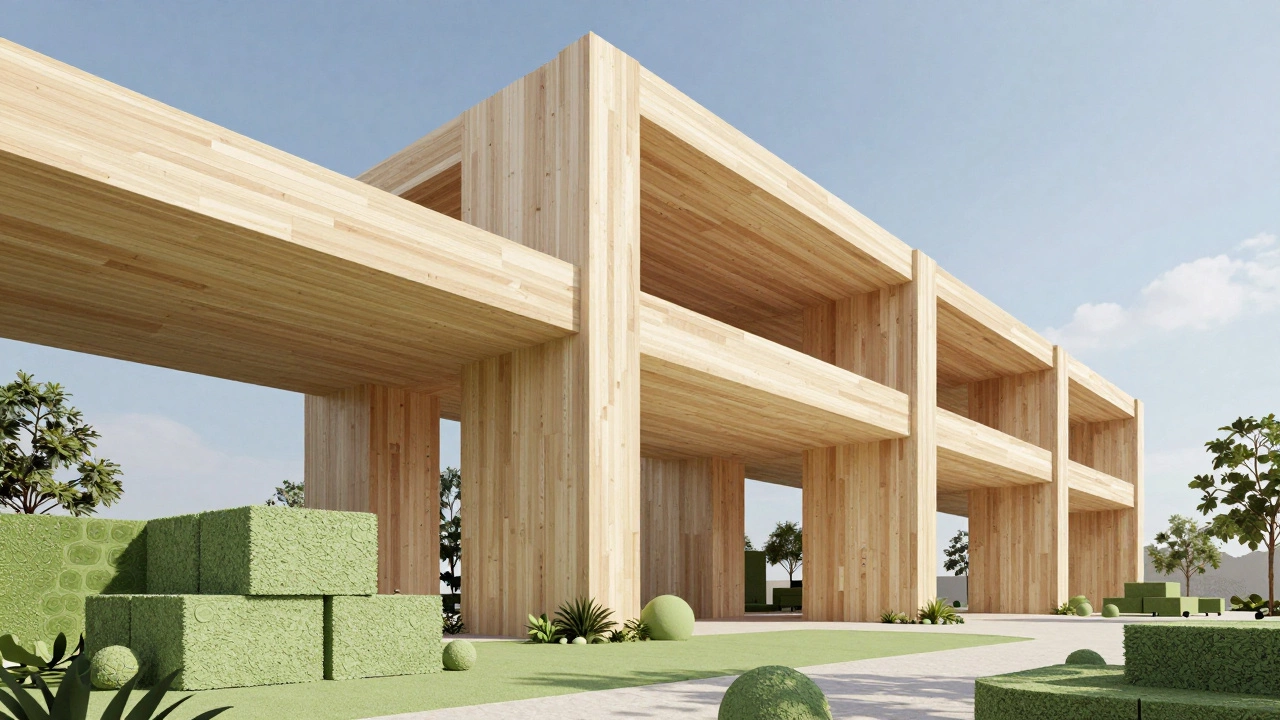
Hardwoods, such as oak or walnut, are used for flooring and cabinetry because they resist wear and tear. But the real game-changer lately is Cross-Laminated Timber (CLT). This is an engineered wood product made by gluing layers of lumber together at right angles. CLT is so strong it's actually being used to build "plyscrapers"-wooden high-rises that are more sustainable than concrete alternatives.
Bamboo is another organic powerhouse. It grows faster than any tree and has a strength-to-weight ratio that rivals some metals. In many parts of Asia, it's the primary raw material for everything from scaffolding to entire homes. In the West, we mostly see it as a sustainable flooring alternative.
The Chemistry of Binders and Finishes
A building isn't just a skeleton; it needs skin and glue. This is where polymers and chemicals come in. Gypsum is a soft sulfate mineral that we bake into sheets to create drywall. It's the standard for interior walls because it's cheap, easy to install, and naturally fire-resistant.
Then there's the world of plastics and resins. Polyvinyl Chloride (PVC) has almost entirely replaced lead and clay for plumbing pipes. Why? Because it's lightweight, doesn't corrode, and is incredibly cheap to mass-produce. We also use polyurethane foams for insulation, which trap tiny pockets of air to stop heat from escaping your home in the winter.
Glass is another essential. It's not just for windows anymore. Structural glass can now support weight, and low-emissivity (Low-E) coatings are applied to the surface to reflect heat back outside, drastically reducing the energy needed to cool a building. This transformation from a simple sandy mineral to a high-tech thermal barrier is a perfect example of how raw materials evolve.
The Shift Toward Green Materials
We can't ignore that the construction industry is one of the biggest polluters. The production of cement alone accounts for about 8% of global CO2 emissions. Because of this, the industry is moving toward "green" raw materials. One of the most exciting is Hempcrete. This is a bio-composite material made from the inner woody core of the hemp plant mixed with a lime-based binder.
Unlike concrete, hempcrete is carbon-negative, meaning it absorbs more CO2 during its growth and curing process than it emits during production. We're also seeing a rise in recycled aggregates-using crushed old concrete from demolished buildings to make new roads. It's a circular economy approach that stops us from stripping more quarries empty.
Mycelium, the root structure of fungi, is another wild innovation. Researchers are growing bricks made of mushroom roots and agricultural waste. While we aren't building skyscrapers out of mushrooms yet, these organic blocks are incredibly strong for temporary structures and offer a fully biodegradable alternative to polystyrene foam.
Matching Materials to the Job
Choosing the right material is a balancing act between cost, durability, and environment. If you're building a warehouse in a humid area, you might lean toward steel with a heavy galvanized coating to prevent rust. If you're building a cozy home in a forest, timber is the obvious choice for its natural thermal properties.
The biggest mistake people make is choosing the cheapest material without considering the lifecycle. For example, cheap vinyl siding might save you money today, but it can warp in the sun and eventually end up in a landfill. Investing in high-quality raw materials like stone or treated hardwoods often pays off because they don't need to be replaced every fifteen years.
What is the difference between cement and concrete?
Cement is a fine powder that acts as the binding agent. Concrete is the final product made by mixing that cement with water, sand (fine aggregate), and gravel or crushed stone (coarse aggregate). Think of cement as the "glue" and concrete as the "finished brick."
Why is steel used with concrete?
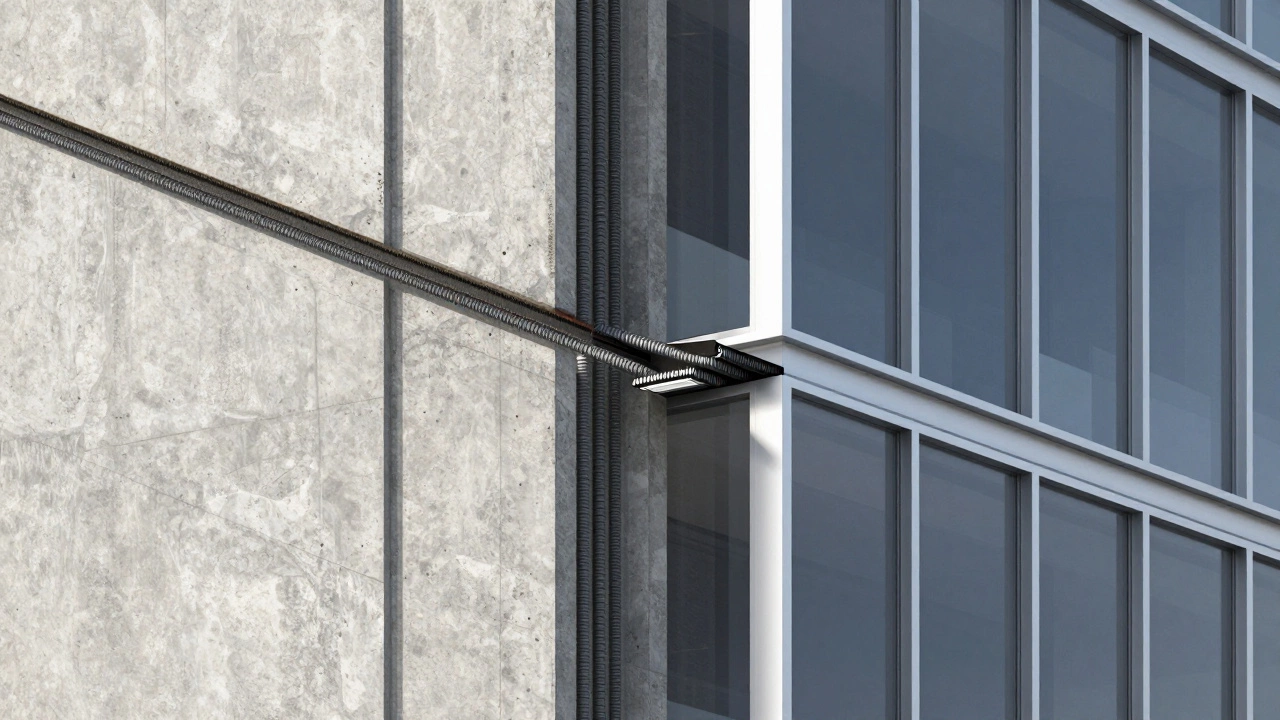
Concrete is incredibly strong when you push down on it (compression), but it cracks easily if you try to pull or bend it (tension). Steel is excellent at resisting tension. By placing steel bars (rebar) inside concrete, you get the best of both worlds: a material that can support weight and withstand bending forces.
Are there truly sustainable alternatives to concrete?
Yes, materials like Hempcrete and Cross-Laminated Timber (CLT) provide lower-carbon alternatives. While they might not replace concrete for every single foundation, they are increasingly used for walls and floors in sustainable architecture to reduce the carbon footprint of a project.
What are aggregates in construction?
Aggregates are granular materials such as sand, gravel, or crushed stone. They make up the bulk of a concrete mix, providing stability and strength while reducing the amount of expensive cement needed to fill a space.
Which metal is best for outdoor construction?
Aluminum is generally the best for outdoor exposure because it forms a natural oxide layer that protects it from corrosion. For structural strength, galvanized steel is used, which is steel coated in zinc to prevent the iron from reacting with oxygen and moisture.
Next Steps and Troubleshooting
If you're planning a project, start by identifying the primary stress your structure will face. Is it heavy loads from above? Go for high-grade concrete and steel. Is it extreme temperature swings? Look into high-R-value insulation and Low-E glass.
For those struggling with budget constraints, don't skimp on the foundation materials. You can always upgrade your flooring or paint later, but you can't easily replace the raw aggregates and cement in your slab once it's poured. If you see cracks appearing in new concrete, it's often a sign of a poor mix ratio-too much water or not enough aggregate-which compromises the structural integrity.
Author
Damon Blackwood
I'm a seasoned consultant in the services industry, focusing primarily on project management and operational efficiency. I have a passion for writing about construction trends, exploring innovative techniques, and the impact of technology on traditional building practices. My work involves collaborating with construction firms to optimize their operations, ensuring they meet the industry's evolving demands. Through my writing, I aim to educate and inspire professionals in the construction field, sharing valuable insights and practical advice to enhance their projects.