New Build Crack Risk Analyzer
Select the characteristics of the crack you are seeing to get an instant risk assessment and recommended next steps.
1. Crack Appearance
2. Location
Select an appearance and location to see the risk analysis.
Risk Assessment
The biggest mistake people make is thinking that a 'new' house is a static object. In reality, a house is a living system that reacts to the ground beneath it and the air around it. By the time you move in, the building has already undergone significant chemical and physical changes. To keep your walls smooth and your foundation solid, you need to manage the moisture, the materials, and the timing of the build.
The Foundation: Where Stability Starts
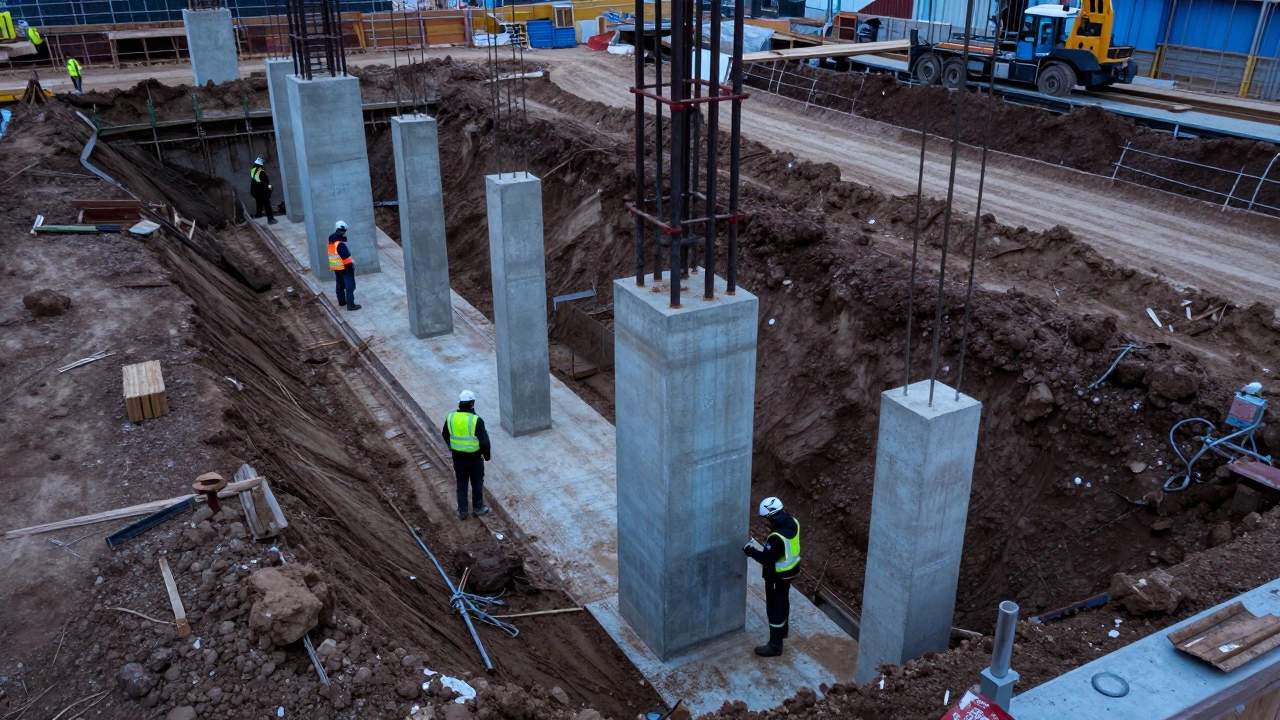
Most cracks start at the bottom. If the ground isn't handled right, the house will shift, and that stress travels upward through the walls. To stop this, the focus must be on the soil. Soil Compaction is the process of increasing the density of soil by packing particles closer together to reduce air voids. If a builder pours a slab over loose or organic soil, the ground will compress over the first few years, leading to "settlement cracks."
You also have to consider the soil type. Clay soil is a nightmare for new builds because it expands when wet and shrinks when dry. This constant "heaving" puts immense pressure on the concrete. To fight this, engineers often use Piled Foundations, which are deep structural elements that transfer the load of the building to a more stable layer of soil or rock. Instead of a simple flat slab, these piles act like stilts, making the house less dependent on the fickle nature of the surface soil.
| Foundation Type | Primary Risk | Prevention Method | Crack Probability |
|---|---|---|---|
| Slab-on-Grade | Surface soil shrinkage | Deep edge thickening | Medium |
| Raft Foundation | Uneven soil bearing | Reinforced steel mesh | Low |
| Pile Foundation | Deep strata instability | Geotechnical drilling | Very Low |
Mastering the Concrete Cure
Concrete doesn't just "dry"-it cures through a chemical reaction called hydration. If the water evaporates too quickly, the concrete shrinks and pulls apart, creating what we call shrinkage cracks. This is especially common in hot, windy weather where the surface dries out while the inside is still wet.
The secret to a crack-free slab is Wet Curing, which is the process of keeping concrete moist for several days after pouring to ensure full hydration. This can be as simple as spraying the slab with water several times a day or covering it with wet burlap sacks. If the builder just pours it and walks away, you're asking for trouble.
Another pro move is using Control Joints. These are pre-planned grooves cut into the concrete to create a weak point where the concrete is "forced" to crack in a straight, neat line. By telling the concrete where to crack, you prevent random, jagged fractures from appearing across your garage or patio. It's better to have one straight line you can't see than ten random ones you can.

Managing Moisture and Drainage
Water is the enemy of a stable home. If water pools around your foundation, it softens the soil, which can lead to subsidence. You need a drainage strategy that moves water as far away from the house as possible. This isn't just about gutters; it's about the slope of the land.
Check the "grading" of your yard. The ground should slope away from the foundation at a minimum of 5% (a 6-inch drop over 10 feet). If the yard slopes toward the house, the soil will soak up water like a sponge, causing the foundation to shift. Using French Drains- trenches filled with gravel or perforated pipes that redirect groundwater away from the building-can provide an extra layer of insurance for homes built in low-lying areas.
Don't ignore the landscaping. Planting large trees too close to the house is a recipe for disaster. A thirsty oak tree can suck hundreds of gallons of water out of the soil under your foundation, causing the ground to shrink and the house to tilt. Keep large root systems at least 20 feet away from the exterior walls.
The Role of Framing and Drywall
Not every crack is structural. Many are just "cosmetic" and happen because of how the house breathes. Wood shrinks as it loses moisture. If a builder installs Drywall (also known as gypsum board) while the framing lumber is still "green" or wet, the wood will shrink over the first year, pulling the drywall with it.
This often manifests as cracks at the corners of door frames and window headers. To prevent this, builders should use kiln-dried lumber and allow the house to "settle" for a few weeks before applying the final coat of paint and caulk. Using Fiberglass Mesh Tape across joints and corners adds a layer of reinforcement that can absorb small movements without the plaster cracking.
Ask your builder if they are using expansion joints in long walls. Just like the concrete slabs, long stretches of wall need a place to move. Without these, the stress builds up until the wall simply snaps, creating a vertical crack that looks terrifying but is often just a result of thermal expansion.

The Pre-Handover Checklist
Before you sign the final papers and take the keys, do a thorough walkthrough. You aren't looking for a tiny paint chip; you're looking for red flags that suggest future cracking. Check the corners of the foundation for "step cracks" (cracks that follow the mortar joints in a stair-step pattern). These are often signs of settlement issues that need to be fixed before the house is finished.
Look at the ceilings. If you see circular cracks around light fixtures or vents, it might indicate that the joists aren't properly supported. Also, check the transition points where a brick exterior meets a wooden frame. If the flashing isn't installed correctly, water will seep in, rot the wood, and cause the exterior skin to pull away from the house.
Ensure that the builder has provided a Geotechnical Report, which is a detailed analysis of the soil properties and bearing capacity at the building site. If they can't show you how they accounted for the specific soil on your lot, they may have used a "one size fits all" approach that isn't suitable for your land.
Are all cracks in a new build dangerous?
No. Hairline cracks (less than 1/8 inch wide) are usually caused by the house settling or the concrete curing. These are typically cosmetic. However, horizontal cracks or diagonal cracks that are wider than a pencil are red flags for structural movement and should be inspected by a licensed engineer immediately.
How long should I wait to paint a new home?
It is generally a good idea to wait 6 to 12 months before doing a final "touch-up" paint job. New homes shift and shrink as the moisture leaves the lumber and the concrete fully cures. Painting too early means you'll likely be filling and painting the same cracks again within a year.
Can I fix foundation cracks myself?
You can fill a cosmetic crack with epoxy or polyurethane sealant, but this is like putting a bandage on a broken leg. If the crack is caused by soil movement, it will just come back. Structural repairs, such as underpinning or slab jacking, must be done by professionals to ensure the house doesn't shift further.
Does a warranty cover new build cracks?
Most builders provide a limited warranty (often 1-2 years for cosmetics and 10 years for structural defects). Cosmetic cracks are often excluded or limited, but structural settlement that affects the integrity of the home is usually covered. Always check your specific contract for the definition of "structural failure."
Why do cracks appear around windows and doors?
These are the weakest points in a wall's structure. Stress concentrates at the corners of openings. If the header (the beam above the window) isn't sized correctly or if the house settles slightly, the drywall will crack at these 45-degree angles. It's very common and usually solved with flexible caulk rather than rigid joint compound.
Next Steps for Homeowners
If you are currently in the build process, start by asking your contractor for the soil report and the curing plan for the slab. Don't be afraid to ask, "How are we managing the shrink-swell of the clay?" A quality builder will be happy to explain their process. If they brush you off, that's a warning sign.
For those who have already moved in and see cracks appearing: document everything. Take photos with a coin or a ruler next to the crack for scale and date them. This creates a paper trail if you ever need to make a warranty claim. If a crack grows by more than a few millimeters over a month, call a structural engineer-not the builder's rep-to get an unbiased opinion on the health of your home.
Author
Damon Blackwood
I'm a seasoned consultant in the services industry, focusing primarily on project management and operational efficiency. I have a passion for writing about construction trends, exploring innovative techniques, and the impact of technology on traditional building practices. My work involves collaborating with construction firms to optimize their operations, ensuring they meet the industry's evolving demands. Through my writing, I aim to educate and inspire professionals in the construction field, sharing valuable insights and practical advice to enhance their projects.