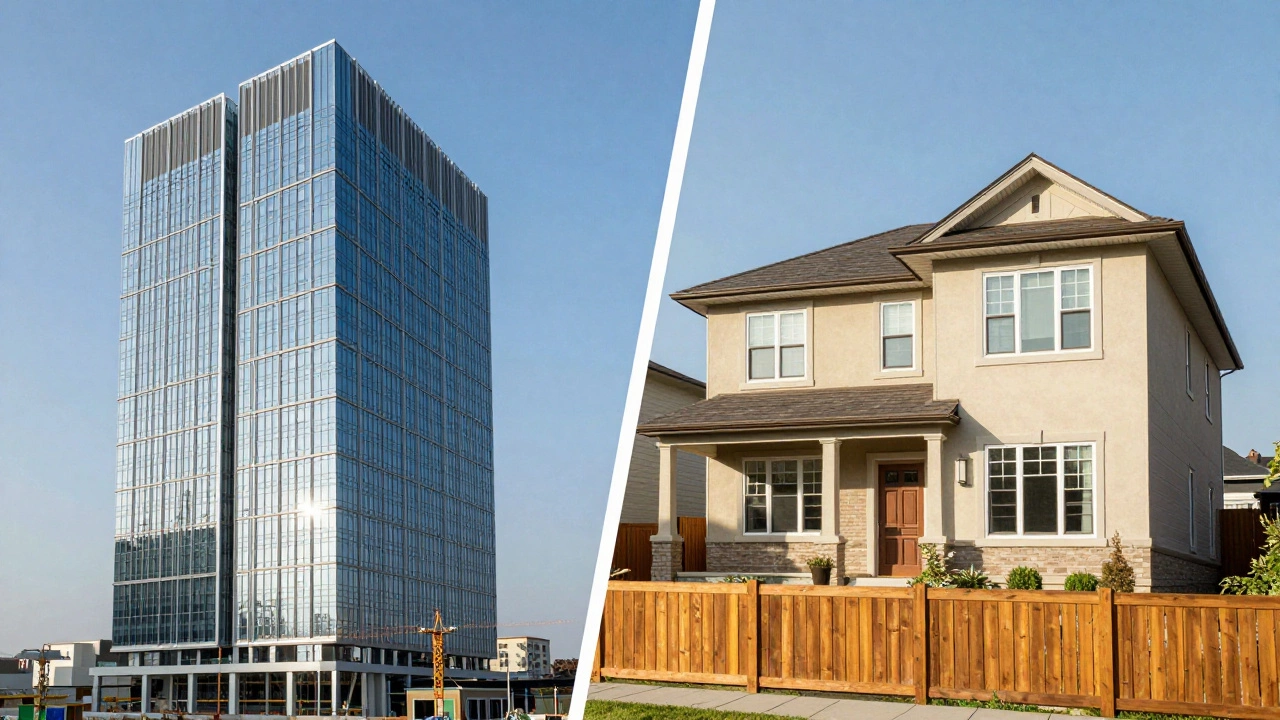
Construction Project Classifier
Use this tool to estimate whether your project falls under commercial or non-commercial (residential) regulations based on key factors discussed in the article.
Project Classification
Key Implications:
Recommended Contractor Type:
You’re looking at a blueprint, staring at a quote, or maybe just trying to understand why your neighbor’s house renovation is taking so long. The question pops up: is this project commercial or non-commercial? It sounds like legal jargon, but the answer changes everything-from who you hire, to what permits you need, to how much cash you’ll burn.
Here is the short version: commercial construction isn’t just about big skyscrapers. It’s about intent. If the building is meant to make money, it’s commercial. If it’s meant for people to live in, it’s non-commercial (usually called residential). But the lines get blurry fast. Mixed-use buildings, duplexes, and converted warehouses can trip up even seasoned pros.
Let’s clear up the confusion once and for all. We will break down exactly where the line is drawn, why it matters for your wallet, and how to spot the difference before you sign any contracts.
The Money Test: Defining Commercial vs. Non-Commercial
At its core, the distinction comes down to one simple metric: revenue generation. This is the "money test."
Commercial construction refers to the building of structures intended for business activities. These are spaces where goods are sold, services are provided, or work is performed. Think offices, retail stores, factories, hospitals, and hotels. The primary goal of these buildings is to facilitate commerce. They are assets designed to generate income for their owners, either through direct sales (like a grocery store) or through rent (like an office tower).
On the flip side, Non-commercial construction, often referred to as residential construction, involves buildings designed for human habitation. These are homes, apartments, and condominiums. The primary function here is shelter and living, not profit generation from the space itself. While landlords do make money from renting apartments, the structure is classified based on its use as a dwelling unit rather than a business hub.
Why does this binary split exist? Because the risks, regulations, and engineering requirements are completely different. A house doesn’t need to handle the foot traffic of a shopping mall. A hospital needs stricter fire safety codes than a suburban garage. The classification dictates the rules of the game.
Key Differences: What Changes When You Cross the Line?
If you are planning a project, knowing which side of the fence you are on affects three major areas: cost, complexity, and timeline. Here is how they stack up.
| Feature | Commercial Construction | Non-Commercial (Residential) |
|---|---|---|
| Primary Purpose | Business operations, revenue generation | Habitation, personal living |
| Building Codes | Strict (IBC), focus on safety & accessibility | Less strict (IRC), focus on livability |
| Materials | Durable, industrial-grade (concrete, steel) | Consumer-friendly (wood framing, drywall) |
| Labor Specialization | Highly specialized trades, union labor common | General contractors, smaller crews |
| Timeline | Rigid schedules, liquidated damages for delays | Flexible, weather-dependent |
| Cost per Sq Ft | $150 - $400+ (varies by type) | $100 - $250 (varies by location) |
Notice the section on building codes. This is where most disputes happen. Commercial projects must adhere to the International Building Code (IBC), which has rigorous requirements for fire suppression, elevator access, and ADA (Americans with Disabilities Act) compliance. Residential projects typically follow the International Residential Code (IRC), which is more forgiving because the occupancy load is lower.
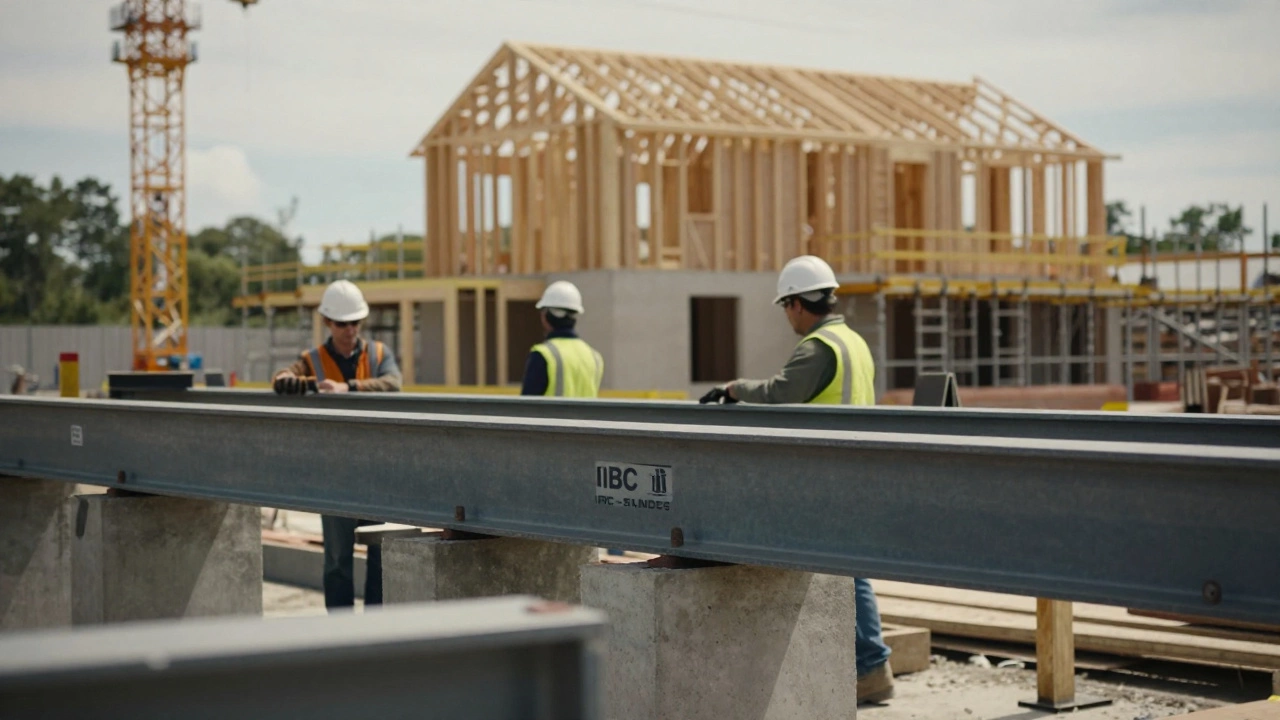
Then there are materials. In a home, you might use wood framing because it’s cheaper and easier to work with. In a commercial high-rise, wood is out. You need steel and concrete to meet fire ratings and structural loads. This drives up the initial cost significantly. However, commercial buildings are built to last longer-often 50 to 100 years-compared to the 30-year average lifespan of residential components like roofs and HVAC systems.
The Gray Areas: Mixed-Use and Edge Cases
Life rarely fits into neat boxes. That’s where things get tricky. What about a building with shops on the ground floor and apartments above? Or a duplex where one unit is rented out and the other is lived in by the owner?
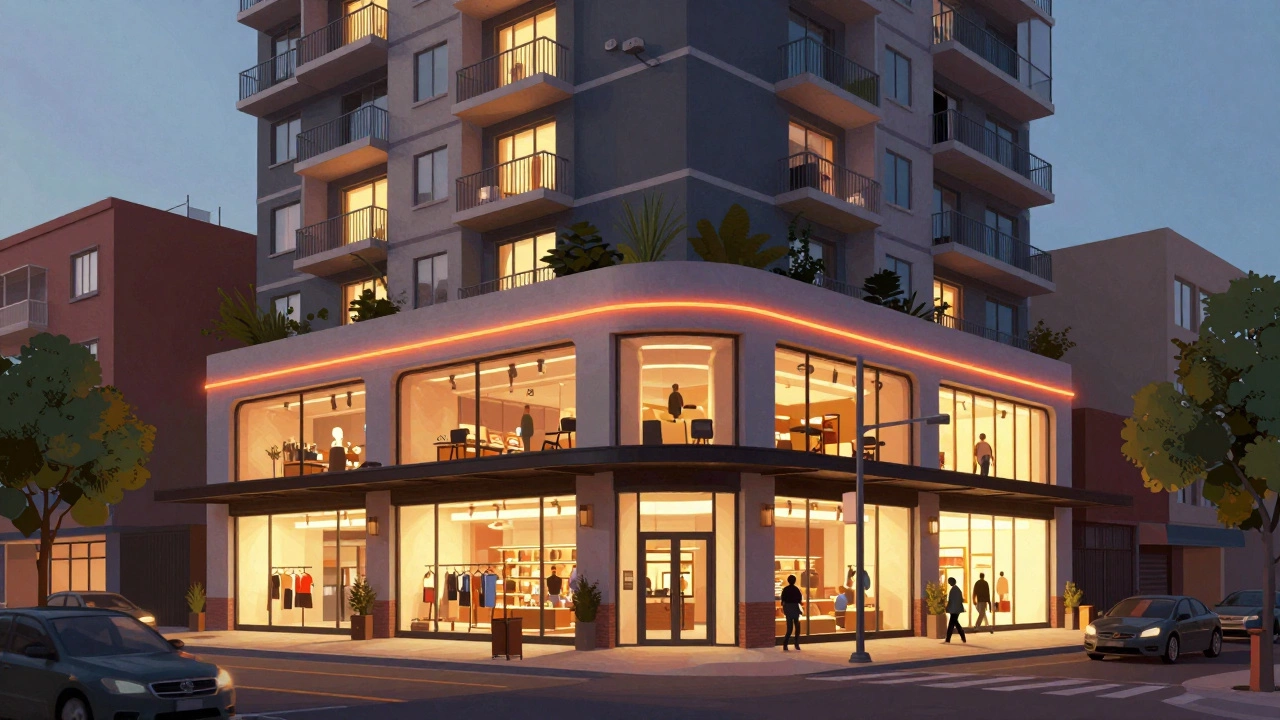
Mixed-use developments are the biggest source of confusion. These buildings combine commercial and residential spaces. From a construction standpoint, they are treated as hybrid projects. The lower levels usually follow commercial codes (higher fire resistance, wider corridors), while the upper levels follow residential standards. The challenge lies in the separation. You need fire-rated walls and separate egress routes to ensure that a fire in the retail space doesn’t trap residents upstairs.
Another edge case is the "home-based business." If you run a consulting firm from your kitchen table, your house remains non-commercial. But if you start hosting clients regularly, storing inventory, or modifying the structure to include a showroom, local zoning laws may reclassify part of your property as commercial. This triggers new tax implications and insurance requirements. Always check with your local zoning board before converting a garage into a workshop open to the public.
What about multi-family housing? Duplexes, triplexes, and fourplexes are often considered residential, even though they generate rental income. However, once you hit five or more units, many jurisdictions switch the classification to commercial or institutional. This shift brings in stricter lending requirements and different regulatory oversight. Banks view a six-unit apartment building as a commercial loan, not a mortgage, because the risk profile is higher.
Who Builds What? Understanding the Contractors
You wouldn’t hire a heart surgeon to fix your broken leg. Similarly, you shouldn’t hire a residential handyman to build a warehouse. The skill sets overlap, but the expertise diverges quickly.
Residential contractors are often generalists. They manage small teams, handle everything from framing to finishing, and rely on relationships with local suppliers. Their projects are smaller, so mistakes can sometimes be patched up later. The pace is slower, and communication is often direct between the homeowner and the contractor.
Commercial contractors operate differently. They are specialists. A commercial general contractor (GC) hires subcontractors for every phase: electrical, plumbing, HVAC, masonry, and steel erection. Each sub is highly skilled and works under tight deadlines. Commercial GCs deal with complex logistics, crane schedules, and city inspections that happen daily. They also manage larger budgets and more sophisticated contracts, often including lien waivers and performance bonds.
If you try to use a residential contractor for a commercial job, you risk code violations. They may not know the specific fire-rating requirements for commercial drywall or the load-bearing calculations for heavy machinery. Conversely, hiring a massive commercial firm to build a single-family home is overkill and expensive. They have overhead costs that don’t scale down well for small projects.
Insurance and Liability: Protecting Your Investment
This is the boring part that keeps you awake at night. Insurance policies differ wildly between commercial and non-commercial properties. And if you misclassify your building, you could be left holding the bag when disaster strikes.
Residential insurance covers personal property, liability, and dwelling damage. It assumes low traffic and standard risks. Commercial insurance, however, accounts for higher liability. If a customer slips and falls in your store, or if a piece of equipment fails in your factory, the potential lawsuits are larger. Commercial policies also cover business interruption-if a fire shuts down your shop, the insurance helps pay your bills while you rebuild. Residential policies rarely offer this level of protection.
For builders, the stakes are even higher. Commercial contractors need errors and omissions (E&O) insurance and higher limits of general liability. If a commercial building collapses due to a design flaw, the financial fallout is catastrophic. Residential builders face less exposure, but they still need solid coverage. Never assume your standard policy covers a mixed-use project. Read the fine print or talk to a broker who understands construction law.
How to Classify Your Project Correctly
So, how do you decide? Follow this simple checklist before you break ground.
- Check the Zoning: Look at your local zoning map. Is the land zoned R-1 (single-family residential) or C-1 (commercial)? Zoning dictates what you can legally build.
- Define the Use: Will people sleep there? If yes, it leans residential. Will people buy things or work there? If yes, it leans commercial.
- Count the Units: One to four units is usually residential. Five or more often triggers commercial regulations.
- Consult the Permit Office: Before hiring anyone, call your local building department. Ask them directly: "Do I need a commercial permit or a residential permit for this project?" Their answer is final.
- Review the Contract: Ensure your contractor’s license matches the project type. In many states, residential and commercial contracting licenses are separate.
Making the wrong choice here can lead to denied permits, failed inspections, and uninsurable properties. It’s worth spending an hour on the phone with your local authorities to save months of headaches later.
Future Trends: Blurring the Lines Further
As cities densify, the distinction between commercial and non-commercial is becoming less rigid. Adaptive reuse is huge right now. Old factories are being turned into loft apartments. Warehouses are becoming tech campuses with on-site housing. These projects require a deep understanding of both code sets.
Sustainability is another factor driving convergence. Both commercial and residential buildings are now expected to meet green building standards like LEED or Passive House. This means both sectors are adopting similar energy-efficient technologies, such as solar panels, smart HVAC systems, and high-performance insulation. The technology gap is closing, even if the legal definitions remain distinct.
Understanding whether your project is commercial or non-commercial isn’t just academic. It’s practical. It determines your budget, your timeline, your team, and your legal obligations. Get it right early, and the rest of the process flows smoothly. Get it wrong, and you’ll be fighting bureaucracy instead of building your vision.
Can a single-family home be considered commercial?
Generally, no. A single-family home is non-commercial unless it is used primarily for business purposes that alter its structure or usage significantly, such as running a daycare with multiple children or operating a retail storefront. Even then, it may require special permits or variances from local zoning laws.
Is an apartment building commercial or residential?
It depends on the number of units. Buildings with one to four units (duplexes, triplexes, fourplexes) are typically classified as residential. Buildings with five or more units are often classified as commercial or multifamily commercial, subject to stricter building codes and lending requirements.
What happens if I build a commercial structure on residential zoning?
You will likely face severe penalties, including fines, stop-work orders, and potentially being forced to demolish the structure. Local zoning laws are strict, and building without the correct zoning approval is illegal. Always verify zoning before purchasing land or starting construction.
Do commercial buildings cost more to maintain than residential ones?
Yes, generally. Commercial buildings have higher maintenance costs due to their size, complexity, and the wear and tear from high traffic. Systems like HVAC, elevators, and fire suppression require regular professional servicing. However, commercial components are often built to last longer, reducing the frequency of major replacements compared to residential counterparts.
Can I use a residential contractor for a small commercial project?
It is risky. While some residential contractors have the skills for small commercial jobs, they may lack the specific knowledge of commercial building codes, such as ADA compliance and fire ratings. Additionally, their insurance may not cover commercial work. Always check their license and insurance coverage before hiring.
Author
Damon Blackwood
I'm a seasoned consultant in the services industry, focusing primarily on project management and operational efficiency. I have a passion for writing about construction trends, exploring innovative techniques, and the impact of technology on traditional building practices. My work involves collaborating with construction firms to optimize their operations, ensuring they meet the industry's evolving demands. Through my writing, I aim to educate and inspire professionals in the construction field, sharing valuable insights and practical advice to enhance their projects.