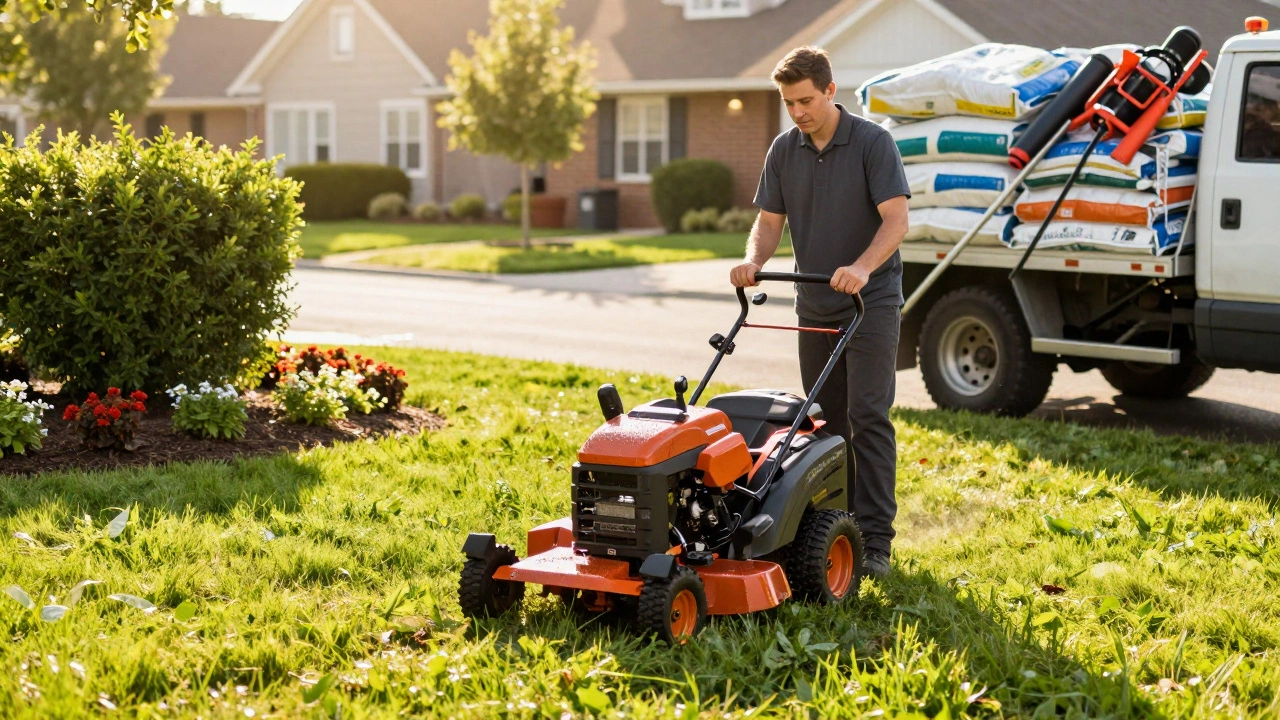
When you’re thinking about sprucing up your yard, one of the first questions that comes to mind is: how much will a landscaper actually charge per hour? It’s not just about the price tag - it’s about what you’re getting for that money. Whether you need a one-time tidy-up, seasonal mulching, or ongoing lawn care, knowing the real hourly rates helps you avoid overpaying - or hiring someone who can’t deliver.
Typical Hourly Rates for Landscapers in 2026
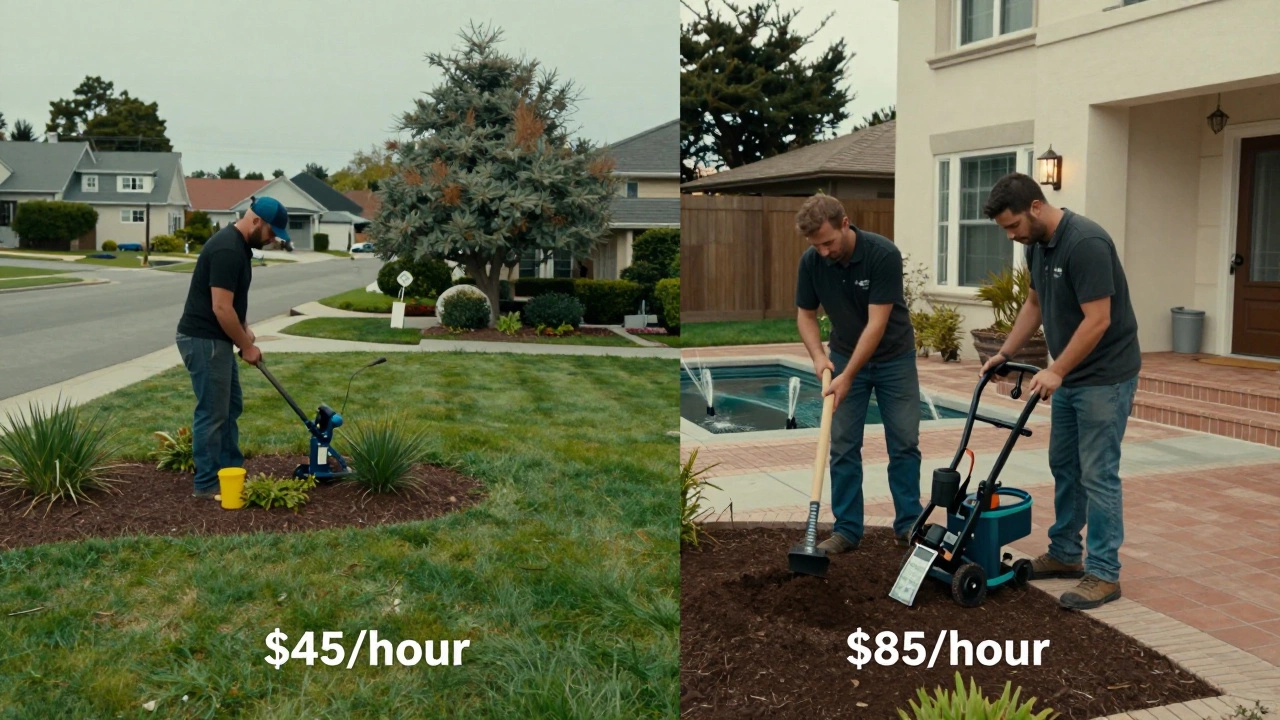
In 2026, most professional landscapers charge between $45 and $85 per hour across the U.S. That range isn’t random. It’s shaped by location, experience, and the type of work involved. In big cities like San Francisco or New York, you’re looking at $70-$85 per hour. In rural areas or smaller towns, rates often dip to $45-$60. The median rate nationally sits around $65 per hour.
Why the gap? It’s not just cost of living. A landscaper with 10+ years of experience, a certified crew, and commercial-grade equipment will charge more than a solo operator with a push mower and a pickup truck. A company that offers full-service design, irrigation installation, and hardscaping will also have higher rates than one that only mows lawns and trims hedges.
What You Get for the Hourly Rate
Landscaping isn’t just about turning on a lawnmower. When you pay an hourly rate, you’re covering:
- Skilled labor - not just physical work, but knowledge of plant health, soil types, drainage, and seasonal care
- Equipment - commercial mowers, trimmers, blowers, edgers, and sometimes heavy machinery like trenchers or excavators
- Materials - mulch, fertilizer, sod, plants, and soil amendments (though sometimes these are billed separately)
- Insurance and liability - reputable landscapers carry workers’ comp and general liability insurance
- Travel time - many charge for driving between jobs, especially if you’re outside their usual service zone
Some landscapers include travel in their hourly rate. Others add $10-$25 for trips over 15 miles. Always ask upfront.
Hourly vs. Project-Based Pricing
Not every job is billed by the hour. For predictable tasks - like a spring cleanup or fall leaf removal - many landscapers offer flat rates. A typical spring cleanup might cost $300-$600, regardless of how long it takes. That’s because they’ve done it hundreds of times and know exactly how long it takes.
Hourly billing makes more sense for:
- Ongoing maintenance (weekly or biweekly lawn care)
- Unpredictable jobs (e.g., storm cleanup, tree removal, invasive plant control)
- Custom designs or installations where scope changes mid-job
For example, if you hire someone weekly to mow, edge, and blow leaves off your driveway, they might charge $75 per visit. That’s roughly 1.5 hours of work. Over a year, that’s $3,900. But if you switch to a monthly maintenance contract, you could lock in $250/month - saving you over $1,000 annually.
Regional Differences Matter
Where you live changes everything. Here’s how hourly rates break down by region in 2026:
| Region | Average Hourly Rate | Lowest Rate | Highest Rate |
|---|---|---|---|
| Northeast | $70-$85 | $60 | $95 |
| West Coast | $65-$80 | $55 | $90 |
| Midwest | $50-$65 | $40 | $75 |
| South | $45-$60 | $35 | $70 |
| Mountain States | $55-$75 | $45 | $85 |
Why is the South cheaper? Lower cost of living, longer growing seasons (more competition among landscapers), and less demand for complex hardscaping. The Northeast? Higher labor costs, stricter regulations, and more demand for year-round services like snow removal and winter pruning.
Red Flags in Pricing
Too-low prices aren’t always a deal. Watch out for:
- Someone quoting $25/hour - they’re probably not insured, using cheap equipment, or skipping permits
- A company that won’t give you a written estimate - verbal quotes can change
- Only accepting cash - that’s a common sign they’re not reporting income
- No online reviews or website - if they can’t be found online, they’re likely not established
On the flip side, if someone charges $100/hour without explaining why, ask for specifics. Are they using imported plants? Do they have arborist certification? Are they part of a national franchise? If they can’t justify it, you might be paying for branding, not skill.
How to Get the Best Value
You don’t have to pick the cheapest or the most expensive. Here’s how to find the sweet spot:
- Get at least three written estimates - ask for itemized breakdowns
- Check for licenses and insurance - most states require landscapers to carry liability insurance
- Look for companies that offer maintenance contracts - they often discount recurring work
- Ask if they use native plants - they’re cheaper to maintain and better for local ecosystems
- Request references - call past clients and ask how often the crew showed up on time
Many homeowners save money by combining services. If you need lawn mowing, hedge trimming, and mulching, hiring one team for all three is cheaper than hiring three separate people.
What About DIY? Is It Worth It?
Some people try to cut costs by doing it themselves. But here’s the truth: if you’re spending 4-6 hours every weekend on your yard, you’re not just saving money - you’re trading time. For most people, that time is worth more than $65/hour.
Plus, mistakes cost more. Overwatering kills plants. Wrong fertilizer burns grass. Improper grading causes erosion. A professional knows how to read soil, spot pests early, and prune without killing the plant. One wrong cut can set you back $200 in replacement shrubs.
DIY works for small tasks - planting annuals, raking leaves, or spot-weeding. But for anything structural - retaining walls, irrigation, tree removal - hire a pro.

Seasonal Variations
Landscaping rates aren’t static. They shift with the seasons:
- Spring (March-May): Highest demand. Rates can spike 10-20% as everyone wants clean lawns and fresh mulch.
- Summer (June-August): Steady rates. Maintenance work keeps crews busy, but demand isn’t as high as spring.
- Fall (September-November): Prices drop. Leaf removal is common, but fewer people book major projects.
- Winter (December-February): Lowest rates. Some companies offer 15-30% off to keep crews working. Great time to plan next year’s design.
If you’re flexible, scheduling your big project for late October or early February can save you hundreds.
What’s Included in a Typical Service?
Here’s what a standard weekly or biweekly maintenance package usually covers in 2026:
- Mowing and edging the lawn
- Trimming hedges and shrubs
- Blowing leaves and clippings off driveways and walkways
- Light weeding in flower beds
- Emptying and cleaning grass catchers
- Checking irrigation system for leaks
Extra services - like fertilizing, aeration, or planting seasonal flowers - are usually extra. Ask for a price list before signing any contract.
How to Avoid Being Overcharged
Landscaping is one of the few home services where customers often get sticker shock. Here’s how to protect yourself:
- Never pay upfront - most reputable companies bill after service
- Ask for a written contract - even for small jobs
- Confirm if materials are included - some charge $15-$30 extra per bag of mulch
- Compare apples to apples - make sure you’re comparing similar services (e.g., 3 cuts/month vs. weekly)
- Look for seasonal promotions - many companies offer discounts for signing up for a full-year contract
Also, avoid companies that pressure you into buying expensive plants or irrigation systems on the spot. Good landscapers give advice - not sales pitches.
Final Takeaway
Most landscapers charge $45-$85 per hour in 2026, with $65 being the national average. The key isn’t finding the lowest rate - it’s finding someone reliable, skilled, and transparent. A slightly higher hourly rate that includes insurance, quality equipment, and consistent service will save you money and stress in the long run.
Don’t just pick the first name you find on Yelp. Ask questions. Compare estimates. Look for reviews that mention punctuality and communication. A great landscaper doesn’t just make your yard look good - they make your life easier.
Do landscapers charge more for weekends?
Most landscapers don’t charge extra for weekend work, but some do - especially if they’re small businesses with limited staff. Always ask upfront. Many companies offer weekend slots at the same rate as weekdays to accommodate working homeowners.
Can I negotiate landscaper rates?
Yes, especially if you’re signing up for ongoing service. Many landscapers offer 10-20% discounts for monthly or annual contracts. You can also ask for a discount if you’re referring another client. Don’t be shy - it’s a common practice.
Are there hidden fees in landscaping?
Common hidden fees include travel charges (especially beyond 15 miles), disposal fees for yard waste, and markups on mulch or plants. Always ask for a detailed estimate that breaks down labor, materials, and extras. A transparent company will list everything.
What’s the difference between a landscaper and a gardener?
A gardener typically focuses on planting, pruning, and caring for ornamental plants. A landscaper handles broader outdoor spaces - lawns, hardscapes, drainage, irrigation, and structural elements like patios or retaining walls. Landscapers often do the work gardeners do, plus more.
Do I need to provide tools or equipment?
No - reputable landscapers bring their own tools. If someone asks you to supply mowers, trimmers, or wheelbarrows, that’s a red flag. It usually means they’re underfunded or unprofessional. Always confirm they come fully equipped.
How often should I hire a landscaper for maintenance?
Most homeowners hire weekly during peak growing season (spring and summer) and biweekly in fall and winter. If you have a small yard and low-maintenance plants, biweekly year-round may be enough. For larger properties or formal gardens, weekly is ideal.
Author
Damon Blackwood
I'm a seasoned consultant in the services industry, focusing primarily on project management and operational efficiency. I have a passion for writing about construction trends, exploring innovative techniques, and the impact of technology on traditional building practices. My work involves collaborating with construction firms to optimize their operations, ensuring they meet the industry's evolving demands. Through my writing, I aim to educate and inspire professionals in the construction field, sharing valuable insights and practical advice to enhance their projects.