
Roof Payment & Financing Calculator
Estimate your total roof cost, payment schedule, and monthly financing options based on current market rates.
Imagine standing in your kitchen during a heavy summer storm. You hear that distinct *ping* sound of rain hitting metal, followed by the dreaded drip-drip-drip into your favorite ceramic mug on the counter. You look up and see water pooling around the light fixture. Panic sets in. You call a roofer, they inspect the damage, and then they hand you a bill. But here is the catch: the bill isn’t just one number. It’s a complex mix of material costs, labor rates, permit fees, and potentially insurance deductibles. This is where the concept of a roof payment gets tricky.
Most homeowners think of a roof payment as a single lump sum handed to a contractor. In reality, it is rarely that simple. A roof payment can refer to an upfront deposit, a monthly installment from a financing plan, an insurance reimbursement check, or a draw from a home equity line of credit. Understanding exactly what kind of payment structure you are looking at can save you thousands of dollars and prevent you from falling victim to predatory lending practices disguised as "easy payments."
The Anatomy of a Roof Invoice
Before you worry about how to pay, you need to understand what you are paying for. A legitimate roofing invoice breaks down into three main buckets: materials, labor, and overhead. If a quote just says "New Roof - $15,000," run the other way. You need itemization.
Materials usually account for 30% to 40% of the total cost. This includes asphalt shingles, underlayment, flashing, vents, and nails. Labor typically makes up another 40% to 50%. The remaining percentage covers disposal fees for your old roof, permits required by your local city council, and the contractor’s profit margin.
When we talk about a "roof payment" in this context, we are often discussing the timing of these cash flows. Ethical contractors rarely ask for 100% upfront. A standard payment schedule might look like this:
- Deposit (10-30%): Paid upon signing the contract to secure your spot in their schedule and order materials.
- Progress Payment (30-50%): Paid once the old roof is torn off and the new underlayment is installed.
- Final Payment (Balance): Paid only after the job is complete, the debris is hauled away, and you have inspected the work yourself.
If a contractor asks for full payment before they even buy the shingles, that is a major red flag. They could disappear with your money, leaving you with a house that has no roof and no recourse.
Insurance Claims: The Check That Isn't Cash
For many homeowners, the largest portion of a roof payment comes from their homeowner's insurance. However, receiving an insurance check does not mean the debt is paid. It means the insurance company has agreed to cover the loss, but there are strings attached.
You need to understand two critical terms: Actual Cash Value (ACV) and Replacement Cost Value (RCV). ACV pays for the age and wear of your old roof. If your roof was 20 years old, ACV might only give you enough to buy a cheap patch job. RCV pays to replace the roof with a brand-new one of similar quality. Most policies offer RCV, but they withhold a portion of the money-called recoverable depreciation-until you actually complete the repairs.
Here is how the payment flow works with insurance:
- Deductible: You pay this out of pocket first. If your deductible is $1,000 and the claim is approved for $10,000, the insurer writes a check for $9,000 (or sometimes $10,000 minus the withheld depreciation).
- Initial Payment: The insurance company sends the first check directly to you or the contractor. This covers the immediate cost of materials and labor.
- Completion Payment: Once the roofer finishes the job and provides proof of completion (photos, invoices), the insurance company releases the remaining withheld funds.
A common scam involves contractors who promise to "waive your deductible." This is illegal in most states. If a contractor agrees to waive your deductible, they will likely inflate the price of the roof to recoup that cost, or they will use cheaper materials than quoted. Always pay your deductible yourself.
Financing Options: Monthly Payments vs. Interest Rates
Not everyone has $15,000 sitting in their savings account. When a roof fails unexpectedly, you need solutions fast. This is where third-party financing enters the picture. Many roofing companies partner with lenders like GreenSky, Service Finance Company, or Wells Fargo Home Improvement Loans. These companies offer "monthly roof payments" that can make a large expense feel manageable.
However, convenience comes at a price. Here is a breakdown of common financing methods:
| Option | Typical Interest Rate (APR) | Pros | Cons |
|---|---|---|---|
| Credit Card | 15% - 25% | Immediate access; potential rewards points if paid off quickly. | High interest if balance is carried; lowers credit utilization ratio. |
| Home Equity Line of Credit (HELOC) | 6% - 10% | Lower interest rates; tax-deductible interest (consult a CPA). | Puts your home at risk if you default; longer approval process. |
| Personal Loan | 8% - 18% | Fixed monthly payments; no collateral required. | Requires good credit score; origination fees may apply. |
| Contractor Financing | 0% - 20%+ | Easy application process; often integrated into the quote. | High APRs for subprime borrowers; deferred interest traps. |
Be extremely careful with "deferred interest" offers. Some lenders advertise 0% interest for 12 months. Sounds great, right? But if you still owe $100 on day 361, you get hit with all the accrued interest from day one. Read the fine print. Calculate the total cost of the loan, not just the monthly payment.

Government Grants and Weatherization Assistance
If you are a low-income homeowner, elderly, or disabled, you might qualify for assistance programs that reduce or eliminate your roof payment entirely. The Department of Housing and Urban Development (HUD) and various state energy offices offer grants through programs like the Weatherization Assistance Program (WAP). While WAP focuses on energy efficiency, a leaking roof is a significant source of heat loss.
To qualify, you generally need to meet income guidelines based on your household size and local median income. You must also own the home. Renters do not qualify. These grants are not loans, meaning you do not pay them back. However, the application process can be slow, involving home inspections and waitlists. Do not rely on this as a solution for an emergency leak unless you have already secured temporary tarping from a contractor.
Red Flags in Roof Payment Requests
The roofing industry is unfortunately rife with scams, especially after severe weather events. Storm chasers drive into neighborhoods, knock on doors, and pressure homeowners into signing contracts immediately. Protect yourself by watching out for these warning signs regarding payments:
- Cash Only Discounts: If a contractor offers a lower price for cash, they are likely trying to avoid taxes and liability insurance. If something goes wrong, you have no legal protection.
- Pressure to Pay Immediately: Legitimate businesses allow time for you to review contracts and consult with family members. Pressure tactics are designed to bypass your logical decision-making.
- Vague Contracts: The contract should specify the exact brand and model of shingles, the number of layers being removed, and the warranty details. If the payment terms are vague, walk away.
- Lack of Licensing and Insurance: Verify that the contractor holds a valid license in your state and carries both general liability insurance and workers' compensation. If a worker falls off your roof and the contractor isn't insured, you could be sued for medical bills.
Negotiating Your Roof Payment
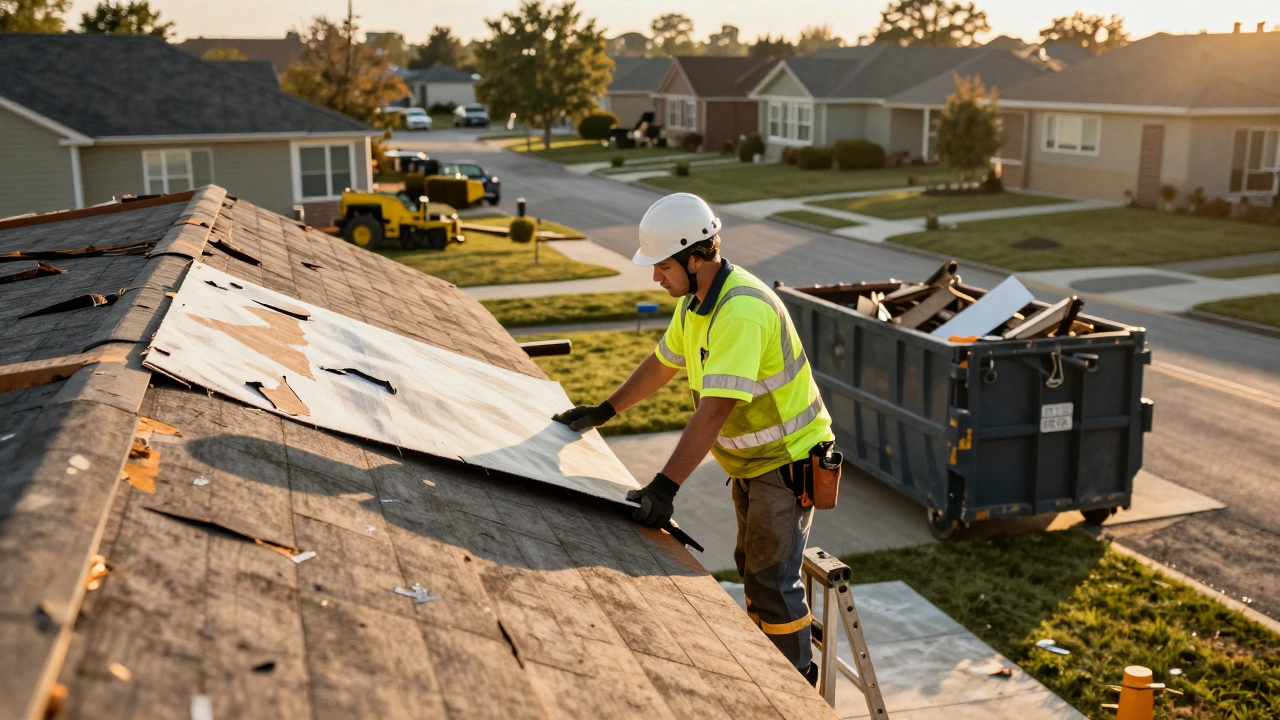
Roofing prices are not set in stone. You have more leverage than you think. Start by getting at least three quotes from different contractors. Use the lowest quote as a baseline, but don't automatically choose the cheapest option. Look for discrepancies in the scope of work. Maybe the cheapest quote doesn't include new drip edge flashing or ventilation upgrades.
Ask about seasonal discounts. Roofing is cyclical. Winter is often the slow season due to cold temperatures making shingles brittle and unsafe to install. Contractors may be willing to offer a discount to keep their crews busy during January and February, provided the weather permits. Conversely, summer is peak season, and prices are higher due to demand.
Consider bundling services. If you need gutters replaced along with the roof, ask for a package deal. Contractors save on mobilization costs when they can do multiple jobs at once, and they often pass some of those savings to you.
Maintenance to Avoid Future Payments
The best way to manage roof payments is to delay the need for a new one. Regular maintenance can extend the life of your roof by 5 to 10 years. Simple tasks like cleaning gutters twice a year, trimming overhanging tree branches, and checking for missing shingles after storms can prevent minor issues from becoming catastrophic failures.
Schedule a professional inspection every two to three years. A roofer can spot early signs of granule loss, curling shingles, or compromised flashing long before water starts dripping into your living room. Catching these issues early means a small repair payment instead of a massive replacement bill.
How much should I pay upfront for a new roof?
A typical upfront deposit ranges from 10% to 30% of the total project cost. This deposit secures your scheduling date and allows the contractor to purchase materials. Never pay more than 50% upfront. The final balance should always be paid after the work is completed and inspected to your satisfaction.
Does insurance cover the entire cost of a new roof?
It depends on your policy type and the cause of damage. If the damage is due to a covered peril like hail or wind, your insurance will likely cover the replacement cost, minus your deductible. However, if the damage is due to wear and tear or lack of maintenance, insurance will deny the claim. Always check your policy's exclusions and whether it offers Actual Cash Value or Replacement Cost Value.
Is it better to use a credit card or a personal loan for roof financing?
If you can pay off the balance within 6 to 12 months, a credit card with a 0% introductory APR offer is often the cheapest option. For larger amounts that will take longer to repay, a personal loan or HELOC usually offers lower interest rates and fixed monthly payments, making budgeting easier. Compare the Annual Percentage Rate (APR) of each option before deciding.
What happens if my insurance check is less than the contractor's quote?
This is called a gap. You have three options: pay the difference out of pocket, negotiate with the contractor to use slightly less expensive materials, or appeal the insurance claim with additional documentation from the contractor proving the necessity of the higher-cost items. Your adjuster may agree to increase the payout if presented with solid evidence.
Can I finance a roof repair if I have bad credit?
Yes, but the interest rates will be significantly higher. Some roofing companies specialize in financing for subprime borrowers. Be cautious of high APRs and hidden fees. Alternatively, consider borrowing from family, using a secured credit card, or exploring community assistance programs if you qualify based on income.
Author
Damon Blackwood
I'm a seasoned consultant in the services industry, focusing primarily on project management and operational efficiency. I have a passion for writing about construction trends, exploring innovative techniques, and the impact of technology on traditional building practices. My work involves collaborating with construction firms to optimize their operations, ensuring they meet the industry's evolving demands. Through my writing, I aim to educate and inspire professionals in the construction field, sharing valuable insights and practical advice to enhance their projects.