
People often use the terms building materials and construction materials like they mean the same thing. But if you’ve ever stood in a hardware store staring at shelves full of lumber, cement, insulation, and nails, you know they’re not interchangeable. The difference isn’t just semantics-it affects how you plan a project, order supplies, and even how contractors quote you.
Building materials are what you assemble with
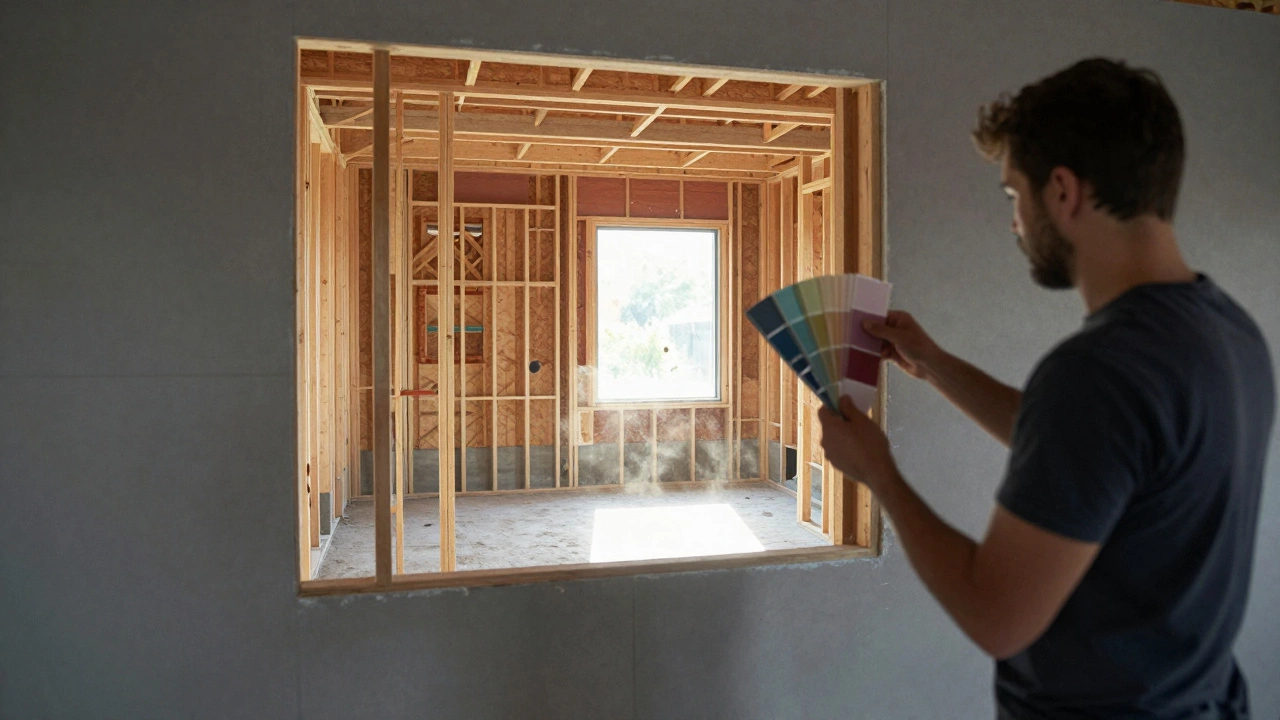
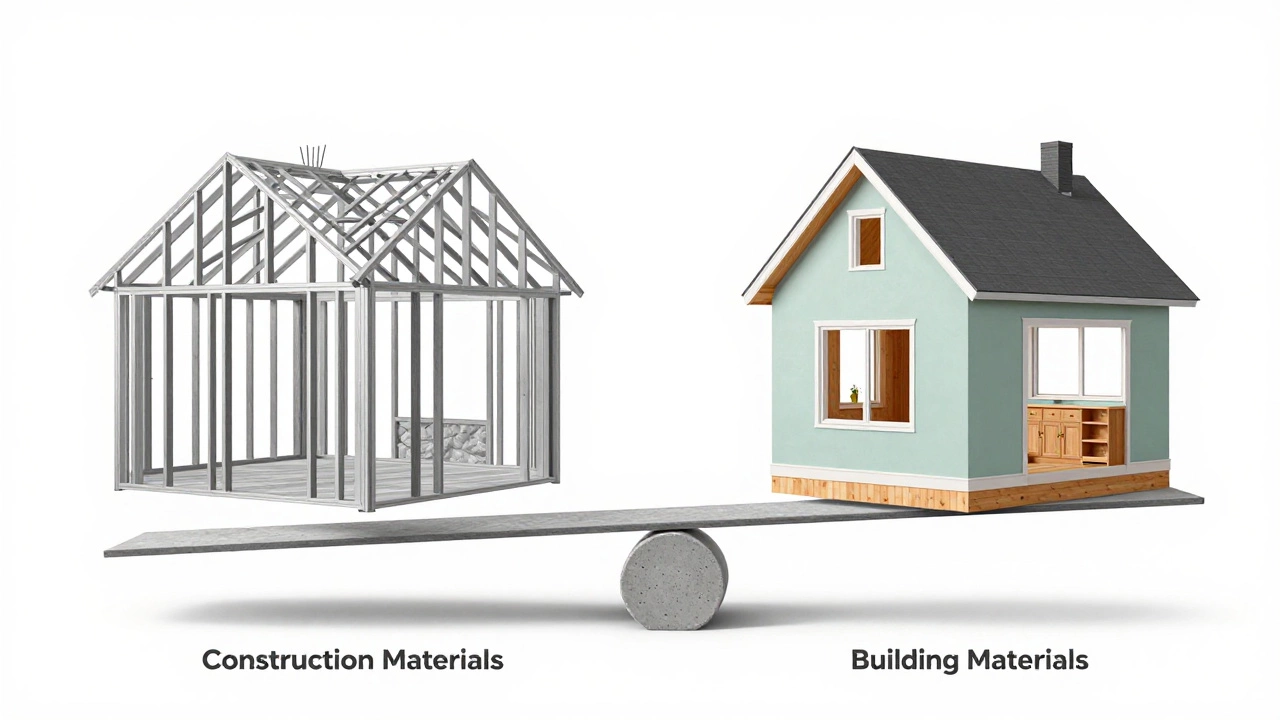
Building materials are the actual components that make up the finished structure. Think of them as the pieces of a puzzle. These are things you can see, touch, and live with after the job is done. Drywall, windows, flooring, roofing shingles, plumbing fixtures, electrical outlets, cabinetry, and paint all fall into this category. They’re the final layers-the skin, bones, and organs of the house.For example, when you install hardwood flooring in your living room, you’re using a building material. When you put in a kitchen sink or hang interior doors, those are building materials too. They’re chosen for aesthetics, comfort, durability, and how they fit into the design. Builders and homeowners often pick these based on style, brand, or personal taste. A $500 granite countertop isn’t just functional-it’s a design choice.
Construction materials are what you build with
Construction materials are the raw or semi-finished inputs that enable the structure to stand up, stay safe, and meet building codes. These aren’t always visible once the job is done, but they’re the reason the building doesn’t collapse. Steel rebar, concrete mix, structural lumber, fasteners, insulation batts, waterproof membranes, and scaffolding fall here.Take concrete. It’s not something you walk on or sit against-it’s the foundation, the footings, the load-bearing walls. You don’t choose concrete because it looks nice; you choose it because it holds weight. Same with steel beams. You won’t see them in your living room, but they’re holding up your second floor. These materials are selected for strength, fire rating, load capacity, and compliance with engineering standards-not appearance.
Why the distinction matters on the job site
If you’re managing a project, mixing up these categories can cost you time and money. Let’s say you’re ordering supplies for a new shed. You need pressure-treated lumber (construction material) to frame the walls, but you also need plywood siding (building material) to finish the outside. If you order only one type, the project stalls.Contractors often separate these in their quotes. A line item for "structural framing" means construction materials. A line item for "interior finishes" means building materials. If you don’t understand the difference, you might think you’re being overcharged for "lumber" when half of it is hidden inside the walls.
In New Zealand, where weather and seismic activity shape building standards, this distinction becomes even more critical. The Building Code requires specific performance levels for structural elements-like how much wind a roof can handle or how much earthquake force a foundation must absorb. These aren’t aesthetic choices. They’re engineering requirements tied to construction materials.
Examples to make it clear
Here’s a side-by-side breakdown:| Category | Building Materials | Construction Materials |
|---|---|---|
| Function | Final appearance and usability | Structural integrity and safety |
| Visibility | Usually visible after completion | Often hidden after installation |
| Selection Criteria | Aesthetics, comfort, brand, style | Strength, code compliance, load ratings |
| Examples | Windows, flooring, paint, cabinetry, light fixtures | Concrete, rebar, structural steel, insulation, nails, waterproofing membrane |
| Who chooses it | Homeowner, interior designer | Structural engineer, builder, code inspector |
You wouldn’t use drywall as a load-bearing wall. You wouldn’t use marble tiles as rebar. One is for finishing; the other is for holding everything together.
Where the lines blur
Some materials straddle the line. For instance:- Brick-it can be a structural wall (construction) or just a decorative veneer (building).
- Timber framing-if it’s structural, it’s construction. If it’s decorative trim, it’s building.
- Insulation-it’s hidden, so it’s construction, but if you’re using it for soundproofing in a home theater, it’s also part of the final experience.
Context matters. The same physical item can serve different roles depending on how it’s used. That’s why professionals always ask: "What’s its function here?" not "What is it?"
What happens when you get it wrong
A homeowner once bought cheap, decorative timber for their deck frame because it looked nice. It wasn’t pressure-treated or rated for ground contact. Two years later, the deck rotted out. The material was beautiful-but it wasn’t built to last under the weather.On the flip side, a builder once used standard drywall in a bathroom ceiling because it was cheaper. Water damage from a leak warped it within months. Drywall isn’t designed for wet areas. Moisture-resistant drywall (green board) is a building material-but it’s still a building material, not a structural one.
Getting the right material for the right job isn’t about cost. It’s about matching the material’s purpose to the role it plays in the structure.
How to choose the right materials
Ask yourself two simple questions before buying anything:- Is this holding up the structure, or is it finishing it?
- Will this be visible and touched daily, or will it stay hidden behind walls?
If the answer to the first is "holding up," you’re looking at construction materials. If it’s "finishing," you’re looking at building materials.
For new builds, start with the structural plan. Let your engineer or builder specify the construction materials first-concrete, steel, framing, insulation. Then, once the shell is set, pick your building materials: colors, textures, finishes. Don’t reverse the order.
Final thought
The difference between building materials and construction materials isn’t just technical-it’s practical. One makes the house beautiful. The other makes it safe. You need both. But if you confuse them, you risk wasting money, delaying work, or worse-creating a dangerous structure.Next time you’re at the hardware store, look at a bag of cement and a box of tiles side by side. One is the skeleton. The other is the skin. Know which is which before you pay.
Are bricks building materials or construction materials?
It depends on how they’re used. If bricks form the load-bearing walls of a house, they’re construction materials. If they’re used as a decorative veneer over a wood or steel frame, they’re building materials. The function determines the category.
Can insulation be considered a building material?
Typically, no. Insulation is a construction material because its job is to control heat flow and meet energy codes. Even though it affects comfort, it’s hidden behind walls and chosen for performance, not appearance. However, if you’re using acoustic insulation in a media room for sound quality, it still falls under construction-it’s just serving a secondary function.
Is drywall a building material or a construction material?
Drywall is a building material. It’s the finished interior surface you paint and live with. It doesn’t carry structural loads. The wooden or metal studs behind it are the construction materials. Drywall just covers them.
Why do contractors separate these in quotes?
Because they’re sourced, priced, and installed differently. Construction materials are often bought in bulk by the contractor based on engineering specs. Building materials are chosen by the homeowner and can vary widely in cost and brand. Separating them helps track costs and avoid misunderstandings.
What happens if I use building materials as construction materials?
You risk structural failure. For example, using decorative timber instead of structural lumber for floor joists can lead to sagging or collapse. Building materials aren’t tested or rated for load-bearing use. They’re made for looks and comfort, not strength.
If you're planning a renovation or new build, start by identifying which materials are structural and which are surface-level. That simple step will save you from costly mistakes and help you communicate better with your builder.
Author
Damon Blackwood
I'm a seasoned consultant in the services industry, focusing primarily on project management and operational efficiency. I have a passion for writing about construction trends, exploring innovative techniques, and the impact of technology on traditional building practices. My work involves collaborating with construction firms to optimize their operations, ensuring they meet the industry's evolving demands. Through my writing, I aim to educate and inspire professionals in the construction field, sharing valuable insights and practical advice to enhance their projects.