Foundation Repair Advisor
Answer these three questions to find the most effective repair method for your home's foundation crack.
Up and down
Left to right
Slanting or stepping
Active water/dampness
Dry/dormant crack
Wall is flat/straight
Wall curves inward
Recommended Approach:
Seeing a crack in your basement wall for the first time is a gut-punch. You start wondering if your house is sinking or if you're looking at a massive bill that will eat your entire savings. The truth is, not every crack is a disaster. Some are just the house "settling" into the dirt, while others are warning signs that your soil is pushing your walls inward. The real question isn't just how to plug the hole, but which method actually stops the problem from coming back.
To get this right, you need to understand foundation crack repair, which is the process of sealing or reinforcing structural gaps in a building's concrete base to prevent water infiltration and structural failure. Depending on whether the crack is vertical, horizontal, or diagonal, you'll need a different approach. Using the wrong method-like putting a flexible sealant on a structural shift-is just a temporary band-aid that will fail within a few seasons.
Quick Summary: Choosing the Right Fix
- Epoxy Injection: Best for structural stability in dry, non-moving cracks.
- Polyurethane Foam: The gold standard for stopping active water leaks.
- Carbon Fiber Straps: The best choice for horizontal cracks and bowing walls.
- Cement Caulking: Only for tiny, non-structural hairline cracks.
Identifying the Type of Crack Before You Fix It
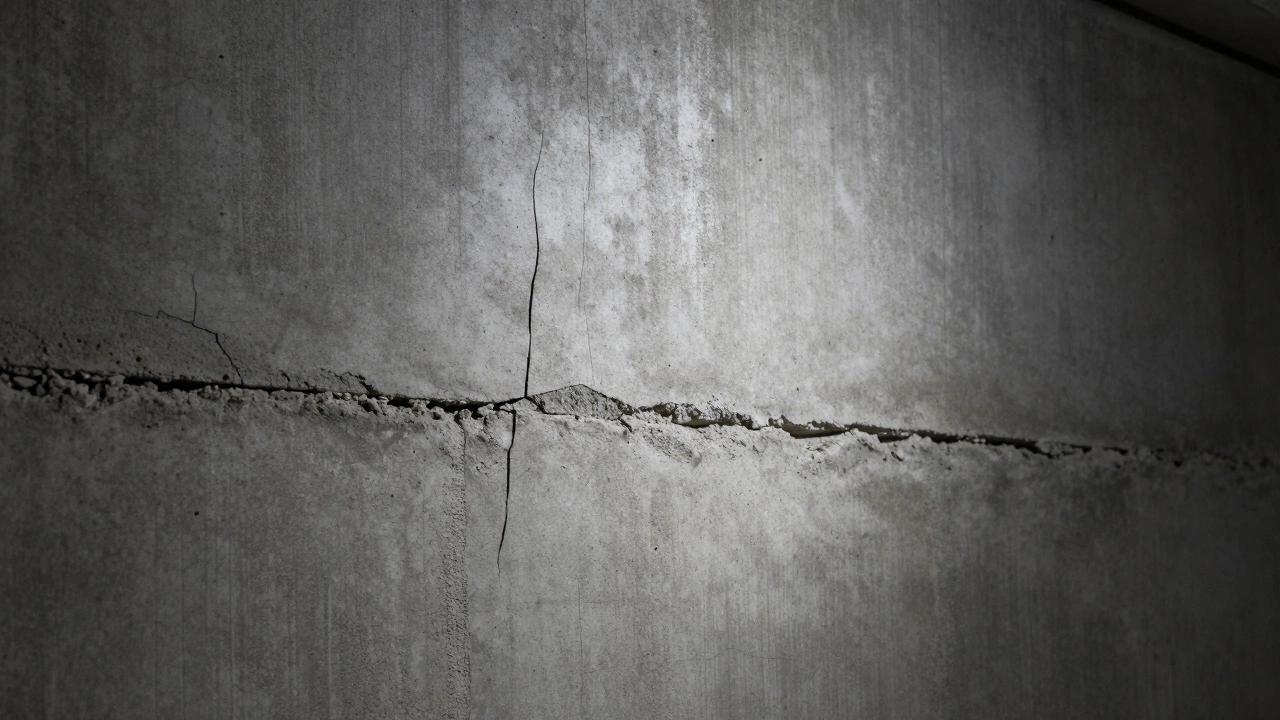
You can't pick the best method if you don't know what you're fighting. In the world of concrete, the direction of the crack tells the whole story. Vertical cracks are usually the result of shrinkage during the curing process or minor settling. They aren't typically a structural threat, but they are like open invitations for groundwater to enter your basement.
Horizontal cracks are a different beast. These usually mean Hydrostatic Pressure is at work. This happens when the soil outside your wall becomes saturated with water, creating a heavy push that literally bows the wall inward. If you see a horizontal crack, stop looking at sealants and start looking at reinforcement. A diagonal crack, especially one that starts at a corner, often signals that one corner of your house is sinking faster than the rest, which requires a professional structural engineer to evaluate.
The Epoxy Injection Method for Structural Strength
When a crack is "dormant"-meaning it isn't moving or leaking-Epoxy Injection is the way to go. This isn't your average hardware store glue. Industrial epoxy is a two-part resin that, once cured, is actually stronger than the surrounding concrete.
The process involves cleaning the crack, installing injection ports every few inches, and sealing the surface with a thick paste. The epoxy is then pumped from the bottom up, filling every microscopic void. Because it bonds the two sides of the concrete back together, it restores the wall's original integrity. If you have a vertical crack that doesn't leak but makes you nervous about the house's strength, this is your best bet.
Polyurethane Foam for Active Water Leaks
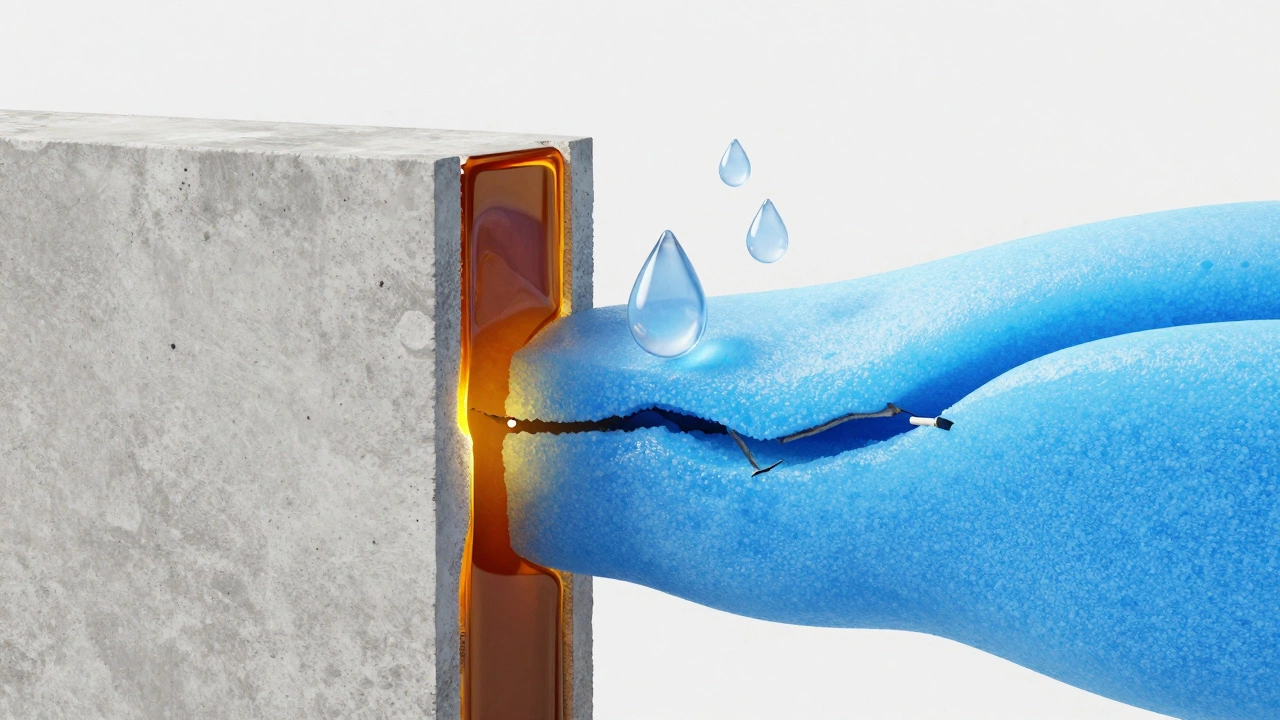
If your basement smells like a damp cave or you see water trickling through a crack during a rainstorm, epoxy is actually a bad choice. Why? Because epoxy is rigid. If the house moves even a fraction of a millimeter, the epoxy will crack again. Instead, you want Polyurethane Foam.
Polyurethane is an expanding foam that reacts with water. When it's injected into a crack, it expands to fill the entire gap, creating a flexible, waterproof seal. Because it can stretch and compress, it moves with your house. If the soil shifts slightly next winter, the foam just flexes rather than snapping. It's the most effective way to handle Basement Waterproofing from the inside out.
Carbon Fiber Straps for Bowing Walls
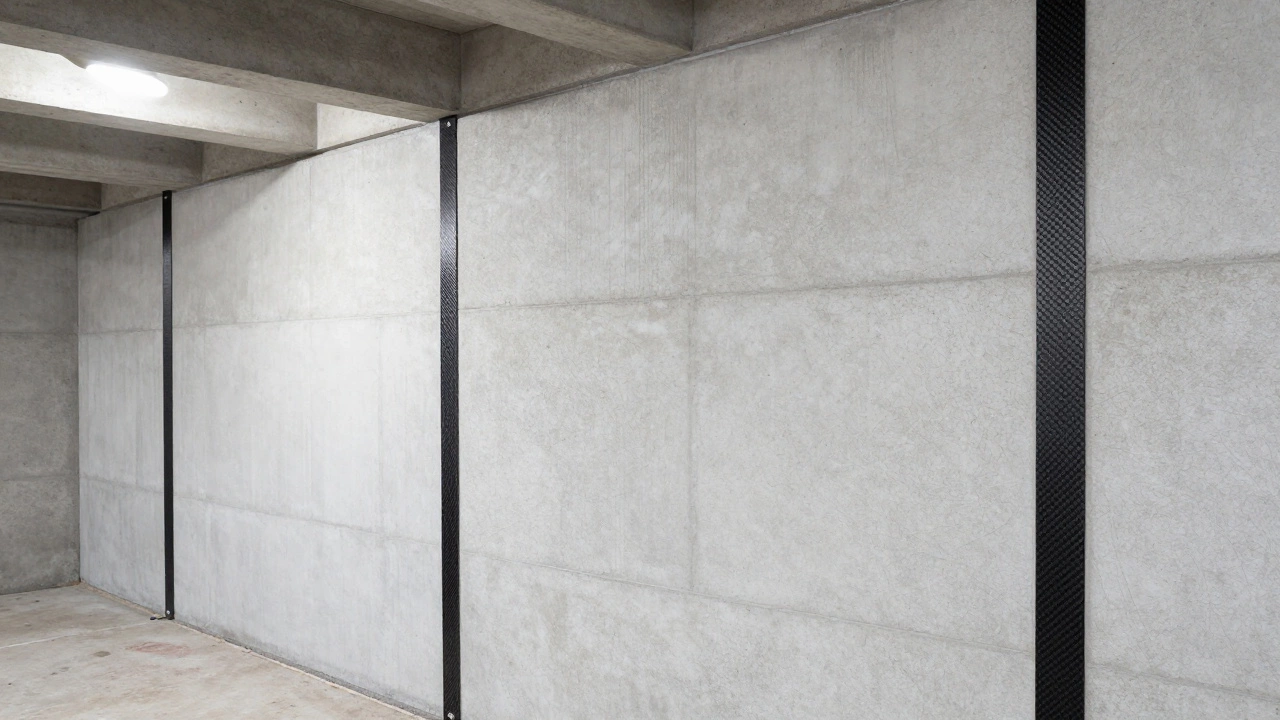
When a wall is bowing or has a wide horizontal crack, no amount of foam or glue will save it. You need to stop the wall from moving further. This is where Carbon Fiber Straps come in. Carbon fiber is an incredibly lightweight material with a tensile strength far higher than steel.
Contractors grind the concrete wall flat, apply a heavy-duty adhesive, and bolt the straps vertically to the wall. These straps act like internal braces, resisting the pressure from the outside soil. Unlike traditional steel I-beams, which are bulky and take up space in your basement, carbon fiber straps are barely noticeable once painted over. They effectively "freeze" the wall in place, preventing the crack from widening into a collapse.
| Method | Best For | Strength | Waterproof? | Flexibility |
|---|---|---|---|---|
| Epoxy Injection | Non-leaking structural cracks | Very High | Yes | None |
| Polyurethane Foam | Active leaks / Wet basements | Moderate | Excellent | High |
| Carbon Fiber Straps | Horizontal cracks / Bowing | Extreme | No (Needs separate seal) | Low |
Common Mistakes and Pitfalls to Avoid
One of the biggest mistakes homeowners make is simply slapping a layer of cement or "hydraulic cement" over the surface of a crack. This is essentially painting over a leak. The water will just find a way around the patch and pop it right off the wall within a year. If you want a permanent fix, the repair material must go inside the crack, not just on top of it.
Another trap is ignoring the exterior. You can spend thousands on internal repairs, but if your gutters are dumping water directly against your foundation, you're just fighting a losing battle. Ensure your downspouts carry water at least five to ten feet away from the house. If the soil is sloping toward your basement, you're creating a swimming pool around your foundation, which makes any repair method significantly less effective.
When Should You Call a Professional?
If you have a hairline crack and a tube of polyurethane sealant, you can probably handle it. But there are a few red flags that mean you should put the tools down and call a structural engineer. First, if the crack is wider than a quarter-inch, it's no longer a "sealant" job. Second, if you notice doors or windows in the house sticking or refusing to close, your foundation has likely shifted significantly.
Lastly, if you see a "stair-step" crack in your brickwork on the outside of the house, this is a classic sign of settlement. This usually requires Underpinning-a process where piers are driven deep into the earth to stabilize the home. This is far beyond the scope of a simple crack repair and requires heavy machinery and engineering plans.
Will a foundation crack repair increase my home's value?
It doesn't necessarily "add" value like a kitchen remodel does, but it prevents a massive drop in value. Unrepaired foundation issues are a huge red flag for home buyers and inspectors, often leading to price drops of tens of thousands of dollars. A documented, professional repair gives buyers peace of mind.
Can I use epoxy if the crack is still leaking water?
Generally, no. Most epoxies do not bond well to wet surfaces, and because epoxy is rigid, the natural movement of a leaking crack will cause the epoxy to crack again. Use polyurethane foam for leaks because it expands and seals even in the presence of moisture.
How long does a carbon fiber strap repair last?
When installed correctly, carbon fiber straps are designed to last the lifetime of the structure. They don't rust like steel and they don't degrade over time. They are a permanent structural reinforcement.
Is a vertical crack always safe?
Most vertical cracks are shrinkage cracks and aren't structurally dangerous. However, if the crack is widening over time or if you can see daylight through it, it could indicate a more serious settling issue. It's always a good idea to monitor them with a crack gauge.
What is the cheapest way to fix a foundation crack?
The cheapest method is using a DIY polyurethane sealant tube for hairline cracks. However, the "cheapest" method is often the most expensive in the long run if it fails and you have to pay a professional to remove the old material and do it correctly.
Next Steps for Homeowners
If you've just found a crack, don't panic. Grab a pencil and a ruler. Mark the ends of the crack and write the date. Check it again in a month. If the crack has grown in length or width, you have an active problem that needs a professional. If it's stayed the same, you can focus on waterproofing. Start by cleaning your gutters and grading your soil; sometimes, simply moving water away from the house stops the pressure and prevents a crack from getting worse.
Author
Damon Blackwood
I'm a seasoned consultant in the services industry, focusing primarily on project management and operational efficiency. I have a passion for writing about construction trends, exploring innovative techniques, and the impact of technology on traditional building practices. My work involves collaborating with construction firms to optimize their operations, ensuring they meet the industry's evolving demands. Through my writing, I aim to educate and inspire professionals in the construction field, sharing valuable insights and practical advice to enhance their projects.