Construction Classifier: Civil vs. Commercial
Which type of construction project are these? Select a project below to analyze its classification and key characteristics.
Select a project
Classification| Typical Client | - |
| Key Expertise | - |
| Typical Equipment | - |
| Primary Goal | - |
Select a project card from the left to analyze its construction type.
Quick Takeaways
- Commercial construction focuses on buildings for business use (offices, malls, hospitals).
- Civil construction focuses on infrastructure for the public (roads, bridges, dams).
- Commercial projects usually happen on private land; civil projects are typically government-funded.
- The equipment varies: commercial work uses more scaffolding and interior finishing tools, while civil work uses massive earth-movers and pavers.
To get the basics straight, Commercial Construction is the process of creating buildings intended for business purposes. Think of a new office complex or a retail center. These projects are usually focused on a specific plot of land and result in a vertical structure where people work, shop, or receive care. The primary goal here is utility for a business owner or tenant.
On the flip side, Civil Construction (or civil engineering) is the design and maintenance of the built environment's infrastructure. It's less about "buildings" and more about the systems that make a city function. When you drive over a bridge, walk through a tunnel, or turn on a tap, you're interacting with the results of civil work. It's the backbone that allows commercial buildings to even exist.
Where the Two Worlds Diverge
The most immediate difference is the intended user. In commercial work, the client is often a private developer or a corporation. They want a building that looks great, attracts customers, and meets specific zoning codes. In civil work, the "client" is usually the public, represented by a government agency like a Department of Transportation. The focus shifts from aesthetic appeal to long-term durability and public safety.
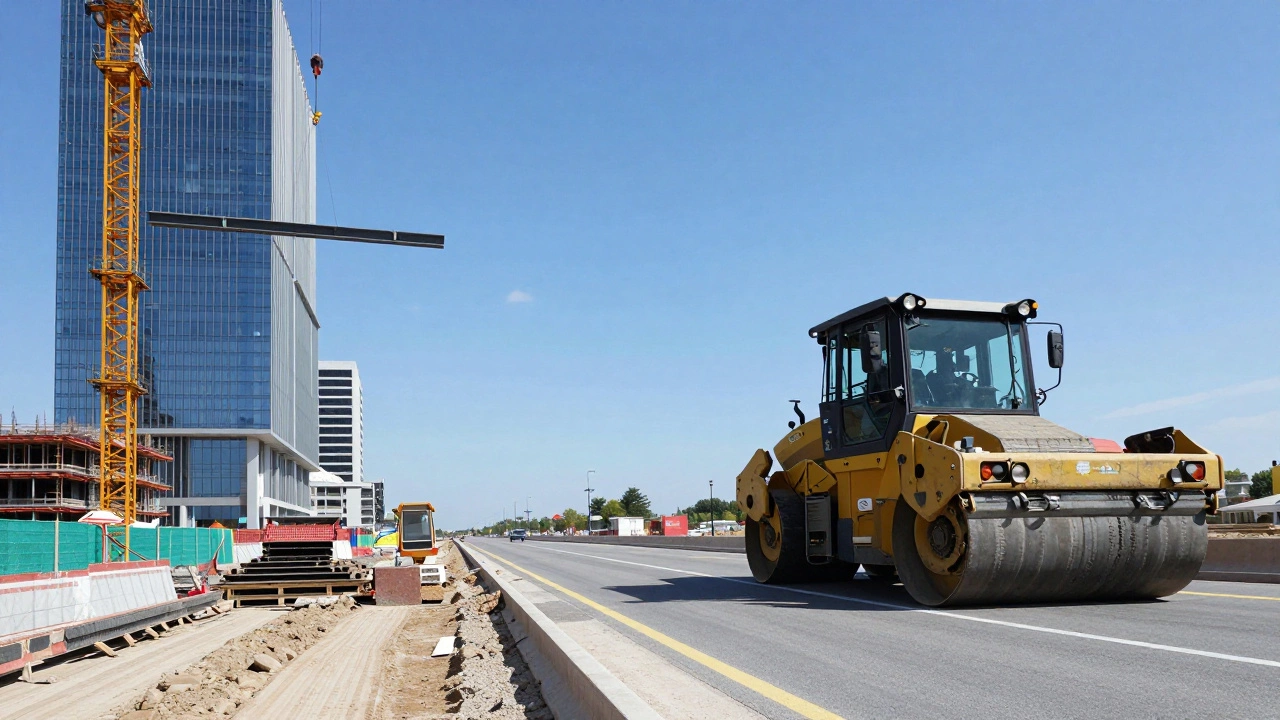
Then there's the scale of the gear. While both use excavators, a commercial site might rely heavily on tower cranes to lift steel beams 20 stories high. A civil site, like a highway expansion, will use massive scrapers, asphalt pavers, and rollers that can weigh dozens of tons. You won't see a road roller inside a shopping mall, and you won't see a drywall crew on a bridge project.
The funding models also vary. Commercial projects are typically financed through private loans and equity, with a goal of generating a return on investment via rent or sales. Civil projects are funded by taxpayers through government budgets and bonds. This means civil projects often have much more rigorous public auditing and environmental impact assessments before a single shovel hits the dirt.
| Attribute | Commercial Construction | Civil Construction |
|---|---|---|
| Primary Goal | Business operations & revenue | Public utility & safety |
| Common Entities | Hotels, Warehouses, Hospitals | Dams, Highways, Airports |
| Typical Funding | Private Investment / Loans | Government / Public Bonds |
| Key Skillset | Architecture & MEP Systems | Geotechnical & Structural Engineering |
The Overlap: Where Civil Meets Commercial
It's not always a clean split. In fact, most commercial projects require a heavy dose of civil work before the actual building goes up. This is often called "site work." If you're building a 500-car parking lot for a new retail hub, you're performing civil construction. You have to grade the land, install drainage systems to prevent flooding, and lay the sub-base for the asphalt. Without this civil foundation, the commercial building would literally sink or flood.
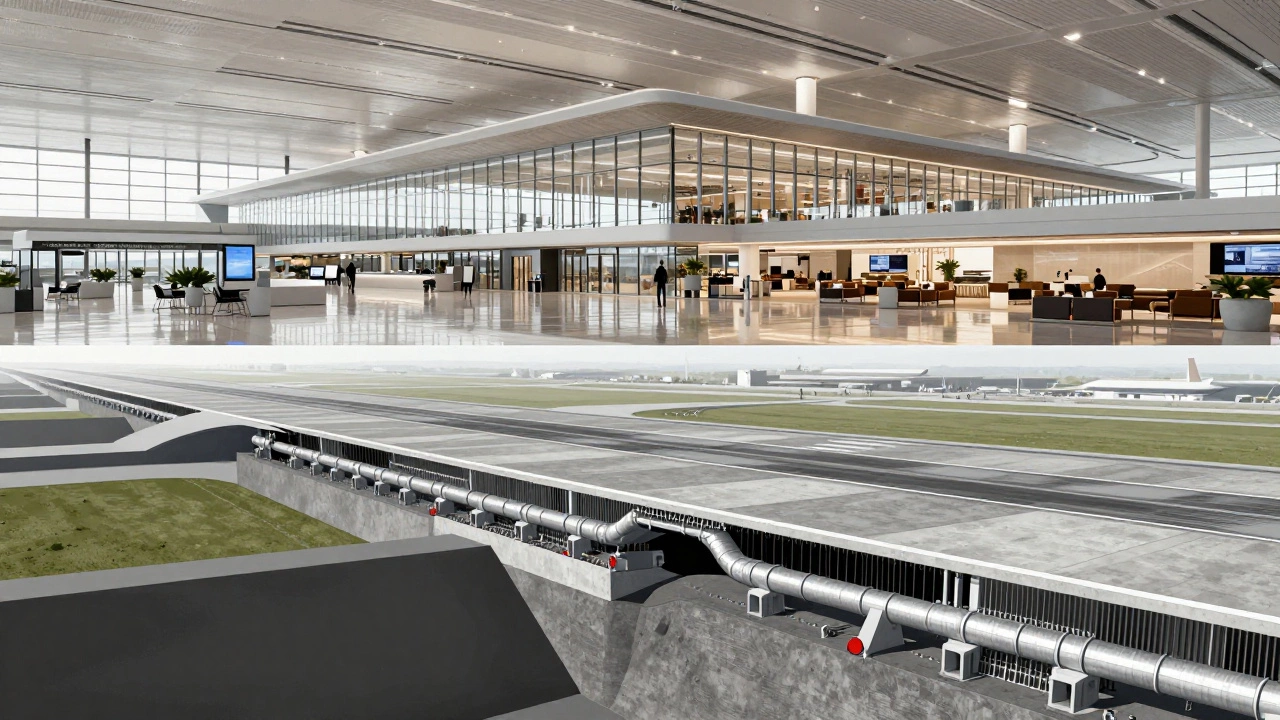
Consider a project like a new airport terminal. The terminal building itself-with its check-in counters, lounges, and shops-is a Commercial Project. But the runways, the taxiways, and the massive drainage basins surrounding the airfield are the work of Civil Engineering. You can't have one without the other; the terminal is useless if the planes can't land, and the runways are pointless if there's no building to process the passengers.
Another area of overlap is the use of Concrete. Both industries rely on it, but they use it differently. A commercial contractor might focus on polished concrete floors for a warehouse or reinforced slabs for a high-rise. A civil contractor focuses on high-strength, weather-resistant concrete for bridge piers or massive retaining walls that must withstand immense earth pressure.
Key Roles and Expertise
If you're looking at the people involved, the roles shift slightly. Commercial projects are heavily driven by architects. The architect defines the "look and feel" and the flow of the space. While structural engineers are vital, the aesthetic and functional design of the interior is a huge part of the job. You'll see a lot of focus on HVAC (Heating, Ventilation, and Air Conditioning) and electrical grids that can support thousands of computers and lights.
Civil projects are led by Civil Engineers. There is rarely an "architect" in the sense of someone picking out paint colors for a bridge. Instead, the focus is on hydraulics, soil mechanics, and materials science. They spend more time analyzing how water flows across a landscape or how a bridge will react to seismic activity. The expertise is less about human comfort and more about structural physics and environmental endurance.
Managing the Risks
The risks in these two sectors are different animals. In commercial construction, a major risk is "scope creep." A client decides mid-way through that they want a glass atrium instead of a brick wall, which can throw off the budget and the timeline. There's also the risk of market fluctuations-if the demand for office space drops, developers might pause projects indefinitely.
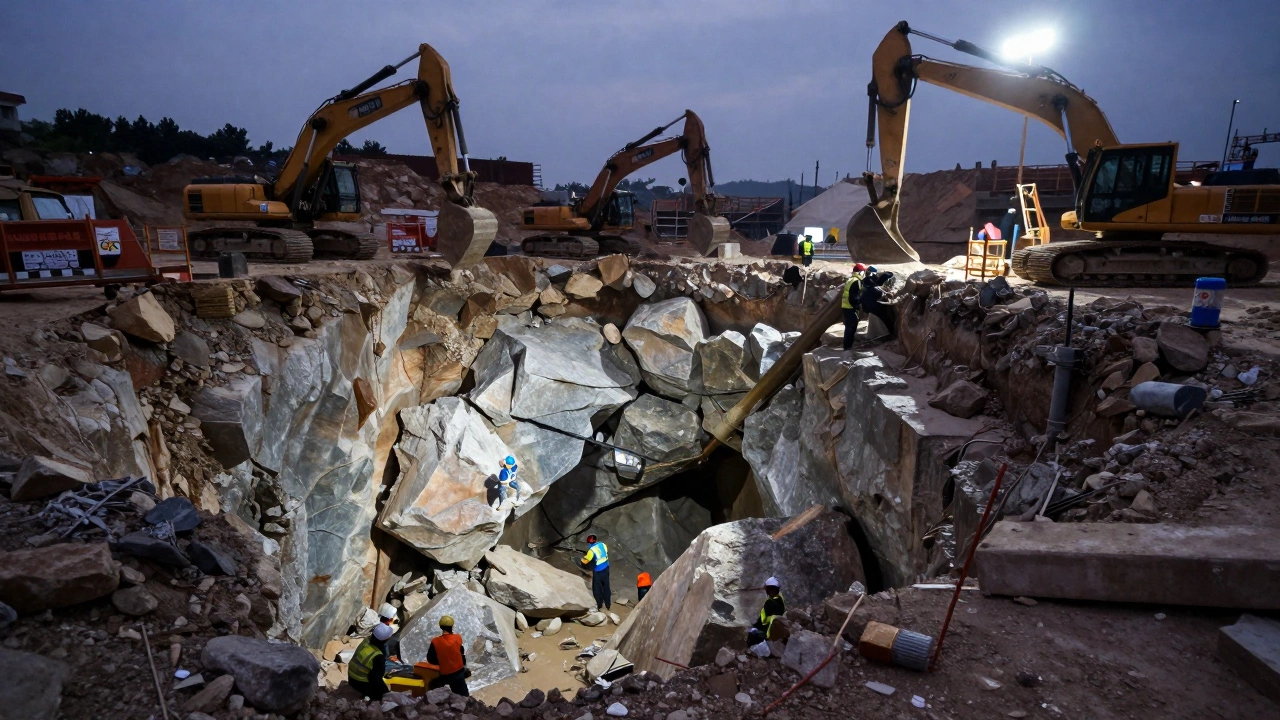
In civil work, the risks are usually hidden underground. You might start digging a tunnel only to find an unexpected layer of granite or an undocumented 19th-century pipe. Because civil projects are so massive, a small error in a slope calculation can lead to a catastrophic failure, like a landslide or a bridge collapse. This is why the safety margins (factors of safety) in civil engineering are often much higher than in commercial building.
Legal disputes also differ. Commercial disputes usually happen between a developer and a contractor over payment or quality of finish. Civil disputes often involve the government, environmental groups, or displaced landowners. The bureaucracy is heavier, and the legal hurdles are often tied to public law rather than simple private contracts.
Choosing the Right Approach
If you're a business owner planning a new site, you need to know when to call which expert. If you need a building designed to house your staff and customers, you want a commercial firm. But if you need to build a private access road to get your trucks into that building, or if you need to manage a massive runoff of rainwater from your parking lot, you need a civil contractor.
Many large-scale firms offer both services, but smaller boutique firms usually specialize. Hiring a pure commercial builder to handle a complex sewage diversion can be a disaster because they lack the heavy equipment and geotechnical knowledge. Conversely, a civil firm might struggle with the fine details of interior finishing, like installing high-end acoustic ceilings or custom cabinetry.
Can one person be both a civil and commercial contractor?
Yes, but it's rare for a small business to do both well. Large general contractors often have different divisions for "Vertical Construction" (commercial) and "Horizontal Construction" (civil). A single individual might have the licensing for both, but they usually lean toward one specialty because the equipment and crew skillsets are so different.
Which one is more expensive?
It depends on the scale, but civil projects are often more expensive overall because they involve massive amounts of raw material (like tons of steel and concrete) and high-cost heavy machinery. However, commercial projects can have higher costs per square foot due to expensive interior finishes, specialized electrical systems, and architectural details.
Do civil projects require architects?
Generally, no. They require engineers. While a bridge might have an architectural element for beauty, the primary design is handled by structural and civil engineers. In commercial work, the architect is the lead visionary; in civil work, the engineer is the lead.
Is residential construction considered commercial or civil?
Residential construction is its own category, but it is much closer to commercial construction because it focuses on buildings and habitable spaces. However, the roads and sewers that lead to a residential neighborhood are examples of civil construction.
What is "Horizontal Construction"?
Horizontal construction is essentially another name for civil construction. It refers to projects that are built across the land rather than up into the air, such as roads, railways, pipelines, and airports.
Next Steps and Troubleshooting
If you're starting a project and aren't sure who to hire, start by mapping out your needs. Do you need a structure (commercial) or a system (civil)? If your project involves both-like a new warehouse on a raw piece of land-your best bet is to hire a General Contractor who has a proven track record in "site development." This ensures the civil work (grading, utilities, paving) is coordinated perfectly with the commercial work (foundation, framing, interiors).
If you've already hired a commercial builder and find they are struggling with the drainage or roadwork, don't be afraid to bring in a civil subcontractor. It's a common mistake to assume a builder can "just figure out" the dirt work, but failing to handle the civil side correctly can lead to foundation cracks or flooding that will cost ten times more to fix after the building is finished.
Author
Damon Blackwood
I'm a seasoned consultant in the services industry, focusing primarily on project management and operational efficiency. I have a passion for writing about construction trends, exploring innovative techniques, and the impact of technology on traditional building practices. My work involves collaborating with construction firms to optimize their operations, ensuring they meet the industry's evolving demands. Through my writing, I aim to educate and inspire professionals in the construction field, sharing valuable insights and practical advice to enhance their projects.