
Architectural Brief Builder
Use this tool to draft your project requirements. Focus on "The Why" and "The Requirement" rather than the final solution to give your architect professional creative freedom.
Your brief is currently empty. Start adding requirements to build your project roadmap!
Key Takeaways for Your Project Brief
- A brief is a living document, not a one-time form.
- Specificity prevents expensive redesigns and delays.
- Budget transparency helps architects choose the right materials and layouts.
- Including "lifestyle" needs is just as important as counting the number of bedrooms.
What actually goes into an architectural brief?
Writing a brief isn't about providing a final solution-that is what you pay the architect for. Instead, it's about defining the problem. If you tell an architect, "I want a kitchen with an island," you've given a solution. If you say, "I want a space where four people can prepare breakfast together without bumping into each other," you've given a requirement. The latter allows the professional to use their expertise to find the best possible layout. First, start with the Project Overview. This is the big picture. Are you building a family home from scratch, converting an old warehouse into a studio, or adding a second story to a colonial villa? Be clear about the primary purpose of the building. If it's a commercial project, define the target user. For example, a retail store needs a very different flow and entrance strategy than a medical clinic. Next, move into Spatial Requirements. This is where you list the "must-haves" and "nice-to-haves." Don't just list rooms; describe how they interact. Do you want the laundry room tucked away in the garage, or do you need it adjacent to the primary bedroom for convenience? Do you need a home office that is completely isolated from the living area for noise control during Zoom calls? Being specific here prevents the architect from guessing and keeps the floor plan functional.The financial and legal boundaries
Money is the most critical constraint in any build. A common mistake is giving a "dream budget" rather than a realistic one. You need to specify if your budget includes just the construction costs or if it also covers land purchase, landscaping, council fees, and interior furnishing. In New Zealand, for instance, unexpected ground conditions or strict seismic requirements can eat into a budget quickly. If you tell your architect you have $500,000 but forget to account for a $50,000 retaining wall, the entire design may become unfeasible. Then there are the Site Constraints. The architect will do their own analysis, but your input is vital. Which way does the wind blow in winter? Where does the sun hit the yard at 4 PM in December? Are there specific trees you refuse to cut down? Mentioning these details early ensures the building is oriented for maximum energy efficiency and preserves the parts of the land you actually love.| Category | Vague (Ineffective) | Specific (Effective) |
|---|---|---|
| Room Needs | "I want a big living room." | "Living area for 8 people, must accommodate a 3-meter sofa and a fireplace." |
| Aesthetics | "Something modern." | "Industrial style with exposed steel beams, polished concrete floors, and large black-framed windows." |
| Budget | "Around $400k." | "Hard cap of $420k for construction, excluding VAT and landscaping." |
Defining your aesthetic and lifestyle
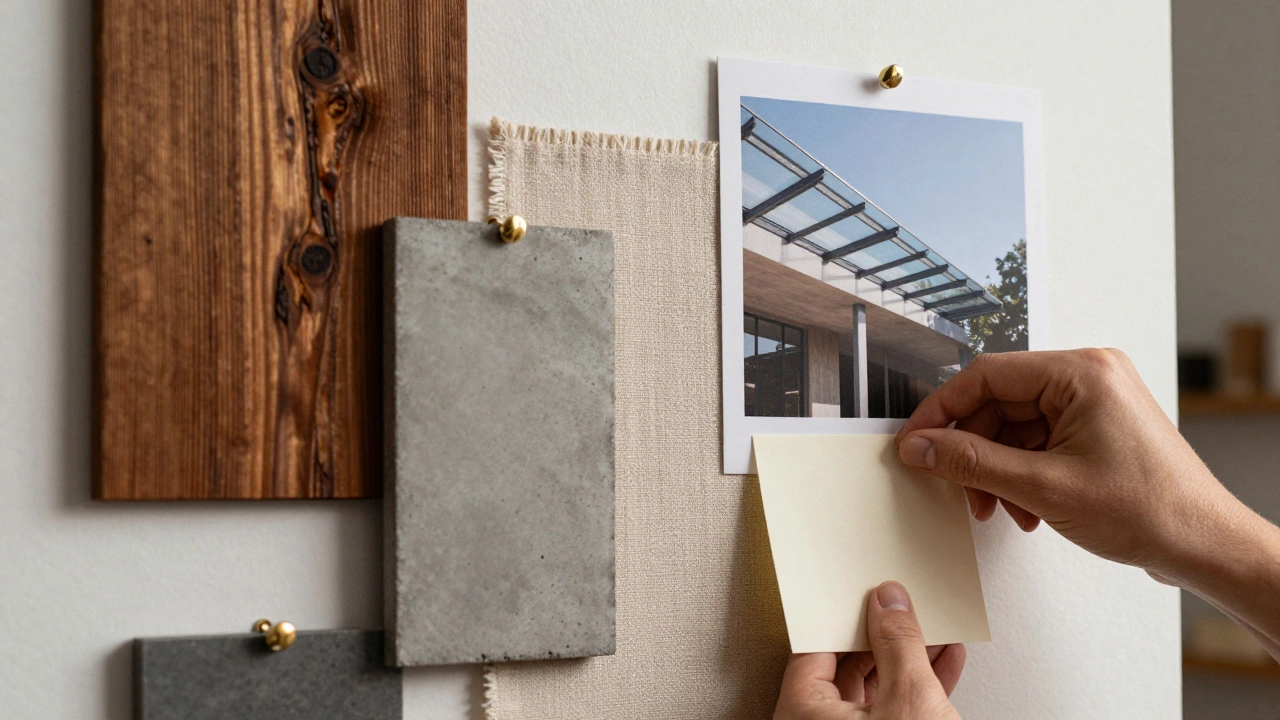
Style is subjective. "Modern" to one person is a glass cube; to another, it's a Scandinavian cottage. To avoid a game of telephone, use visual references. Create a mood board on Pinterest or gather magazine clippings. Don't just show the architect a picture of a house and say "I want this." Instead, explain *what* you like about it. Is it the way the roof overhangs? The texture of the charred timber cladding? The seamless transition from the indoor lounge to the outdoor deck? Consider the User Journey. How will you actually move through the space? If you often come home with muddy boots or wet dogs, a dedicated mudroom entrance is a lifestyle requirement, not just a luxury. If you enjoy hosting dinner parties, the relationship between the kitchen and the dining area is paramount. Describe your daily routines-from the moment you wake up until you go to bed-and the architect can design a home that supports those habits rather than fighting them. Sustainability is no longer an optional add-on; it is a core part of modern architectural services. Specify your goals here. Are you aiming for a Passive House standard? Do you want a rainwater harvesting system or a specific type of high-thermal-mass flooring? If you want the house to be "off-grid," that requires significantly different technical planning than if you just want a few solar panels for the water heater.The process: From brief to blueprints
Once the brief is written, it doesn't just sit in a drawer. It becomes the benchmark for the Concept Design phase. The architect will produce initial sketches and 3D models. Your job at this stage is to compare these designs against your brief. Ask yourself: "Does this layout actually solve the problem of the four people cooking breakfast?" or "Is this design still within the budget I specified?" If the design deviates from the brief, it's usually for a reason-perhaps a zoning law or a structural limitation. A good architect will explain *why* a certain requirement couldn't be met and suggest a viable alternative. This iterative process-Brief $ ightarrow$ Design $ ightarrow$ Feedback $ ightarrow$ Refinement-is what ensures the final building is a success. Be aware of Scope Creep. This happens when the brief starts expanding mid-project. You might decide you suddenly want a sauna in the basement or an extra balcony. Every addition to the brief after the design is finalized usually results in higher fees and potential delays. If you're unsure about a feature, mark it as "Optional/Phase 2" in the initial brief so the architect can plan the structure to accommodate it later without needing to rebuild the foundations.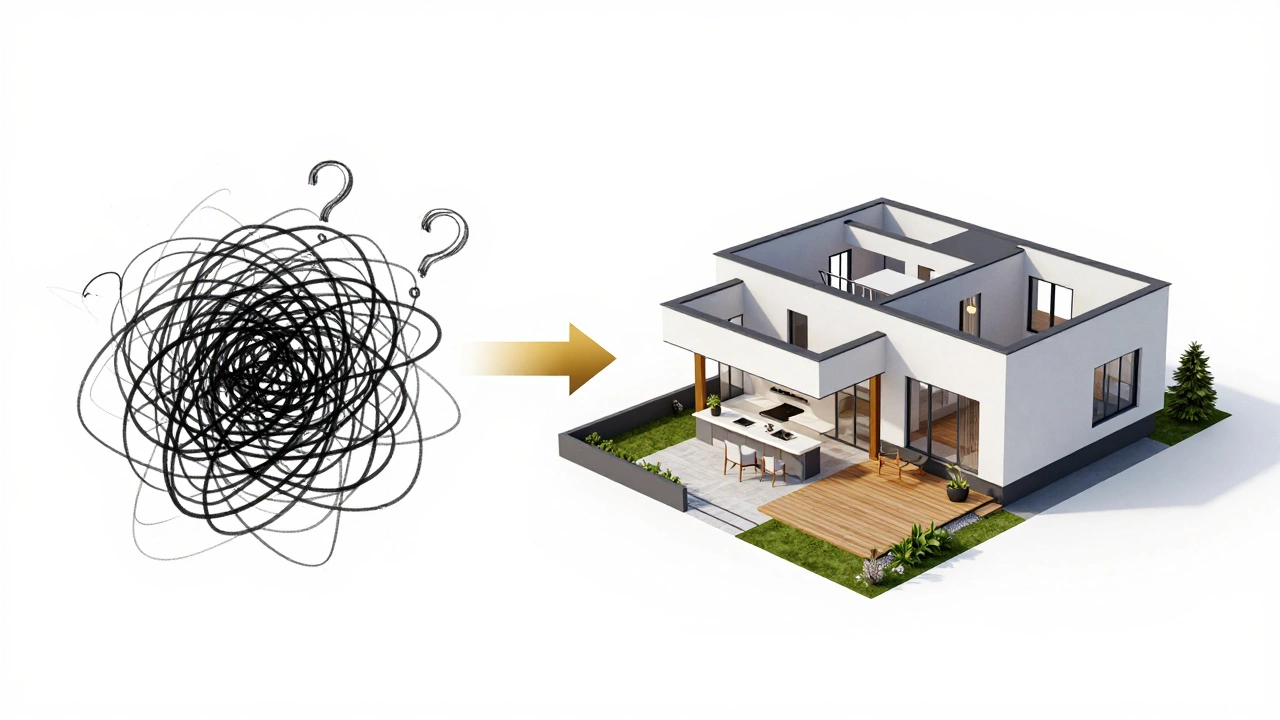
Common pitfalls to avoid
One of the biggest mistakes is being too restrictive. If you tell an architect exactly where every wall must go, you aren't hiring an architect; you're hiring a draftsman. You are paying for their ability to solve problems you didn't even know you had. Give them the "what" (the requirements) and the "why" (the goals), but let them figure out the "how" (the design). Another trap is ignoring the Regulatory Environment. Depending on your location, there are strict rules regarding building height, boundary setbacks, and heritage protections. While the architect handles the technical side, your brief should acknowledge any known restrictions. If your property is in a protected historical zone, your desire for a massive glass extension might be a non-starter. Acknowledging this early saves everyone from designing a beautiful building that the local council will simply refuse to approve.Do I have to pay an architect to help me write the brief?
Usually, the brief is something you prepare before or during the initial consultation. While some architects offer a "briefing session" as a paid service to help you refine your thoughts, many will work with your initial draft as part of the early project stages. The goal is to ensure a shared understanding before the heavy design work begins.
How long should an architectural brief be?
There is no set length. For a small home renovation, a two-page document with a few images might be enough. For a commercial development, it could be a 20-page comprehensive manual. The value is in the clarity and detail, not the word count.
What happens if I want to change the brief halfway through?
Changing the brief is possible, but it often leads to "variation fees." If the design has already progressed to the technical drawing stage, a major change (like adding a room) will require the architect to redo a significant portion of the work. This will increase both the professional fees and the overall construction cost.
Should I include my interior design preferences in the brief?
Yes, but focus on the broad strokes. Mention preferred materials (e.g., "natural stone" vs "synthetic tiles") and the overall vibe. You don't need to pick the exact curtain color, but knowing that you prefer a minimal, airy feel over a cozy, dark aesthetic helps the architect determine window sizes and ceiling heights.
Is a mood board part of the brief?
Absolutely. Visuals are often more effective than words when describing style. A mood board helps the architect understand the "language" of the project. Just remember to specify what exactly you like in the images so the architect doesn't misinterpret a specific detail.
Author
Damon Blackwood
I'm a seasoned consultant in the services industry, focusing primarily on project management and operational efficiency. I have a passion for writing about construction trends, exploring innovative techniques, and the impact of technology on traditional building practices. My work involves collaborating with construction firms to optimize their operations, ensuring they meet the industry's evolving demands. Through my writing, I aim to educate and inspire professionals in the construction field, sharing valuable insights and practical advice to enhance their projects.