Commercial Building Construction Material Selector
Select Building Characteristics
Answer a few quick questions to determine the most appropriate construction system for your commercial project.
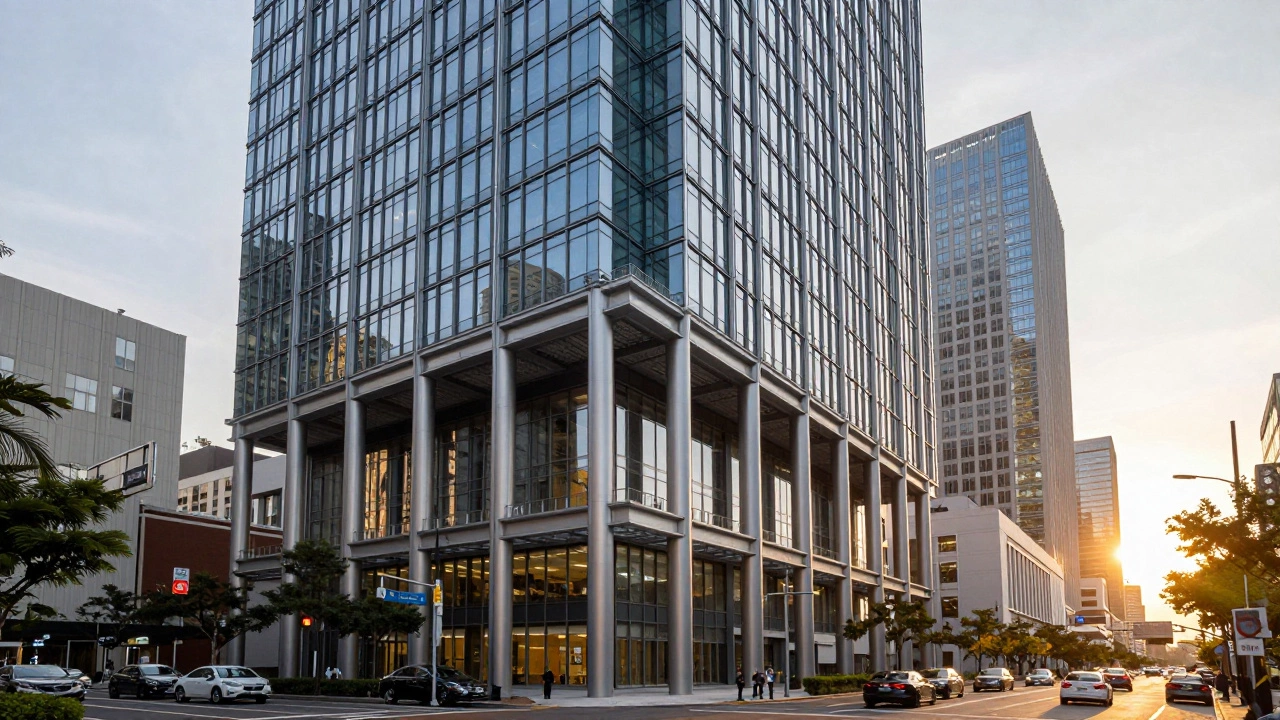
When you walk past a downtown office tower, a shopping mall, or a warehouse district, have you ever wondered what’s actually holding it all up? It’s not wood. It’s not brick. And it’s definitely not the same stuff used to build houses. Most commercial buildings today are built using one of two systems: steel frame construction or concrete construction. These aren’t just popular choices-they’re the backbone of nearly every non-residential structure you see. Why? Because commercial buildings don’t just need to look good. They need to hold heavy loads, span wide open spaces, resist fire, last decades, and adapt to changing uses-all while staying within budget. That’s why builders have moved far beyond traditional wood framing. Let’s break down what you’re really seeing when you look at a modern commercial building.
Steel Frame Construction: The Go-To for Tall and Wide
If you’ve ever stood inside a big-box store or looked up at a 10-story office building, you’ve seen steel frame construction in action. This method uses a skeleton of steel beams and columns to support the entire structure. Think of it like an exoskeleton. The walls, windows, and roof aren’t carrying the weight-they’re just filling in the gaps. Steel is strong, lightweight for its strength, and can be fabricated off-site with extreme precision. That means faster construction, fewer delays, and less waste. A typical commercial steel frame can span 30 to 60 feet without needing internal columns. That’s huge for retail spaces, warehouses, or open-plan offices where you don’t want to bump into support beams. It’s also fire-resistant. Steel doesn’t burn, and when it’s properly insulated with fireproofing materials, it can hold up for over two hours under extreme heat. That’s a major reason why building codes require it for structures over a certain height. Steel frame construction dominates in urban areas where space is tight and vertical growth is key. In cities like Auckland, Sydney, or even Wellington, nearly every new office tower or mixed-use building built since the 1980s uses this system.Concrete Construction: The Heavyweight Champion
While steel handles height and openness, concrete handles mass and endurance. Most industrial facilities, hospitals, parking garages, and large retail centers rely on reinforced concrete. This isn’t just poured slabs-it’s a system of steel rebar embedded in high-strength concrete, forming walls, columns, floors, and even foundations all in one go. Concrete has a few big advantages. It’s fireproof. It resists wind and seismic forces better than almost any other material. It’s also incredibly durable. A well-built concrete structure can last 75 to 100 years with minimal maintenance. That’s why you’ll see it in places where longevity matters: hospitals, data centers, and government buildings. It’s also great for thermal mass. Thick concrete walls absorb heat during the day and release it slowly at night. That reduces heating and cooling costs over time. In places like New Zealand, where energy efficiency is becoming a regulatory requirement, this isn’t just a nice feature-it’s a necessity. Concrete construction is often used in low- to mid-rise buildings where you don’t need the long spans steel offers. Think strip malls, schools, or apartment complexes above retail spaces.Why Not Wood? Or Brick?
You might be thinking: “But houses are made of wood. Why not commercial buildings?” The answer is scale and safety. Wood framing works for homes because they’re small, low-density, and have limited occupancy. A 2,000-square-foot house with four people inside? No problem. But a 50,000-square-foot warehouse with 200 workers and hundreds of tons of inventory? That’s a different story. Wood can’t handle the load. It’s flammable. It’s prone to rot and pests. And building codes in most countries restrict wood construction in commercial buildings to just three stories or less. Even then, it requires special fireproofing and sprinkler systems. Brick? It’s beautiful, but it’s a cladding material-not a structural one. Brick walls don’t carry loads in modern commercial buildings. They’re just the outer skin. The real structure behind it? Steel or concrete.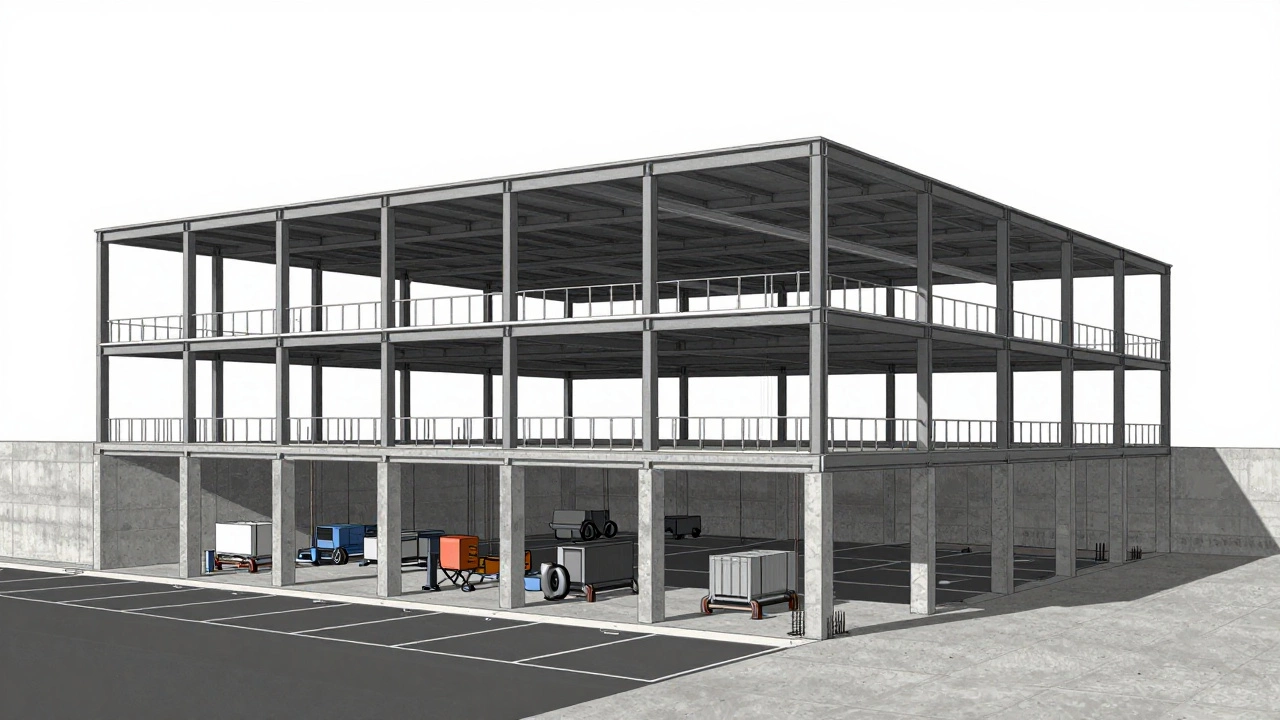
Hybrid Systems Are the New Normal
The truth is, most large commercial buildings today aren’t just steel or concrete. They’re hybrids. A typical project might use a steel frame for the upper floors to maximize open space, while the lower levels-where heavy equipment, loading docks, or parking are located-are built with reinforced concrete for strength and vibration control. The foundation? Always concrete. The roof? Often steel trusses with a waterproof membrane. This blending isn’t random. It’s smart engineering. You use the right material for the right job. Steel for speed and span. Concrete for stability and mass. Together, they cover every need.What’s Driving the Choice Today?
It’s not just tradition. It’s regulation, cost, and time. Building codes in New Zealand, the U.S., and the EU all require commercial buildings to meet strict fire safety, wind load, and seismic standards. Steel and concrete are the only materials that consistently pass these tests without expensive add-ons. Cost-wise, steel is often cheaper per square foot for tall buildings because it reduces foundation size and speeds up construction. Concrete wins for low-rise projects where labor and formwork are manageable. And time? Contractors know that every day a job runs late costs money. Steel components arrive pre-cut and ready to bolt. Concrete can be poured in place over several days. Both are faster than traditional masonry or timber framing.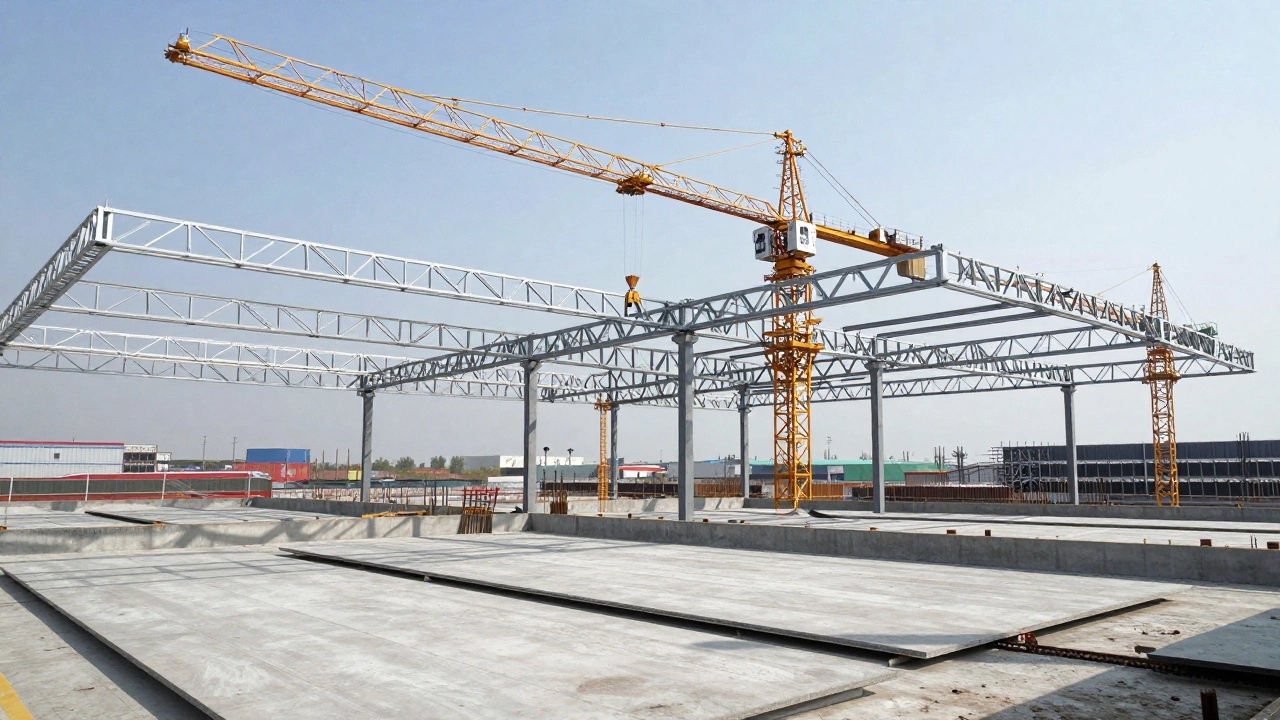
Real-World Examples
Look at the new Wellington Central Business District developments. The 12-story commercial tower on Lambton Quay? Steel frame. The new hospital wing in Hutt Valley? Reinforced concrete. The massive logistics hub in Palmerston North? Steel frame with concrete slab floors. Even older buildings that were retrofitted for modern use-like converted factories into co-working spaces-usually had their original brick exteriors preserved, but the internal structure replaced with steel or concrete to meet current safety codes.What Does This Mean for You?
If you’re a business owner looking to lease space, knowing what’s behind the walls matters. Steel frame buildings are easier to modify-walls can be moved, mezzanines added, or floors opened up. Concrete buildings are harder to change but offer better sound insulation and thermal stability. If you’re investing in property, understand that steel buildings have a longer lifespan with lower maintenance. Concrete buildings may cost more upfront but often have lower insurance premiums because of their fire resistance. And if you’re just curious? Next time you walk into a shopping center, look up. You’ll likely see exposed steel beams. That’s not an aesthetic choice-it’s the structure doing its job.Bottom Line
Most commercial buildings are built with steel or concrete. Steel for height, speed, and flexibility. Concrete for strength, durability, and fire safety. The choice depends on the building’s purpose, location, and budget-but one thing is certain: you won’t find many commercial structures built with wood or brick as the main support system anymore. The age of lightweight, high-performance materials is here-and it’s built to last.Why don’t commercial buildings use wood like houses do?
Wood framing is limited by building codes for commercial use. Most codes restrict wood construction to three stories or less because it can’t support large loads, is more flammable, and is vulnerable to moisture and pests. Commercial buildings need materials that can handle hundreds of people, heavy equipment, and strict fire safety standards-steel and concrete do that reliably.
Is steel or concrete cheaper for commercial buildings?
It depends on the project. Steel is often more cost-effective for taller or larger buildings because it reduces foundation size and speeds up construction. Concrete tends to be cheaper for low-rise buildings where formwork and labor are manageable. Long-term maintenance and insurance costs also favor concrete due to its durability and fire resistance.
Can you renovate a concrete commercial building easily?
Renovating a concrete building is harder than renovating a steel frame one. Concrete walls and floors are load-bearing, so changing layouts requires structural engineering, permits, and often demolition. Steel buildings allow for more flexible interior changes because the structure is separate from the walls.
Do steel and concrete buildings last the same amount of time?
Both can last 75 to 100 years if properly maintained. Steel may need periodic corrosion protection, especially in coastal areas, while concrete can develop cracks over time if not reinforced correctly. But neither material degrades like wood or brick under normal conditions. The longevity comes from the material’s inherent strength, not just maintenance.
Are there any new materials replacing steel and concrete in commercial construction?
Not yet. While innovations like cross-laminated timber (CLT) and fiber-reinforced polymers are being tested, they haven’t replaced steel or concrete in mainstream commercial use. CLT is gaining ground in low-rise projects under five stories, but it still requires special fireproofing and code approvals. Steel and concrete remain the industry standard because they’re proven, scalable, and meet every safety requirement worldwide.
Author
Damon Blackwood
I'm a seasoned consultant in the services industry, focusing primarily on project management and operational efficiency. I have a passion for writing about construction trends, exploring innovative techniques, and the impact of technology on traditional building practices. My work involves collaborating with construction firms to optimize their operations, ensuring they meet the industry's evolving demands. Through my writing, I aim to educate and inspire professionals in the construction field, sharing valuable insights and practical advice to enhance their projects.