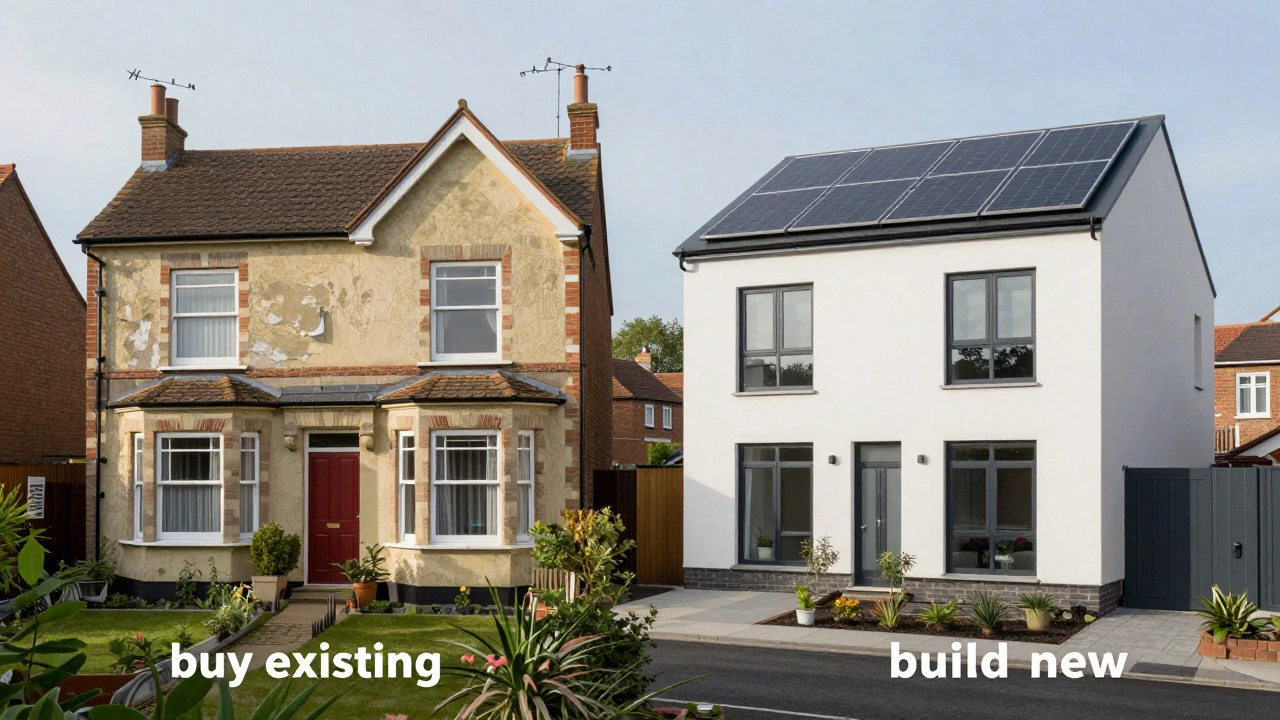
Build vs. Buy Cost Calculator
Option A: Buy Existing
Option B: Build New
Buying: vs Building:
Financial Winner (Upfront)
Difference in initial cash required
Long-Term Utility Savings
Over 30 years, the monthly utility difference adds up significantly.
Potential Savings:
Based on current monthly rates remaining constant.
| Expense Category | Buy Existing | Build New |
|---|---|---|
| Base Cost (Price/Hard Costs) | ||
| Land / Immediate Repairs | ||
| Soft Costs / Fees | ||
| Closing & Financing | ||
| Total Initial Investment |
It is May 2026, and the housing market feels like it is standing on a tightrope. Interest rates have settled into a higher normal compared to the pandemic era, yet they are nowhere near the crisis levels of previous decades. Construction materials have stabilized after years of volatility, but labor remains a bottleneck in many regions. You are looking at your savings, staring at listings for existing homes that feel overpriced or outdated, and wondering if you should just break ground on something new. The question isn't just about pride of ownership anymore; it is a cold, hard math problem. Is it cheaper to build than buy now?
The short answer? It depends entirely on where you live and how much sweat equity you are willing to invest. In some markets, buying an older home and renovating is still the financial winner. In others, building new offers better long-term value despite a higher upfront price tag. Let’s break down the real numbers, the hidden costs, and the strategic moves you need to make right now.
Quick Summary: Key Takeaways
- Land Costs Are the Wildcard: In high-demand areas, land prices often erase any savings from building yourself.
- Soft Costs Add Up Fast: Permits, architectural fees, and engineering reports can add 15-20% to your budget before you lay a single brick.
- Energy Efficiency Pays Off: New builds meet stricter 2026 energy codes, leading to significantly lower utility bills compared to older homes.
- Time Is Money: Building takes 6-12 months longer than buying, meaning you pay interest on a construction loan during that period.
- Customization Has a Price: Every custom feature adds cost; sticking to standard plans keeps the price competitive with existing homes.
The True Cost of Buying an Existing Home
When people say "buying is cheaper," they usually look at the listing price. If a three-bedroom house lists for $400,000, that seems straightforward. But that number is deceptive. Older homes come with immediate deferred maintenance. A roof installed in 2010 is due for replacement. The electrical panel might not handle modern EV chargers or smart home systems. HVAC systems degrade, and insulation standards from twenty years ago are laughably inefficient by today’s metrics.
You also face the "renovation trap." Many buyers purchase an older home intending to do small updates, only to find that opening one wall reveals mold, knob-and-tube wiring, or foundation cracks. These surprises can easily add $50,000 to $100,000 to the purchase price. Plus, there is the emotional tax. Living in a fixer-upper while you work on it is stressful. You are paying mortgage interest, property taxes, and insurance on a house that doesn’t fully function as a home yet.
However, buying existing does offer speed. You can move in within 30-60 days. In a volatile market, locking in a price today protects you from future inflation in both housing values and construction costs. If you find a well-maintained home in a good school district, the premium you pay for convenience is often worth it.
The Real Expense of Building New
Building a new home gives you control. You choose the layout, the materials, and the energy efficiency standards. But control comes with complexity. The cost to build in 2026 varies wildly by region. In rural areas, you might build for $150-$200 per square foot. In urban centers or high-cost states, that number jumps to $300-$500 per square foot or more.
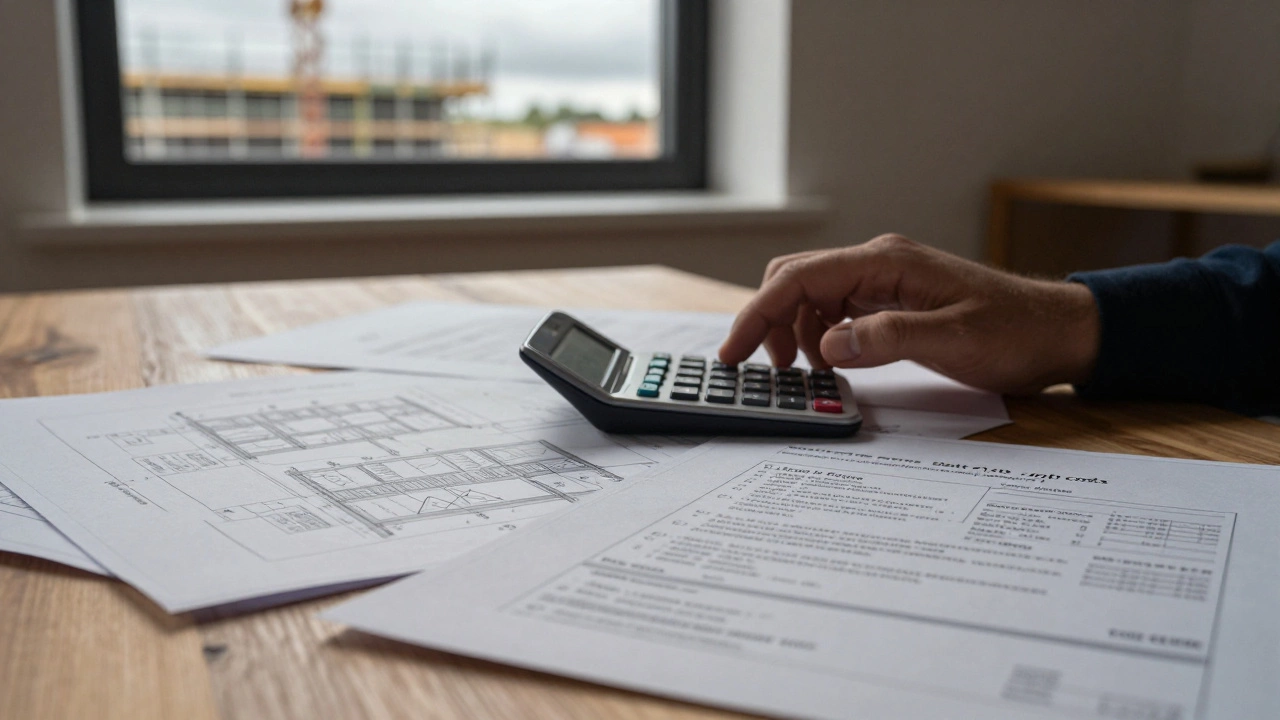
Let’s talk about soft costs. These are expenses that don’t go into the physical structure but are essential to getting permission to build. Architectural drawings, structural engineering, soil tests, surveying, and permit fees can total $20,000 to $50,000 depending on the project size and local bureaucracy. Many first-time builders underestimate this. They budget for bricks and mortar but forget the paperwork.
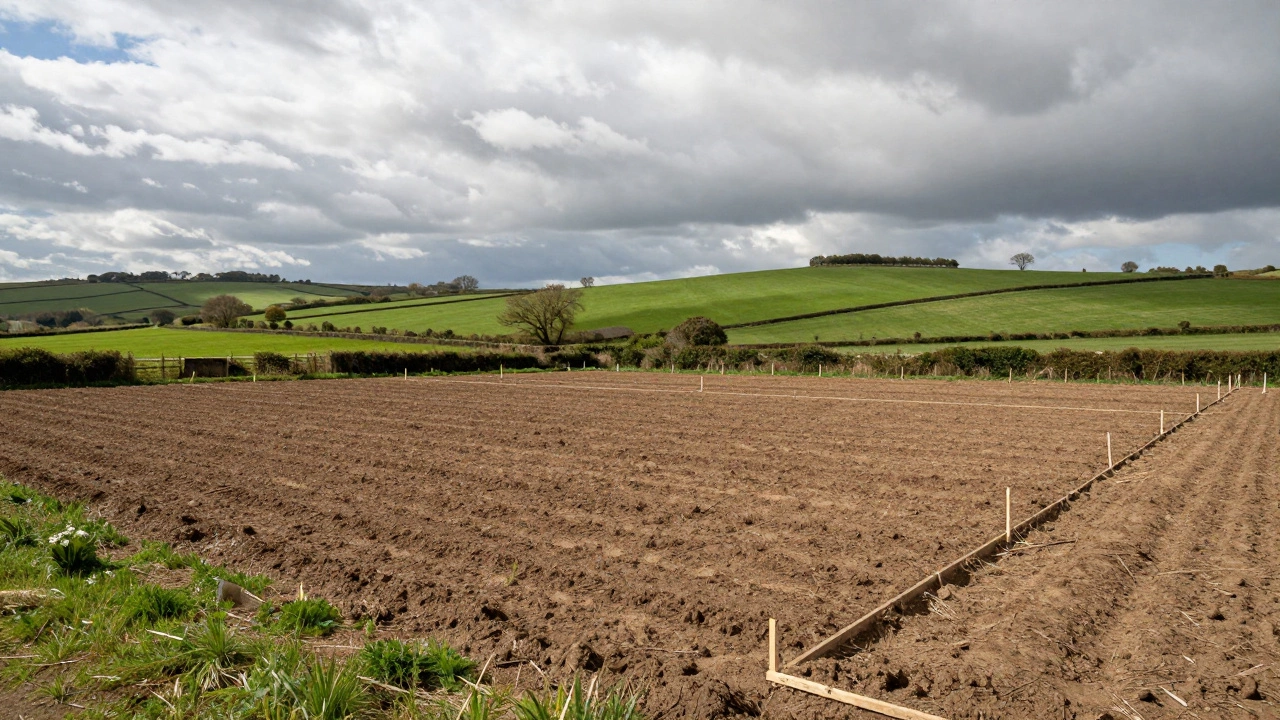
Then there is the land. If you don’t already own a lot, you need to buy one. In many desirable suburbs, land prices have risen faster than home prices. A vacant lot might cost $100,000 to $200,000 on its own. That capital is tied up in dirt that generates no income until you build. Plus, preparing the land-clearing trees, grading, installing septic or connecting to city sewer, bringing in power lines-can add another $30,000 to $80,000.
Construction loans are also different from traditional mortgages. They typically have higher interest rates because they are riskier for lenders. You pay interest only on the amount drawn during construction, but once the build is complete, you must refinance into a permanent mortgage. This means closing costs twice. In 2026, with rates hovering around 6-7%, that second round of closing costs is a significant hit to your wallet.
Comparing the Numbers: A Side-by-Side Look
To see which option wins, you need to compare apples to apples. Let’s assume a target home size of 2,000 square feet in a mid-tier market.
| Expense Category | Buying Existing Home | Building New Home |
|---|---|---|
| Purchase/Construction Price | $450,000 | $400,000 (hard costs) |
| Land Cost | Included | $100,000 (if not owned) |
| Soft Costs (Permits, Plans) | $0 | $30,000 |
| Closing Costs | $9,000 (2%) | $18,000 (Construction + Refi) |
| Immediate Repairs/Renovations | $20,000 (avg) | $0 |
| Total Initial Investment | $479,000 | $548,000 |
In this scenario, buying looks cheaper upfront. But wait. The existing home will likely have higher monthly utility bills. An older home might spend $300/month on electricity and gas, while a new build with heat pumps, solar-ready roofing, and superior insulation might spend $150/month. Over 30 years, that $150 difference adds up to tens of thousands of dollars in savings. Also, new homes come with warranties on major systems, reducing repair risks for the first decade.
Hidden Factors That Tilt the Scale
Beyond the spreadsheet, several qualitative factors matter. First is customization. If you need a specific layout-for example, a main-floor primary suite for aging parents or a dedicated home office with soundproofing-building allows you to get exactly what you need. Buying forces you to compromise or spend extra to remodel later, which is always more expensive than doing it right the first time.
Second is resale value. Homes built in the last five years tend to sell faster and closer to asking price because they require less immediate investment from the next buyer. However, if you over-improve your neighborhood-building a $700,000 house in a $400,000 neighborhood-you may not recoup that investment when you sell.
Third is stress and timeline. Building a home is a part-time job. You will make hundreds of decisions, deal with contractor delays, and manage inspections. If you are working full-time, this mental load can be exhausting. Buying an existing home, even one needing repairs, is generally less emotionally taxing.
For those interested in exploring other lifestyle choices while navigating these major life transitions, some people look into diverse directories for personal services, such as this resource, though it bears little resemblance to the rigorous planning required for home construction.
When Building Makes Financial Sense
Building is likely the smarter financial move if:
- You already own land: This removes the biggest variable. If you inherited a lot or bought land years ago, your effective construction cost drops dramatically.
- You live in a low-density area: In rural or suburban exurbs, land is cheap, and existing homes are scarce or old. Building new gives you modern amenities without a massive land premium.
- You plan to stay long-term: If you intend to live in the home for 10+ years, the energy savings and lack of maintenance costs will offset the higher initial investment.
- You have specialized needs: Accessibility features, extreme energy efficiency, or unique architectural preferences are easier and cheaper to build in than to retrofit.
When Buying Existing Wins
Buying is usually better if:
- You are in a high-cost urban market: Land prices in cities like San Francisco, New York, or London make building prohibitively expensive compared to buying a condo or townhouse.
- You need to move quickly: If you have a job relocation deadline or expiring lease, the 6-12 month build timeline is too risky.
- You want established neighborhoods: Mature communities have tree-lined streets, proven schools, and community cohesion that new developments take decades to develop.
- You prefer character: Hardwood floors, crown molding, and historical charm cannot be replicated cheaply. If aesthetics matter more than efficiency, buying older homes preserves that soul.
Strategic Tips for 2026 Builders
If you decide to build, here is how to keep costs down:
- Choose a Production Builder Plan: Custom designs are expensive. Using a modified plan from a production builder reduces architectural fees and speeds up permitting.
- Lock in Material Prices Early: Work with your builder to pre-order lumber, steel, and windows when prices are favorable. Volatility still exists in global supply chains.
- Simplify the Exterior: Complex rooflines and multiple facade materials drive up labor costs. Stick to simple rectangular shapes and standard siding.
- Invest in Envelope, Not Decor: Spend money on insulation, windows, and air sealing. These affect your comfort and bills forever. Save on countertops and cabinet finishes, which can be upgraded later.
- Get Multiple Bids: Never accept the first quote. Get at least three detailed bids from licensed contractors. Ensure they include identical scopes of work so you can compare accurately.
Final Thoughts: It’s About Your Priorities
There is no universal answer to whether it is cheaper to build or buy. In 2026, the gap has narrowed. Building is no longer the obvious bargain it was in the early 2000s, but it is far from a fool’s errand. For many, the peace of mind that comes with a brand-new home-warranties, efficiency, and modern design-justifies the premium. For others, the immediacy and character of an existing home win out.
Your decision should hinge on your timeline, your location, and your tolerance for project management stress. Do the math carefully, including soft costs and opportunity costs. Talk to local builders and real estate agents who understand your specific market. Then, choose the path that aligns with your life goals, not just your bank balance.
How long does it take to build a new home in 2026?
Typically 6 to 12 months from groundbreaking to move-in. This includes foundation work, framing, mechanical installations, and finishing. Delays due to weather, material shortages, or permit issues can extend this timeline by several months.
Are construction loans harder to get than mortgages?
Yes, slightly. Lenders view construction loans as higher risk because the collateral (the unfinished house) is incomplete. You typically need a larger down payment (20-25%) and a stronger credit score. However, many lenders offer "construction-to-permanent" loans that simplify the process by converting to a regular mortgage upon completion.
What are "soft costs" in home building?
Soft costs are non-construction expenses required to bring a project to fruition. This includes architectural fees, engineering reports, permit fees, impact fees, legal costs, and financing fees. They can account for 15-20% of your total project budget.
Is it better to build in a recession?
Historically, yes. During economic downturns, material prices often drop, and contractors may offer discounts to secure work. However, financing can be tighter. If you have stable income and access to credit, building during a slow market can yield significant savings.
Do new homes really save money on utilities?
Yes. Modern building codes require higher levels of insulation, tighter air sealing, and efficient HVAC systems. Compared to a home built in the 1990s, a 2026 new build can use 30-50% less energy for heating and cooling, leading to substantial monthly savings.
Author
Damon Blackwood
I'm a seasoned consultant in the services industry, focusing primarily on project management and operational efficiency. I have a passion for writing about construction trends, exploring innovative techniques, and the impact of technology on traditional building practices. My work involves collaborating with construction firms to optimize their operations, ensuring they meet the industry's evolving demands. Through my writing, I aim to educate and inspire professionals in the construction field, sharing valuable insights and practical advice to enhance their projects.