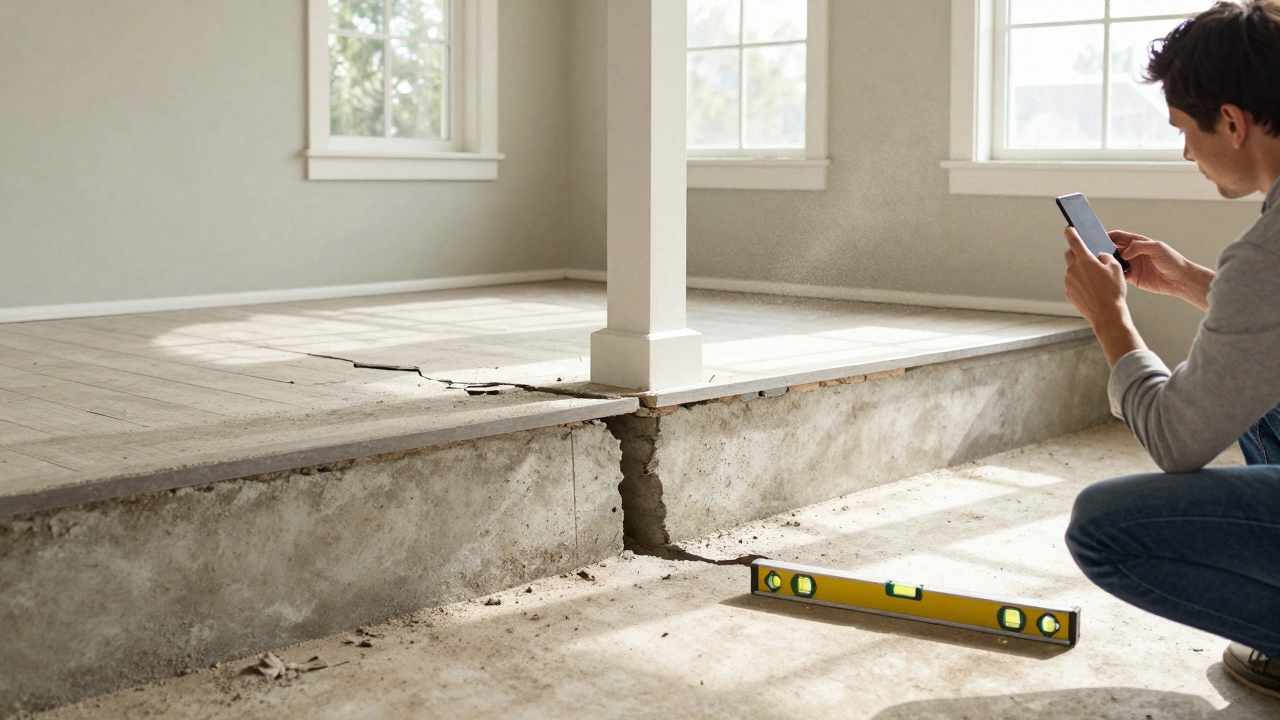
If your floors are sloping, doors won’t close, or cracks are spreading along your walls, your foundation might be sinking. This isn’t just an eyesore-it’s a structural emergency. A sinking foundation can lead to water leaks, mold, even total collapse if left unchecked. The good news? Most sinking foundations can be fixed, but only if you act fast and use the right method. There’s no one-size-fits-all fix. What works for a 1950s brick home in Chicago won’t work for a modern slab in Texas. Let’s cut through the noise and show you exactly how to fix a sinking foundation based on real-world conditions.
First, confirm it’s actually sinking
Not every crack or uneven floor means your foundation is sinking. Some settling is normal, especially in homes under 10 years old. But true sinking shows up in specific ways:
- Cracks wider than 1/4 inch that keep growing
- Doors and windows that stick or won’t latch
- Floors that slope more than 1 inch over 20 feet
- Cracks in brick or stucco extending from the foundation up to the roofline
- Gap between the foundation and siding or porch
Use a level on your floor to check for slope. If you see a consistent tilt in one direction, especially near the center of the house, that’s a red flag. Take photos of cracks over time-if they widen month after month, you’re dealing with active movement.
What causes a foundation to sink?
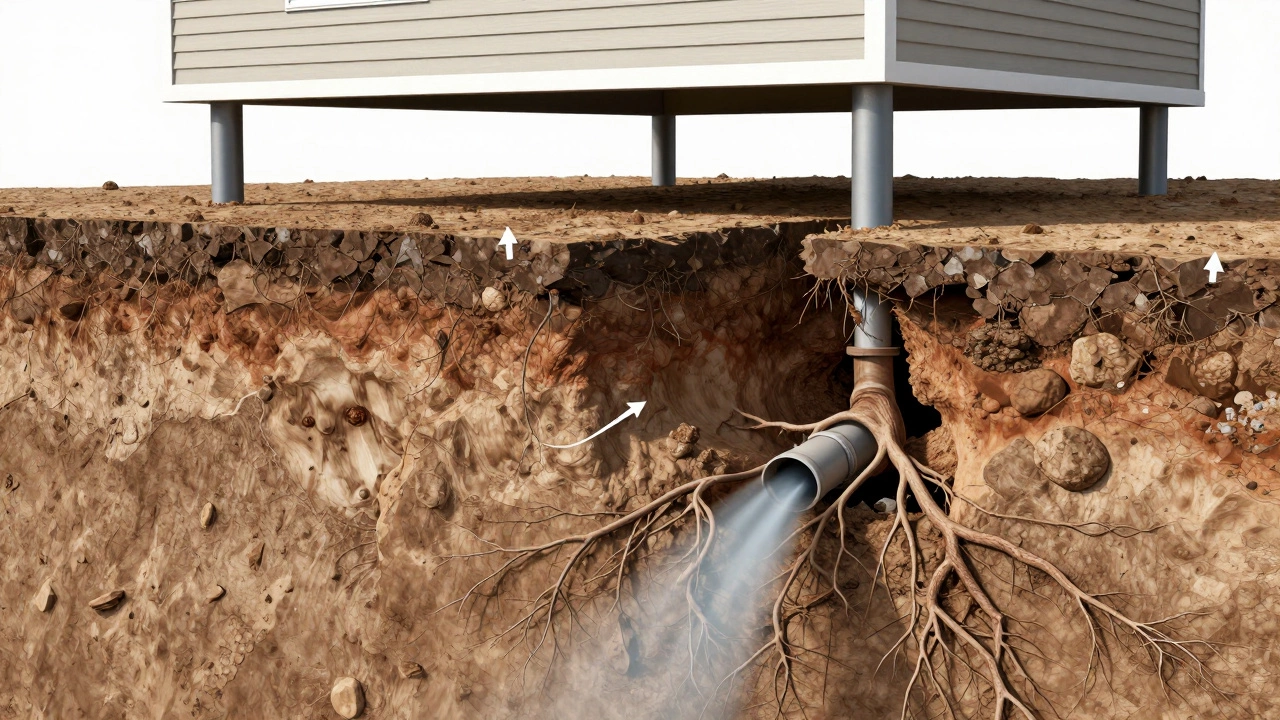
Foundations sink because the soil beneath them loses support. It’s not the foundation breaking-it’s the ground giving way. The most common causes:
- Expansive clay soil: This type of soil swells when wet and shrinks when dry. In places like Texas and Oklahoma, seasonal drying causes the ground to pull away from the foundation, creating voids.
- Poor drainage: Gutters that dump water near the house, downspouts that aren’t extended, or grading that slopes toward the building all flood the soil under the foundation.
- Tree roots: Large trees within 15 feet of the house can suck moisture out of the soil, causing it to dry and shrink.
- Old or weak construction: Homes built before 1980 often used shallow footings or undersized concrete. They weren’t designed for modern soil conditions.
- Water leaks: A burst pipe or leaking water heater under the slab can wash away soil or turn it to mud.
Without fixing the root cause, any repair will fail. You can’t just push the foundation back up if water is still pooling under it.
Types of foundation repair systems
There are three main ways professionals fix sinking foundations. Each has pros, cons, and ideal use cases.
| Method | How It Works | Best For | Cost Range | Longevity |
|---|---|---|---|---|
| Steel Piers | Steel tubes are driven deep into stable soil or bedrock, then hydraulic jacks lift the foundation onto them. | Clay soils, homes with severe settlement, older homes with shallow footings | $1,500-$3,500 per pier | Permanent (50+ years) |
| Concrete Push Piers | Steel tubes with concrete caps are driven down until they hit load-bearing soil. The foundation is then lifted. | Heavy brick homes, areas with hardpan soil | $1,200-$3,000 per pier | Permanent (50+ years) |
| Helical Piers | Screw-like steel shafts are twisted into the ground like a corkscrew, then used to lift or stabilize the foundation. | Sandy or loose soils, homes with limited access, crawl spaces | $1,000-$2,800 per pier | Permanent (50+ years) |
| Slabjacking / Mudjacking | Concrete slabs are lifted by pumping a cement slurry underneath. | Only for slab-on-grade homes with minor sinking, not structural settlement | $500-$1,500 per slab section | 5-15 years |
Steel and helical piers are the most reliable for long-term fixes. Mudjacking is cheaper but temporary-it doesn’t address the cause, just masks the symptom. If your foundation is sinking more than 2 inches, avoid mudjacking. It won’t hold.
Step-by-step repair process
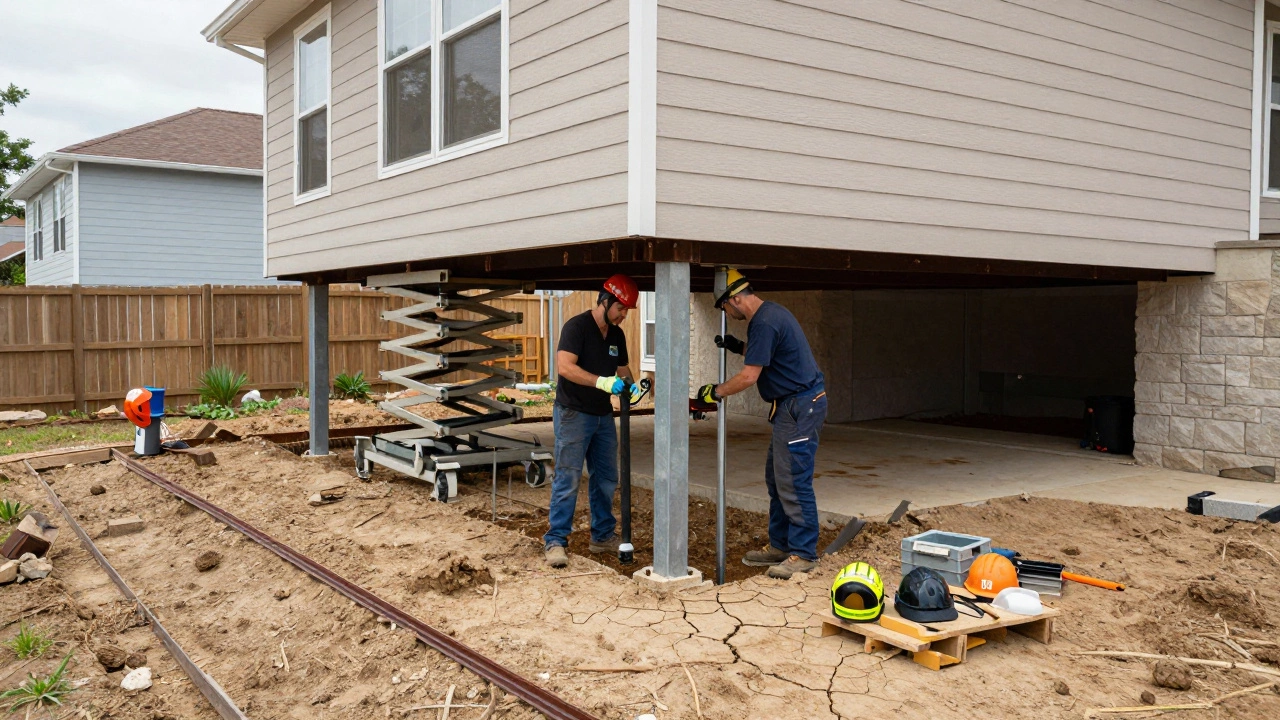
Here’s what actually happens when a professional fixes a sinking foundation:
- Inspection - A licensed structural engineer or foundation specialist inspects the house, measures settlement, and checks for water damage. They’ll use a laser level and moisture meter. Expect to pay $300-$600 for this.
- Soil test - In serious cases, they may dig test holes or use a soil probe to determine soil type and depth to stable ground.
- Plan selection - Based on findings, they recommend the right system. Don’t accept a one-size-fits-all quote.
- Preparation - They remove landscaping, cut through siding or trim, and sometimes remove interior drywall to access the foundation.
- Installation - Piers are driven or screwed into the ground, then hydraulic lifts slowly raise the foundation. This happens over days, not hours. Rushing this step causes more damage.
- Sealing and drainage - After lifting, they fix the root cause: installing French drains, regrading soil away from the house, and fixing gutters.
- Final inspection - A second engineer signs off that the home is stable and level.
Reputable companies will give you a 10- to 25-year transferable warranty. If they don’t, walk away.
What NOT to do
DIY fixes for sinking foundations almost always make things worse. Here’s what to avoid:
- Adding more concrete - Pouring a new slab over the old one doesn’t fix the cause. It just adds weight and hides the problem.
- Using foam injections - Polyurethane foam is marketed as a quick fix, but it doesn’t lift heavy foundations. It’s only good for minor slab lifting, not structural repair.
- Ignoring drainage - If you lift the house but leave water pooling under it, it’ll sink again in 2-3 years.
- Choosing the cheapest bid - Foundation repair isn’t a commodity. Lowball quotes often skip soil testing, use inferior materials, or skip drainage fixes.
How much does it cost?
Costs vary wildly based on location, home size, and method. Here’s what homeowners actually pay in 2026:
- Minor repair (1-3 piers) - $3,000 to $7,000
- Moderate repair (4-8 piers) - $8,000 to $15,000
- Major repair (9+ piers or full house) - $16,000 to $35,000
Slabjacking costs $1,000-$3,000, but only works if the sinking is under 1 inch and not structural. If your foundation is sinking more than that, you’re not saving money-you’re delaying the real fix.
Some states offer grants for low-income homeowners. Check with your local housing authority. In Texas, the Homeowner Assistance Fund covers up to $15,000 for foundation repair. California has similar programs.
How to choose a foundation repair company
Not all contractors are created equal. Here’s how to pick one you can trust:
- Ask for structural engineering certification-not just a contractor’s license.
- Verify they use ISF (International Foundation Society) or NAHB certified installers.
- Check BBB ratings and recent reviews. Look for patterns: “They fixed my leak first” vs. “They just pried up my house and left.”
- Get at least three written quotes. Compare piers, warranties, and drainage plans-not just price.
- Ask if they handle permits. Most repairs require structural permits.
- Never pay more than 30% upfront. Reputable companies work on progress payments.
Prevent future sinking
Once your foundation is fixed, protect it:
- Install gutter extensions that carry water at least 6 feet away from the house.
- Ensure ground slopes away from the foundation by at least 1 inch per foot for the first 10 feet.
- Keep large trees at least 20 feet from the house.
- Fix leaky pipes immediately-especially under slabs.
- Check foundation vents in crawl spaces. They should be open in summer, closed in winter to control moisture.
Check your foundation every six months. Look for new cracks, sticking doors, or changes in floor slope. Catching movement early saves thousands.
Can a sinking foundation be fixed without lifting the house?
No-not if the sinking is structural. You can’t stabilize a foundation that’s dropped 2 inches or more without lifting it back into place. Some companies claim they can “stabilize” without lifting, but that usually means installing piers to stop further movement. That’s not a fix-it’s damage control. If your home is already uneven, lifting is required.
How long does foundation repair take?
Most repairs take 3 to 7 days. Simple jobs with 3-5 piers can be done in 2 days. Complex jobs involving full-house lifting, drainage work, and interior repairs may take up to 2 weeks. The lifting itself usually takes 1-2 days. The rest of the time is for preparation, drainage fixes, and cleanup.
Will my insurance cover foundation repair?
Almost never. Standard homeowners insurance doesn’t cover gradual foundation settlement. It only covers sudden events like a burst pipe or earthquake. If your foundation sank because of poor drainage over years, it’s considered maintenance-not covered. Some insurers offer optional endorsements for foundation repair, but they’re expensive and rarely worth it. The best bet is to fix it yourself before it gets worse.
Can I sell my house with a sinking foundation?
You can, but you must disclose it. Buyers will require a structural inspection. If you haven’t repaired it, they’ll either walk away or demand a huge discount. Some investors buy homes with foundation issues, but they expect to pay 30-50% less. Repairing the foundation before listing increases your sale price by 15-25% and cuts selling time in half.
Is foundation repair worth the cost?
Yes-if you plan to stay in the home for more than 3 years. A sinking foundation reduces your home’s value, increases energy bills (from air leaks), and can lead to mold, plumbing damage, or even collapse. Repairing it protects your biggest investment. On average, foundation repair returns 100-150% of its cost when you sell. Even if you don’t sell, the peace of mind and safety are priceless.
Author
Damon Blackwood
I'm a seasoned consultant in the services industry, focusing primarily on project management and operational efficiency. I have a passion for writing about construction trends, exploring innovative techniques, and the impact of technology on traditional building practices. My work involves collaborating with construction firms to optimize their operations, ensuring they meet the industry's evolving demands. Through my writing, I aim to educate and inspire professionals in the construction field, sharing valuable insights and practical advice to enhance their projects.