
Roof Negotiation Savings Calculator
Select Your Negotiation Strategies
Check each strategy you plan to use when negotiating with your contractor:
Multiple Quotes
Low DifficultyGet 3-5 detailed quotes to establish market value and create competitive leverage
Off-Season Scheduling
Medium DifficultySchedule during late fall or early winter when contractors have idle crews
Bundle Services
Low DifficultyCombine roof with gutters, soffits, or skylights to reduce contractor overhead costs
Cash Payment
Low DifficultyOffer cash or cashier's check to eliminate processing fees and payment risk
Material Tier Downgrade
High DifficultyStep down one tier in materials while maintaining quality (e.g., architectural vs designer shingles)
Independent Financing
Low DifficultySecure your own financing through HELOC or personal loan to avoid contractor markup
Staring at a quote for a new roof can feel like looking at a blank check. The numbers are high, the options are confusing, and you know that if you don’t act now, water damage could make the problem much worse. But here is the truth: roofing quotes are not set in stone. Contractors build in margins for negotiation because they expect homeowners to ask questions and push back on price. You just need to know where the leverage lies.
Negotiating a roof isn't about being aggressive or trying to lowball a professional into losing money. It is about understanding the value you are buying and finding efficiencies in the process. When you approach the conversation with knowledge about roofing materials, such as asphalt shingles, metal panels, or synthetic composites, you shift from being a passive buyer to an informed partner. This guide will walk you through exactly how to lower that final number without sacrificing quality or warranty coverage.
Get Multiple Quotes to Establish Market Value
You cannot negotiate effectively if you do not know what the market rate actually is. One quote gives you no leverage; three to five quotes give you power. However, simply collecting numbers isn't enough. You need comparable data. If one contractor quotes $15,000 and another quotes $25,000, there is likely a difference in scope, material quality, or labor expertise. Your job is to identify those differences before you start talking price.
- Request detailed line items: Do not accept a single lump sum. Ask for a breakdown that separates material costs, labor hours, tear-off disposal fees, and permit costs.
- Standardize the scope: Ensure every contractor is quoting for the same type of asphalt shingles, the most common residential roofing material known for durability and affordability or metal panels. Comparing basic 3-tab shingles to architectural laminate shingles is comparing apples to oranges.
- Check for hidden fees: Some quotes include dumpster rentals and permits, while others list them as add-ons. Make sure you are comparing total out-of-pocket costs.
Once you have these detailed quotes, look for the outliers. If two contractors are close in price but significantly different from a third, investigate why. Is the cheaper one cutting corners on underlayment? Is the expensive one using premium synthetic underlayment, a weather-resistant barrier that protects the roof deck during installation? Understanding these details allows you to ask specific questions rather than generic ones.
Leverage Timing and Seasonality
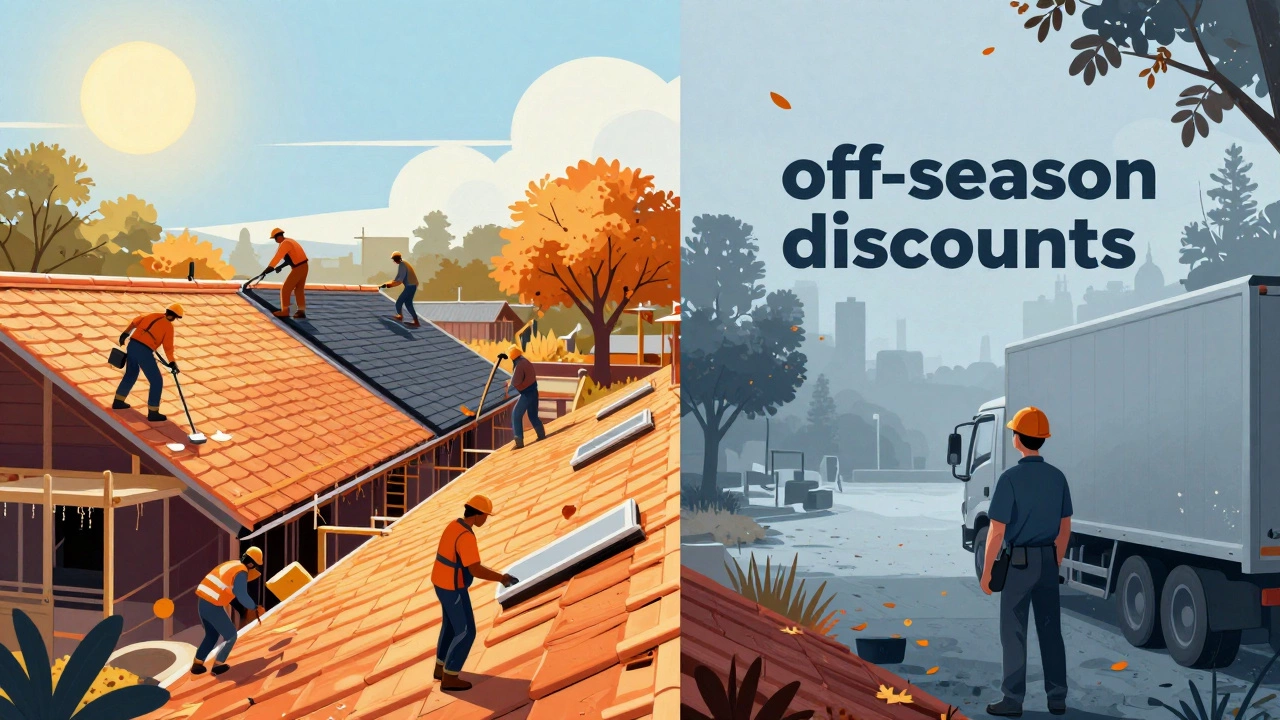
Timing is your strongest secret weapon when negotiating roofing costs. Roofing is a seasonal business with distinct peaks and valleys. In many regions, late fall and early winter are slow months due to cold temperatures and rain. Conversely, late spring and summer are peak seasons when contractors are booked weeks or even months in advance.
If you can wait, scheduling your project during the off-season can yield significant discounts. Contractors often have idle crews and want to keep their workers employed. They may offer reduced labor rates just to keep cash flow steady. For example, a contractor might drop their price by 10-15% in November compared to June. Even if you cannot delay indefinitely, asking for an "off-season discount" is a valid negotiation tactic. Frame it as a win-win: you get a lower price, and they get guaranteed work during a quiet period.
Additionally, consider the day of the week. While less impactful than seasonality, some contractors prefer starting projects on Mondays or Tuesdays to ensure a full week of work. Avoiding weekend starts can sometimes lead to minor concessions or more flexible scheduling, which has indirect value.
Bundle Services and Increase Scope
Contractors love efficiency. Every time they send a crew to a house, there are fixed costs: travel time, setup, and equipment mobilization. If you only need a roof, they pay those fixed costs once. If you need a roof, gutters, and skylights, they pay those fixed costs once but bill for multiple services. This creates margin room for negotiation.
Ask your roofer if they can bundle related services. Common bundles include:
- Gutter installation: Most roofing companies install or replace gutters simultaneously with the roof.
- Soffit and fascia repair: These components protect the roof edges and are often damaged during tear-off.
- Skylight installation: Adding natural light requires flashing and sealing, which fits naturally into the roofing workflow.
When you bundle, you reduce the contractor's administrative and logistical overhead. Use this to your advantage. Say something like, "I’m planning to replace my gutters and soffits at the same time. Can you give me a package price that reflects the efficiency of doing everything in one go?" This often unlocks a discount that wouldn't be available for a standalone roof job.
Choose Materials Strategically
The choice of materials dramatically impacts the bottom line. While metal roofing, a durable option lasting 40-70 years with excellent energy efficiency offers long-term savings, it has a higher upfront cost. Asphalt shingles, affordable and widely available roofing tiles remain the standard for budget-conscious homeowners. Within asphalt shingles, there are tiers: 3-tab (cheapest), architectural (mid-range), and designer/luxury (most expensive).
To negotiate price, consider stepping down one tier in materials while maintaining quality. For instance, if the quote includes luxury designer shingles, ask about switching to high-quality architectural shingles. The visual difference from the street is minimal, but the cost savings can be substantial. Alternatively, ask if the contractor has relationships with manufacturers for bulk pricing or leftover stock deals. Sometimes, contractors have pallets of shingles left over from other jobs that they are willing to sell at a discount to clear inventory.
Also, discuss the brand. Major brands like GAF, Owens Corning, and CertainTeed compete fiercely. Ask your contractor if they can offer a better deal by switching brands. They might have a current promotion with one manufacturer that makes it cheaper than another, even if the product performance is nearly identical.
Pay Cash or Secure Financing Early
Payment terms matter more than you think. Contractors factor in financing costs, credit card processing fees, and the risk of non-payment into their quotes. If you can pay a significant portion upfront or offer to pay in cash (or cashier’s check) upon completion, you remove financial friction for the contractor.
Offering a cash payment can sometimes shave 2-5% off the total price because the contractor avoids credit card transaction fees (typically 2-3%) and doesn't have to worry about chasing checks. However, always use secure methods like cashier’s checks for large transactions. Never hand over large amounts of cash without a receipt and contract.
If you need financing, try to secure it independently through a home equity loan or personal line of credit. Bringing your own financing plan to the table shows you are serious and capable. You can then ask the contractor to remove any markup they were planning to add for financing assistance. Be transparent: "I’ve already arranged my funding. Since I’m not using your financing partner, can we adjust the price accordingly?"

Review Warranty and Labor Guarantees
A lower price means nothing if the warranty is weak. Most roofing materials come with a manufacturer warranty (often 25-50 years), but this only covers defects in the shingles themselves. It does not cover poor installation. The contractor provides a separate workmanship warranty, typically ranging from 1 to 10 years.
When negotiating, don't just focus on the initial price. Ask about the length and coverage of the labor warranty. A contractor offering a 5-year labor warranty might be more confident in their work than one offering only 1 year. If you find a contractor with a strong reputation and a good warranty, you have less room to negotiate price because you are paying for peace of mind. Conversely, if warranties are similar across quotes, price becomes the primary differentiator.
Some manufacturers offer enhanced warranties if the installation is performed by a certified contractor. For example, GAF offers Golden Pledge warranties for certified installers. Ask your contractor if they are certified and if that certification adds value to your home resale or insurance premiums. Sometimes, the perceived value of a certified installer justifies a slightly higher price, reducing the need for aggressive negotiation.
| Strategy | Potential Savings | Difficulty | Best Time to Use |
|---|---|---|---|
| Multiple Quotes | 10-20% | Low | Before hiring |
| Off-Season Scheduling | 10-15% | Medium | Nov-Feb (varies by region) |
| Bundling Services | 5-10% | Low | During scope discussion |
| Cash Payment | 2-5% | Low | At signing/completion |
| Material Tier Downgrade | 15-30% | High | During material selection |
Build a Relationship, Not a Transaction
Finally, remember that you are dealing with people who rely on referrals. Being respectful, punctual, and clear in your communication goes a long way. Contractors are more likely to extend a favor or discount to a homeowner who is easy to work with. Show up for meetings on time, respond to emails quickly, and be clear about your budget constraints. If you explain that you are stretched thin financially but are committed to getting the job done right, many contractors will work with you to find a middle ground.
Avoid ultimatums or hostile tactics. Instead, frame your requests as collaborative problem-solving. "I really like your proposal, but I’m $2,000 over my budget. Is there anything we can adjust in the scope or materials to bring it closer to that number?" This opens a dialogue rather than closing it. Often, the contractor will suggest removing a non-essential upgrade or switching to a more cost-effective underlayment, saving you money while keeping the core integrity of the roof intact.
Is it rude to negotiate with a roofing contractor?
No, it is not rude. Contractors expect negotiation and build margins into their quotes specifically for this purpose. As long as you are respectful and reasonable, negotiating is a normal part of the business relationship. It shows you are engaged and value your investment.
What is the average discount for a new roof?
There is no fixed average, but savvy homeowners often save 10-20% through a combination of strategies like multiple quotes, timing, and bundling. Larger projects tend to have more room for negotiation than small repairs.
Should I hire the cheapest roofer?
Not necessarily. The lowest bid can sometimes indicate cut corners, such as using inferior materials, skipping necessary repairs to the roof deck, or lacking proper insurance. Always verify licenses, insurance, and reviews before choosing based solely on price.
Can I negotiate the warranty?
You can negotiate the terms of the labor warranty, such as extending its duration or clarifying what is covered. Manufacturer warranties are generally fixed, but certified installers may offer enhanced packages that provide better protection.
When is the best time of year to negotiate a roof?
Late fall and early winter are typically the best times, as demand drops in many regions. Contractors are more willing to offer discounts to fill their schedules during these slower months.
Author
Damon Blackwood
I'm a seasoned consultant in the services industry, focusing primarily on project management and operational efficiency. I have a passion for writing about construction trends, exploring innovative techniques, and the impact of technology on traditional building practices. My work involves collaborating with construction firms to optimize their operations, ensuring they meet the industry's evolving demands. Through my writing, I aim to educate and inspire professionals in the construction field, sharing valuable insights and practical advice to enhance their projects.