Commercial Construction Method Selector
Choose Your Project Parameters
Answer these questions to find the best construction method for your project
Recommended Construction Method
When you walk into a new office tower, a retail mall, or a warehouse with high ceilings and heavy-duty floors, you’re seeing the result of specific commercial construction methods. These aren’t just bigger versions of home builds. They’re complex, regulated, and tightly coordinated processes designed for speed, durability, and long-term value. Unlike residential projects, commercial construction has to handle high foot traffic, strict safety codes, zoning laws, and often operates around the clock to meet business deadlines.
Design-Build
Design-build is the most popular method for commercial projects today. It combines the design and construction phases under one contract with a single team. This cuts down on finger-pointing between architects and contractors, which used to cause delays and budget overruns. In a design-build setup, the same company handles the blueprints and the actual building. That means changes can be made faster - if the client wants to move a load-bearing wall, the structural engineer and the crew can adjust it in one meeting, not three.
Companies like Turner Construction and Mortenson use this method for big retail chains and hospital expansions. The result? Projects finish 33% faster on average, according to a 2024 study by the Design-Build Institute of America. It’s ideal for clients who want control without getting lost in paperwork.
Construction Management
Construction management is the go-to method when the owner wants maximum control over costs and timelines. Here, the owner hires a construction manager - not a general contractor - to oversee the entire project. The manager acts like a project coordinator, hiring separate subcontractors for electrical, plumbing, HVAC, and framing. The owner signs contracts directly with each one.
This method gives you more transparency. You see every invoice, negotiate each bid, and approve every change order. But it also means you’re managing more relationships. If the roof leaks and the HVAC system fails at the same time, you’re the one mediating between two different teams. It works best for large institutions like universities, government agencies, or hospitals that have in-house facilities teams.
Design-Bid-Build
Design-bid-build is the oldest and most traditional method. First, an architect designs the building. Then, the plans are put out to bid. Contractors submit proposals based on those fixed plans. The owner picks the lowest qualified bidder. This method is common in public sector projects because it’s seen as fair and transparent.
But here’s the catch: once the bid is accepted, any change - even a small one - can trigger delays and cost hikes. If the architect didn’t account for local soil conditions, the foundation team might need extra concrete. Now you’re waiting weeks for a change order to be approved. It’s predictable, but inflexible. Many private developers avoid this method unless they’re building something simple, like a single-story retail space with no complex systems.
Integrated Project Delivery
Integrated Project Delivery (IPD) is the most collaborative - and the most advanced - method. Everyone involved: owner, architect, contractor, engineers, and even key suppliers - signs a single contract and shares risk and reward. If the project comes in under budget, everyone gets a share. If it goes over, everyone absorbs part of the loss.
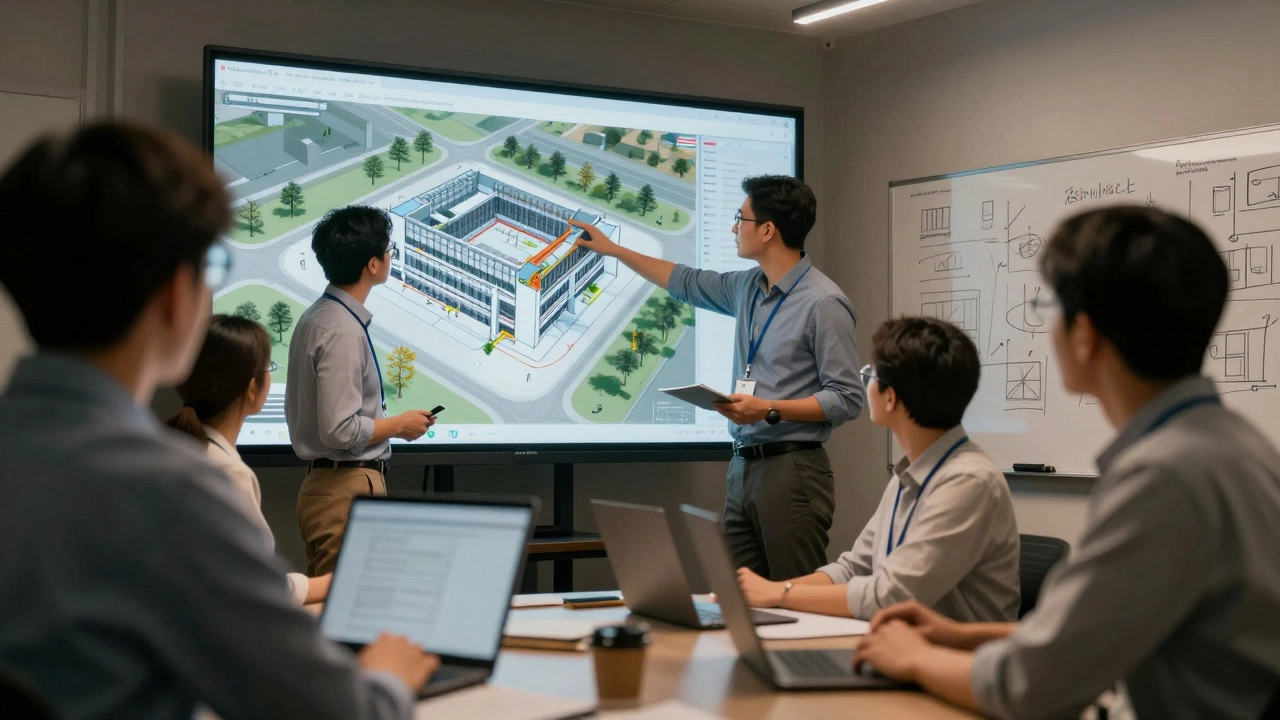
This method requires trust. Teams meet daily in a shared digital workspace. BIM (Building Information Modeling) software lets everyone see the same 3D model in real time. If the plumbing team moves a pipe, the electrical team sees it instantly. IPD is used for high-stakes projects like data centers, biotech labs, and major airport terminals. It’s not for small projects. You need a team of 10+ specialists and a budget over $10 million. But when it works, it reduces waste by up to 40% and cuts schedule time by 20%.
Modular and Prefabricated Construction
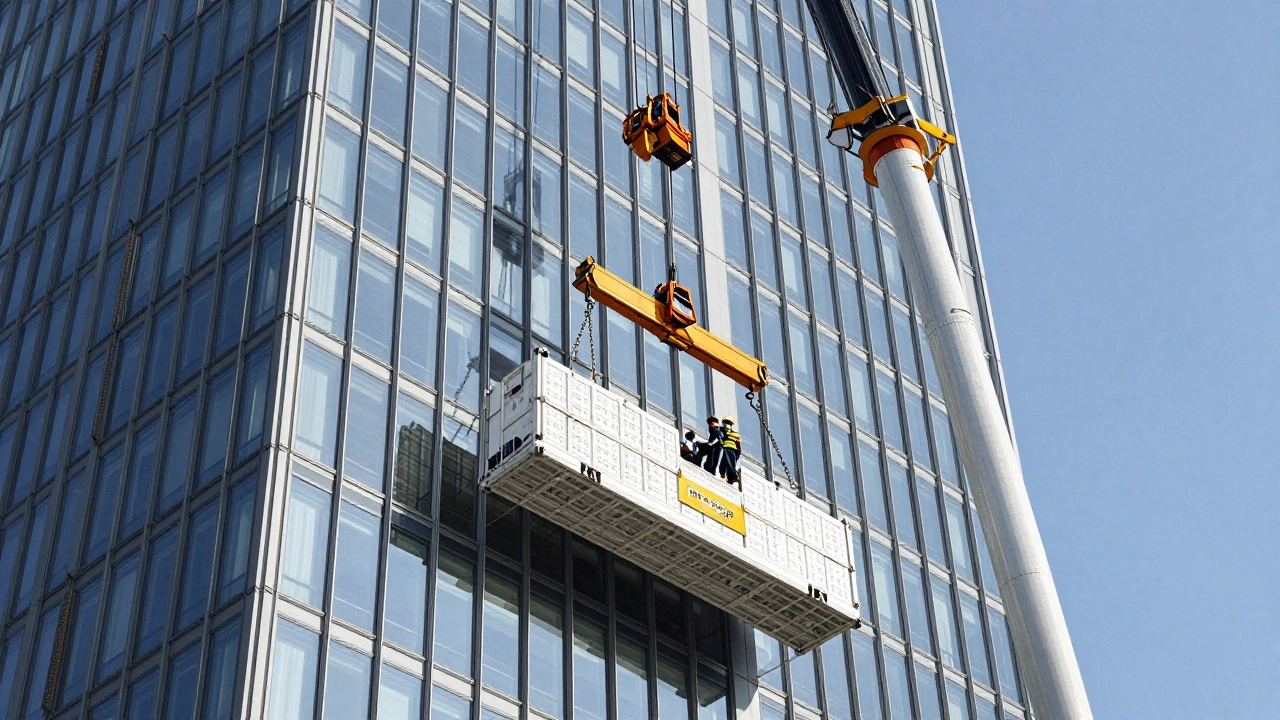
Modular construction is no longer just for cheap hotels. Today, companies like Katerra and Lendlease are building entire office towers with modules built off-site in factories. Walls, floors, even bathrooms are assembled in controlled environments, then shipped to the site and stacked like Lego blocks.
This method slashes construction time by 30-50%. Weather delays? Less of an issue. Labor shortages? You’re building indoors with trained technicians. It’s perfect for fast-turnaround projects like urgent medical clinics, retail stores, or student housing. The trade-off? Design flexibility is limited. You’re working within standard module sizes. But for chain restaurants or banks that need identical locations across cities, this is a game-changer.
Lean Construction
Lean construction isn’t a method you hire - it’s a mindset. It comes from manufacturing, where Toyota perfected eliminating waste. In construction, waste means waiting, rework, excess material, or moving workers around unnecessarily.
Lean teams use Last Planner System® to plan weekly tasks in detail. Instead of saying, “We’ll pour the slab next month,” they say, “On Tuesday at 9 a.m., we’ll pour 120 cubic yards of concrete with two pumps and three crews.” Every task is scheduled, tracked, and adjusted daily. It reduces material waste by up to 25% and improves safety by cutting down on rushed work.
Lean works best when combined with other methods - especially design-build or IPD. It’s not about doing more. It’s about doing only what adds value.
How to Choose the Right Method
There’s no single best method. The right one depends on your project’s size, timeline, budget, and how much control you want.
- Choose design-build if you want speed, simplicity, and one point of contact.
- Go with construction management if you’re experienced, have a team, and want full oversight.
- Use design-bid-build only if you’re bound by public bidding rules or building something simple.
- Try IPD for complex, high-value projects where collaboration saves money long-term.
- Use modular if you need identical units fast - think fast-food chains or urgent care centers.
- Apply lean principles to any method to reduce waste and improve efficiency.
Most successful commercial projects use a mix. A hospital might use design-build for the main wing, modular for patient rooms, and lean practices across the board. The key is matching the method to your goals - not just following what’s trendy.
Common Mistakes to Avoid
Many commercial projects fail not because of bad materials, but because of bad choices in delivery method.
- Don’t pick design-bid-build for a project with unclear requirements. Changes will cost you.
- Don’t assume modular means cheap. High-end modular offices can cost more than traditional builds - but they save time and labor.
- Don’t skip the pre-construction meeting. If you don’t align on goals, schedule, and communication style early, you’ll regret it later.
- Don’t ignore local regulations. In places like Wellington, commercial buildings must meet strict seismic codes. A method that works in Texas might not pass inspection here.
What’s Changing in 2026
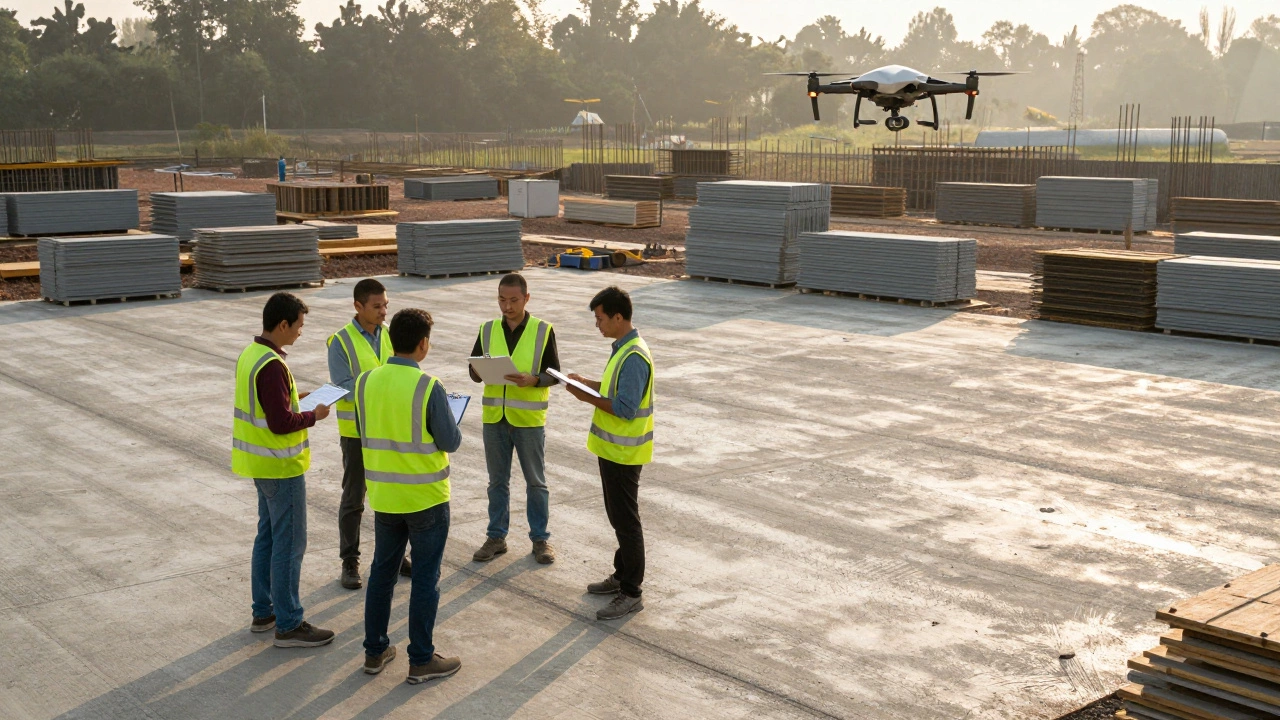
Technology is reshaping how commercial buildings are made. AI-driven scheduling tools now predict delays before they happen. Drones scan sites daily and compare progress to the BIM model. Robots lay bricks faster and more accurately than humans.
But the biggest shift? Clients are demanding sustainability as standard - not a bonus. Net-zero energy buildings, recycled steel, low-carbon concrete, and solar-integrated facades are now baseline expectations. The methods that survive will be the ones that adapt to these new requirements.
Whether you’re building a 10,000-square-foot clinic or a 50-story tower, the method you choose will determine your costs, timeline, and even your building’s long-term performance. Pick wisely - because in commercial construction, the way you build shapes what you get.
What’s the fastest way to build a commercial property?
Modular and prefabricated construction is the fastest method. Since components are built off-site in controlled environments, you can cut construction time by 30-50%. For example, a 20,000-square-foot retail center that would take 12 months traditionally can be completed in 6-7 months with modular techniques. This is ideal for urgent projects like medical clinics or chain restaurants.
Is design-build more expensive than traditional methods?
Not necessarily. Design-build often saves money by reducing change orders and delays. Since the design and construction teams work together from day one, they catch conflicts early - like a duct running through a beam - before it becomes a costly mistake. According to industry data, design-build projects have 6-10% lower cost overruns than design-bid-build projects.
Can small businesses use integrated project delivery (IPD)?
IPD is usually for large projects over $10 million because it requires deep collaboration and shared risk. But small businesses can adopt lean principles from IPD - like daily huddles, BIM coordination, and early supplier involvement - without signing a full IPD contract. These practices improve efficiency even on smaller builds.
Why do some commercial projects go over budget?
The biggest cause is unclear scope and late changes. In design-bid-build, if the owner changes the layout after the bid is awarded, contractors have to submit change orders - which take weeks to approve. This delays work and increases costs. Design-build and IPD reduce this risk by involving builders early in planning.
Are there legal differences between commercial and residential construction methods?
Yes. Commercial projects are subject to stricter building codes, fire safety regulations, accessibility standards (like ADA or NZS 4121), and zoning laws. For example, commercial buildings need wider exits, fire-rated walls, and commercial-grade HVAC systems. These requirements affect how you design and build - and which contractors you can hire. Always verify local codes before choosing a method.
How do I know if my project needs a construction manager?
You need a construction manager if you have an in-house team that can handle coordination, you want full control over subcontractor selection, and you’re comfortable managing multiple contracts. If you’re a business owner with no construction experience, design-build is safer. Construction management works best for institutions like schools, hospitals, or government agencies with dedicated facilities staff.
Author
Damon Blackwood
I'm a seasoned consultant in the services industry, focusing primarily on project management and operational efficiency. I have a passion for writing about construction trends, exploring innovative techniques, and the impact of technology on traditional building practices. My work involves collaborating with construction firms to optimize their operations, ensuring they meet the industry's evolving demands. Through my writing, I aim to educate and inspire professionals in the construction field, sharing valuable insights and practical advice to enhance their projects.