Contractor vs Construction Company Finder
Find the Right Partner for Your Project
Answer these questions to get a recommendation based on your specific needs. This tool helps you avoid hidden costs, delays, and unaccountable work.
When you’re planning a home renovation or a new build, you’ll hear two terms thrown around: contractor and construction company. People use them like they mean the same thing. But they don’t. And picking the wrong one can cost you time, money, and stress.
Who is a contractor?
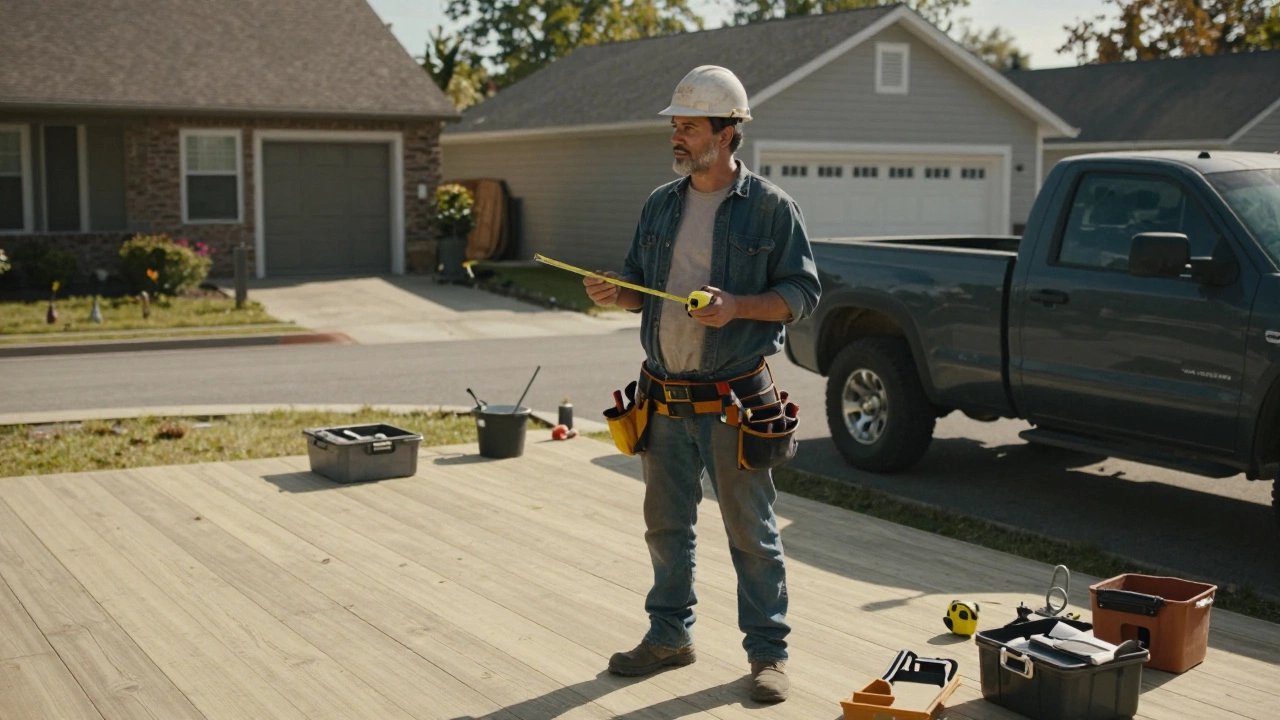
A contractor is usually an individual or a small team that takes on specific building jobs. Think of them as skilled tradespeople who run their own show. They might specialize in one thing-like roofing, plumbing, or kitchen installs-or they might manage a few different trades under their name.Most contractors work solo or with one or two helpers. They don’t have a big office, a fleet of trucks, or a team of 20 workers. They find work through word of mouth, local ads, or job boards. When you hire a contractor, you’re hiring a person, not a brand.
For example, you might hire John, a local contractor, to rebuild your deck. He brings his own tools, hires a carpenter for a day, and orders the timber. He handles the permits, pays the suppliers, and shows up every morning at 7 a.m. He’s accountable-because if the job’s messy or late, you’re dealing with him directly.
What does a construction company do?
A construction company is a registered business with structure. It has employees, a legal entity, insurance policies, a website, and often multiple project managers. They don’t just do one job-they handle dozens at once, from small renovations to full house builds.These companies usually have a division of labor. There’s a project manager who talks to you, a site supervisor who runs the crew, electricians and plumbers who are on payroll, and a back-office team handling permits and payments. You don’t deal with the guy swinging the hammer-you deal with the person in the office.
Take a company like Wellington Build Co. They’ve got 15 full-time staff. They’ve got liability insurance, workers’ compensation, and a 10-year structural warranty. If something goes wrong two years later, you call them, and they send someone out. No guesswork. No finger-pointing.
How they work differently
The biggest difference isn’t skill-it’s scale and responsibility.- A contractor might subcontract the electrical work to a licensed electrician. If that electrician does a bad job, you might be stuck sorting it out.
- A construction company employs their own electricians. If something’s wrong, they fix it-no extra charge.
Contractors often work on a fixed-price quote for a single task. Construction companies give you a full project plan with timelines, milestones, and payment schedules. They’re used to managing complexity.
Here’s a real example: You want to add a second story to your home in Miramar. A contractor says, “I’ll handle the framing and roofing.” But who gets the building consent? Who coordinates the structural engineer? Who ensures the insulation meets NZS 4218? A contractor might not know-or might assume you’ll sort it. A construction company? They’ve done 47 second-story additions. They know the process inside out.
Cost: Who’s cheaper?
It’s tempting to think contractors are cheaper. And sometimes they are-for simple jobs. But here’s the catch: the cheapest quote isn’t always the cheapest in the end.Contractors often don’t include GST, insurance, or permit fees in their quotes. They might say, “$15,000 for the kitchen.” But you later find out they didn’t include the plumbing inspection fee ($450), the waste removal ($600), or the fact they’re using a subcontractor who charges extra for overtime.
Construction companies usually give you an all-inclusive quote. It includes GST, insurance, permits, cleanup, and even a 12-month maintenance check. You pay more upfront-but you know exactly what you’re paying for.
Studies from the New Zealand Building Industry Authority show that 68% of homeowners who hired independent contractors for full renovations ended up paying 20-35% more over time due to hidden costs, delays, or repairs.

Who handles permits and regulations?
New Zealand has strict building codes. The Building Act 2004 requires all work to meet standards set by the Ministry of Business, Innovation and Employment (MBIE). Permits aren’t optional.A licensed contractor can apply for building consent-but only if they’re registered with the Licensed Building Practitioner (LBP) scheme. Many small contractors aren’t. That means you, the homeowner, have to apply for the consent yourself. And if you mess up the paperwork? Your project gets stalled. You could be fined.
Construction companies? They’ve got LBP-registered staff on payroll. They handle all the paperwork. They know what inspectors look for. They’ve been through the process dozens of times. You don’t need to lift a finger.
Who’s responsible when things go wrong?
This is where the gap becomes dangerous.If a contractor’s work causes water damage because the roof wasn’t sealed right, and they’ve disappeared or gone out of business? You’re stuck. No warranty. No recourse. You might need to hire someone else to fix it-and pay twice.
Construction companies carry insurance. They offer warranties. Most provide a 10-year structural guarantee and a 12-month defect liability period. If your tiles crack, your windows leak, or the plaster cracks after six months? They come back. No debate.
According to the Consumer Protection Commission, over 40% of complaints about home building in 2024 came from people who hired unregistered contractors without written contracts.
When to hire a contractor
There are times a contractor makes sense:- You need a single trade done-like replacing a bathroom vanity or installing a new fence.
- You’re handy yourself and want to manage the project.
- You’re doing a small, low-risk job under $5,000.
- You’ve worked with them before and trust their work.
But even then, make sure they’re an LBP. Ask for their license number. Check it on the Licensed Building Practitioners register.
When to hire a construction company
Go with a company if:- You’re doing a full renovation or new build.
- You want one point of contact for everything.
- You need permits, inspections, and compliance handled for you.
- You want a warranty and insurance-backed protection.
- You’re investing over $20,000.
Don’t be fooled by flashy websites. Ask for three recent projects. Visit them. Talk to the homeowners. Ask if the company showed up on time. Did they clean up? Did they fix problems without arguing?
Red flags to watch for
Watch out for these signs:- They ask for 50% upfront cash payment.
- They don’t have a business address-just a mobile number.
- They refuse to show proof of insurance or LBP registration.
- They say, “I don’t need a contract-trust me.”
- They use vague terms like “everything included” without listing specifics.
If they’re dodging questions, walk away. The right contractor or company will answer everything clearly, in writing.
Final decision: Who should you pick?
If you’re doing a simple fix-like a new tap or a shed-hire a qualified contractor. Keep it small. Keep it simple.If you’re building, extending, or renovating your home-go with a construction company. You’re not just paying for labor. You’re paying for accountability, expertise, and peace of mind.
In Wellington, where weather changes fast and building standards are strict, cutting corners on who you hire isn’t worth the risk. Your home is one of your biggest investments. Choose wisely.
Can a contractor legally do a full home renovation in New Zealand?
Yes, but only if they’re a Licensed Building Practitioner (LBP) and registered to carry out the specific work. Many contractors aren’t. If they’re not LBP-registered for structural work, the job may not pass inspection, and you could be liable for repairs or fines. Always check their license on the official LBP register.
Do construction companies charge more than contractors?
Usually, yes-but not always. A construction company’s quote includes insurance, permits, project management, warranties, and compliance. A contractor’s quote might look cheaper because it leaves those out. When you add up the hidden costs, the company often ends up being the better value.
What’s the difference between a builder and a contractor?
In New Zealand, the terms are often used interchangeably. But technically, a builder is someone who manages the entire build process, often with a team. A contractor might be a specialist (like a plumber or electrician) or a generalist who takes on jobs. Most construction companies employ builders. Most contractors are individual builders.
Should I hire a contractor or company for a kitchen remodel?
For a full kitchen remodel involving plumbing, electrical, cabinetry, and structural changes, go with a construction company. They handle permits, coordinate trades, and guarantee the work. If you’re just replacing cabinets and a sink, a qualified contractor is fine.
How do I check if a contractor is licensed?
Go to the Licensed Building Practitioners register at lbp.govt.nz. Enter their name or license number. If they’re not listed, they’re not legally allowed to do structural work. Never hire someone without verifying this.
Author
Damon Blackwood
I'm a seasoned consultant in the services industry, focusing primarily on project management and operational efficiency. I have a passion for writing about construction trends, exploring innovative techniques, and the impact of technology on traditional building practices. My work involves collaborating with construction firms to optimize their operations, ensuring they meet the industry's evolving demands. Through my writing, I aim to educate and inspire professionals in the construction field, sharing valuable insights and practical advice to enhance their projects.