Foundation Crack Assessment Tool
Assess Your Foundation Crack
Answer these questions to determine if your crack is dangerous. Based on the article's criteria for identifying bad foundation cracks.
Safe Assessment
Based on your inputs, this appears to be a normal hairline crack (less than 1/16 inch wide).
Monitor Regularly
Based on your inputs, this crack requires monitoring but isn't an immediate emergency.
EMERGENCY! Immediate Action Required
Based on your inputs, this crack meets multiple criteria for dangerous foundation failure.
Cracks in your foundation aren’t always a disaster-but some are. If you’ve noticed a line running through your concrete floor or a split in the brickwork near your basement, it’s natural to wonder: is this normal wear, or is something serious going on? The truth is, not all cracks are created equal. Some are harmless. Others mean your house is shifting, settling unevenly, or worse-risking structural failure. Knowing what a bad foundation crack looks like can save you thousands and maybe even your home.
How to Spot a Bad Foundation Crack
Start by looking at the shape, width, and direction of the crack. A hairline crack less than 1/16 inch wide, running vertically or diagonally near a corner, is usually just shrinkage from curing concrete. These are common in newer homes and rarely need repair.
But if you see a crack wider than 1/4 inch, that’s a red flag. If you can slip a dime into it, you’re looking at something that needs professional attention. Wider cracks mean movement has happened-and it’s not stopping. These often run horizontally or in a stair-step pattern along brick or block walls. They’re caused by soil pressure, water damage, or poor soil compaction under the foundation.
Another telltale sign? Cracks that get bigger over time. Take a photo today. Check it again in a month. If the crack has widened, or if new cracks have appeared nearby, that’s not normal settling. That’s active damage.
Stair-Step Cracks: A Classic Warning Sign
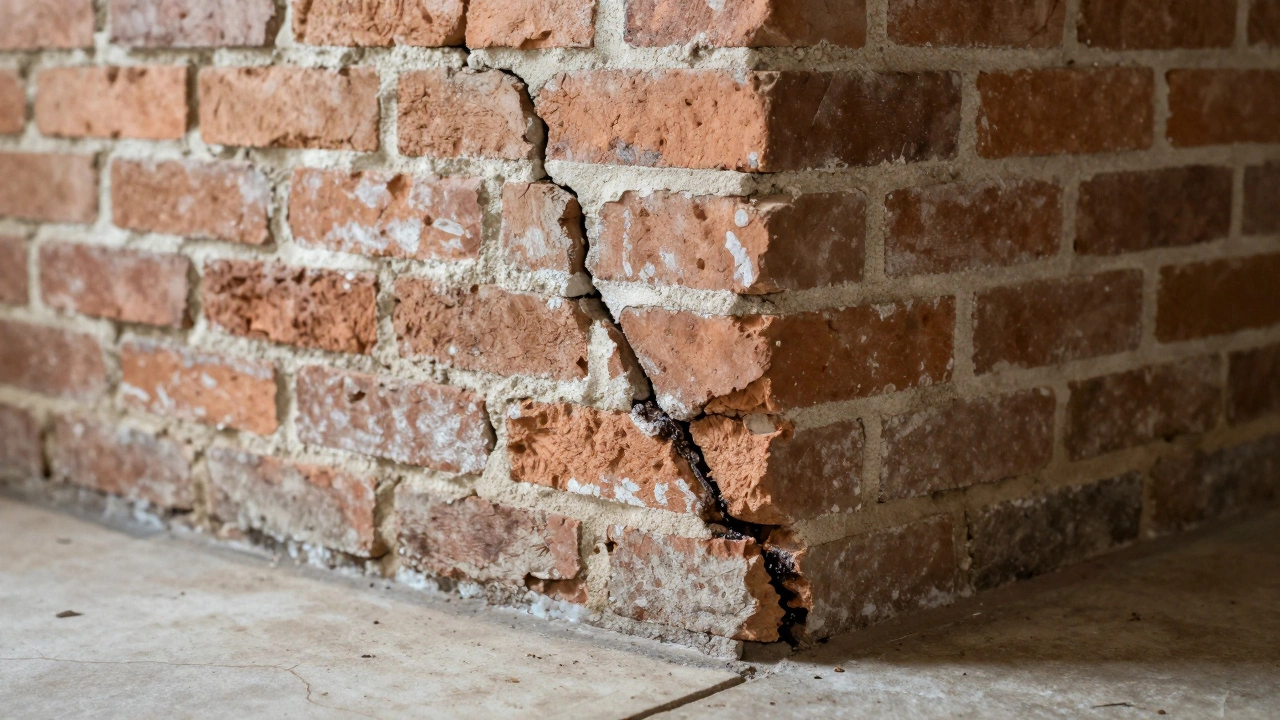
One of the most common and dangerous patterns is the stair-step crack. It looks like a staircase running diagonally across a brick or concrete block wall-usually starting near the top corner of a window or door and moving down toward the foundation. This isn’t random. It’s caused by differential settlement: one part of your foundation is sinking more than another.
In New Zealand, where many homes sit on clay-rich soils, this is especially common after heavy rain or prolonged dry spells. Clay expands when wet and shrinks when dry. If your soil isn’t evenly compacted, your foundation moves with it. Stair-step cracks often show up on the first-floor walls, but you’ll also see them on retaining walls or garage foundations.
Don’t ignore these. They’re not cosmetic. They mean your wall is pulling away from the structure. Left unchecked, doors and windows will stop closing. Floors will slope. In extreme cases, walls can collapse.
Horizontal Cracks: The Most Dangerous Type
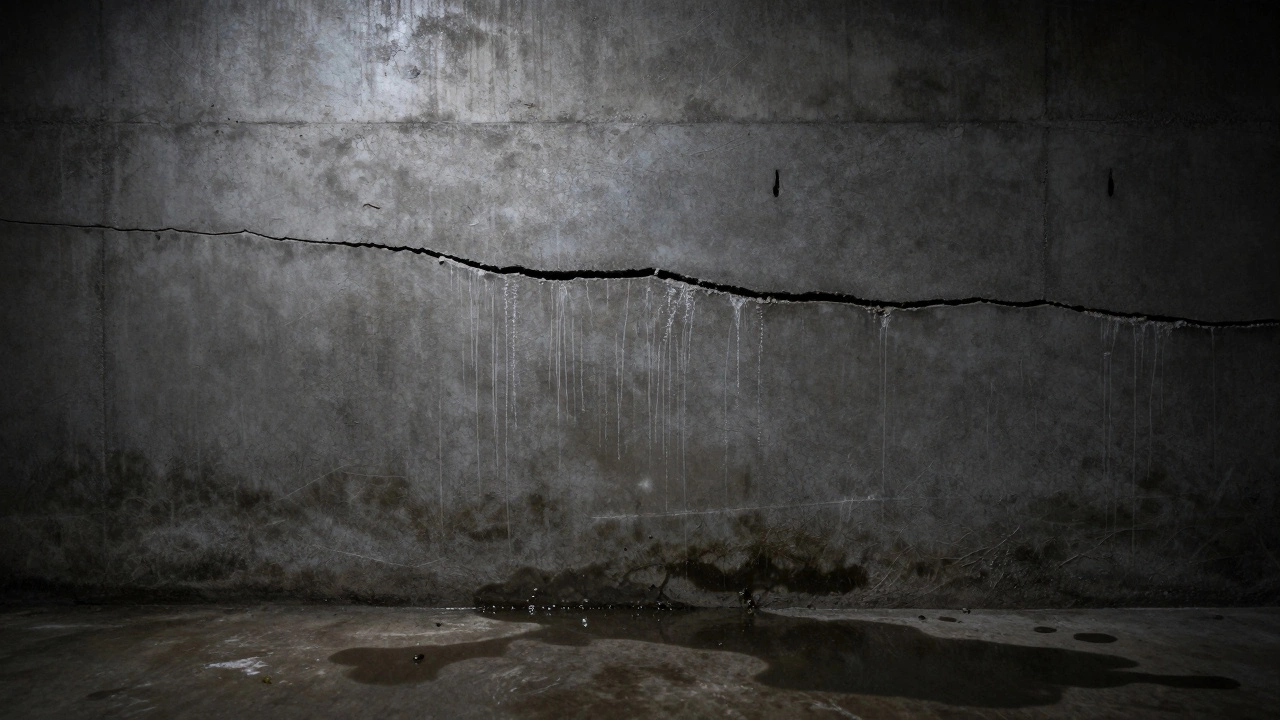
If you see a horizontal crack running straight across a basement wall or foundation, treat it like an emergency. Horizontal cracks are caused by lateral pressure-usually from waterlogged soil pushing against the wall. This is common in homes with poor drainage, clogged gutters, or improper grading.
Unlike vertical cracks, which are often from settling, horizontal cracks mean the wall is bowing inward. You might even notice the wall bulging slightly. This isn’t just a crack-it’s a structural failure in progress. A horizontal crack wider than 1/8 inch can lead to wall collapse within months if the pressure isn’t relieved.
Homeowners often miss this because it’s hidden in the basement. But if you’ve noticed damp spots, efflorescence (white chalky residue), or musty smells near the wall, the water is already there. The crack is just the visible symptom.
Cracks That Follow Doors and Windows
Cracks that form around window frames or door openings aren’t always foundation-related-but when they’re wide, jagged, and extend into the wall beyond the frame, they are. These are called “diagonal shear cracks” and happen when the foundation shifts sideways. The frame can’t move with the wall, so the wall cracks right next to it.
If your doors stick, jam, or won’t latch anymore, and the cracks around them are wider than a pencil, it’s not just a warped door. It’s foundation movement. The same goes for windows that won’t open or close smoothly. These aren’t seasonal issues. They’re signs the entire structure is out of alignment.
Cracks with Water or Mold
A crack that’s wet, dripping, or has dark stains running down it is a major problem. Water doesn’t just cause rot-it erodes the soil under your foundation, leading to more movement. Mold growing near a crack means moisture has been present for weeks or months. That’s long enough for wood framing, floor joists, or even the concrete itself to begin breaking down.
Efflorescence-a white, powdery substance-is another clue. It’s salt left behind when water evaporates from concrete. You’ll find it near cracks, at the base of walls, or on pavers. It’s not harmful itself, but it’s proof that water has been moving through your foundation. And water moving through concrete means the structure is under stress.
What a Bad Crack Looks Like in Real Life
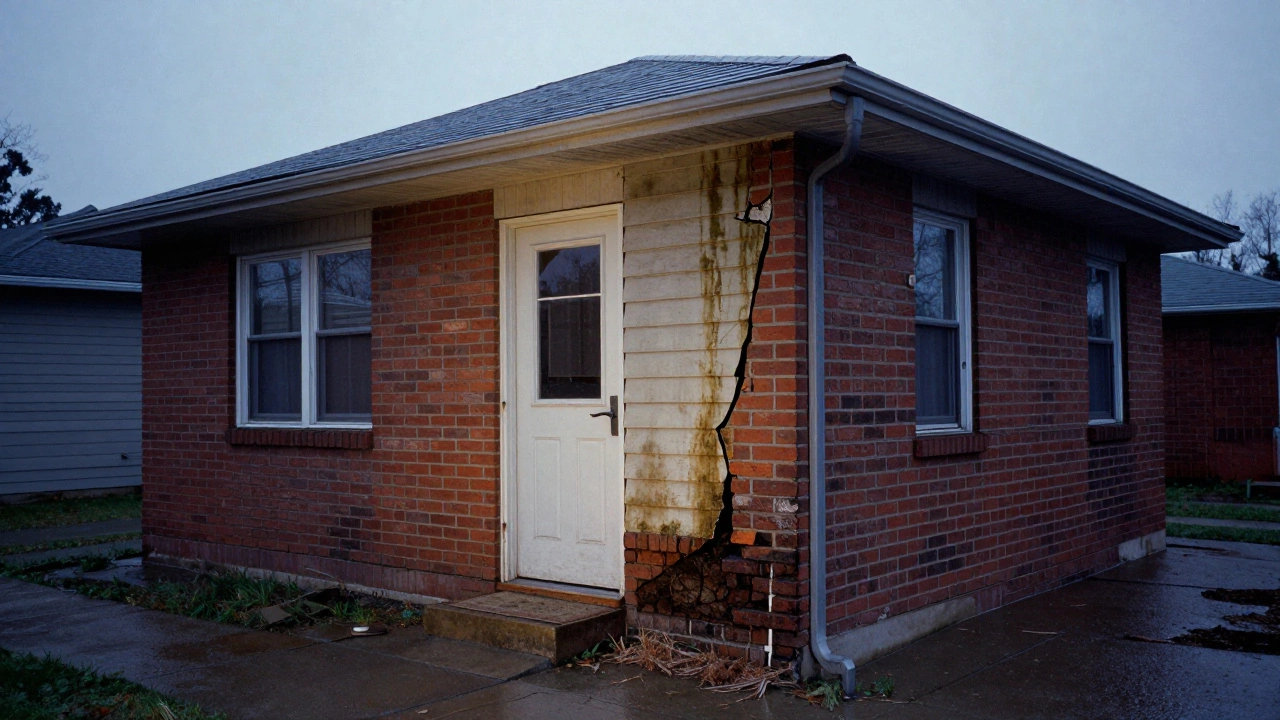
Let’s say you’ve got a 1980s brick-and-concrete home in Lower Hutt. You notice a crack near the back corner. It’s 3/8 inch wide, runs diagonally from the top of the wall down to the floor, and you can see the brick on one side is slightly higher than the other. The door in that room won’t close without forcing it. There’s a damp patch behind the laundry basket in the corner, and the carpet smells like mildew.
That’s not a hairline crack. That’s a textbook case of active foundation failure. The soil under that corner is saturated. The wall is sinking and leaning. The moisture is rotting the floor joists. If you don’t act, you could lose the entire back section of your home.
Another example: a concrete slab in a 2020 build in Porirua. A 1/2-inch crack runs across the living room floor, and the tiles above it are cracked too. The crack is wider at one end. The homeowner thought it was just poor tiling. But when they checked the basement, they found the same crack continuing down the foundation wall-horizontal this time. That’s not settling. That’s structural failure.
What to Do If You See a Bad Crack
Don’t wait. Don’t try to patch it with epoxy or caulk and call it done. Those are temporary fixes for symptoms, not solutions.
- Take clear, well-lit photos of the crack from multiple angles, including a ruler or coin for scale.
- Mark the ends of the crack with tape or a pencil. Check it weekly. If it grows, act immediately.
- Check your gutters, downspouts, and grading. Water should flow away from your house, not toward it. Even a 2% slope is enough.
- Call a licensed foundation specialist-not a general handyman. They’ll use tools like laser levels, moisture meters, and foundation probes to measure movement.
- Get a written report with photos, measurements, and a repair plan. Don’t accept vague promises.
Repairs can range from epoxy injection for minor cracks to underpinning or wall anchors for serious cases. Costs vary from $500 to $20,000+, but waiting makes it worse-and more expensive.
When to Walk Away
If you’re buying a home and see multiple horizontal cracks, stair-step patterns, or doors that won’t close, walk away-or demand a full structural report before you sign anything. Many sellers hide foundation issues with paint, new flooring, or drywall patches. Don’t be fooled.
Foundations don’t heal. They don’t improve with time. Once they start moving, they keep moving unless something stops it. And that something usually costs money.
The sooner you identify a bad foundation crack, the cheaper and easier the fix. Ignore it, and you’re not just risking your home-you’re risking your safety, your investment, and your peace of mind.
Author
Damon Blackwood
I'm a seasoned consultant in the services industry, focusing primarily on project management and operational efficiency. I have a passion for writing about construction trends, exploring innovative techniques, and the impact of technology on traditional building practices. My work involves collaborating with construction firms to optimize their operations, ensuring they meet the industry's evolving demands. Through my writing, I aim to educate and inspire professionals in the construction field, sharing valuable insights and practical advice to enhance their projects.