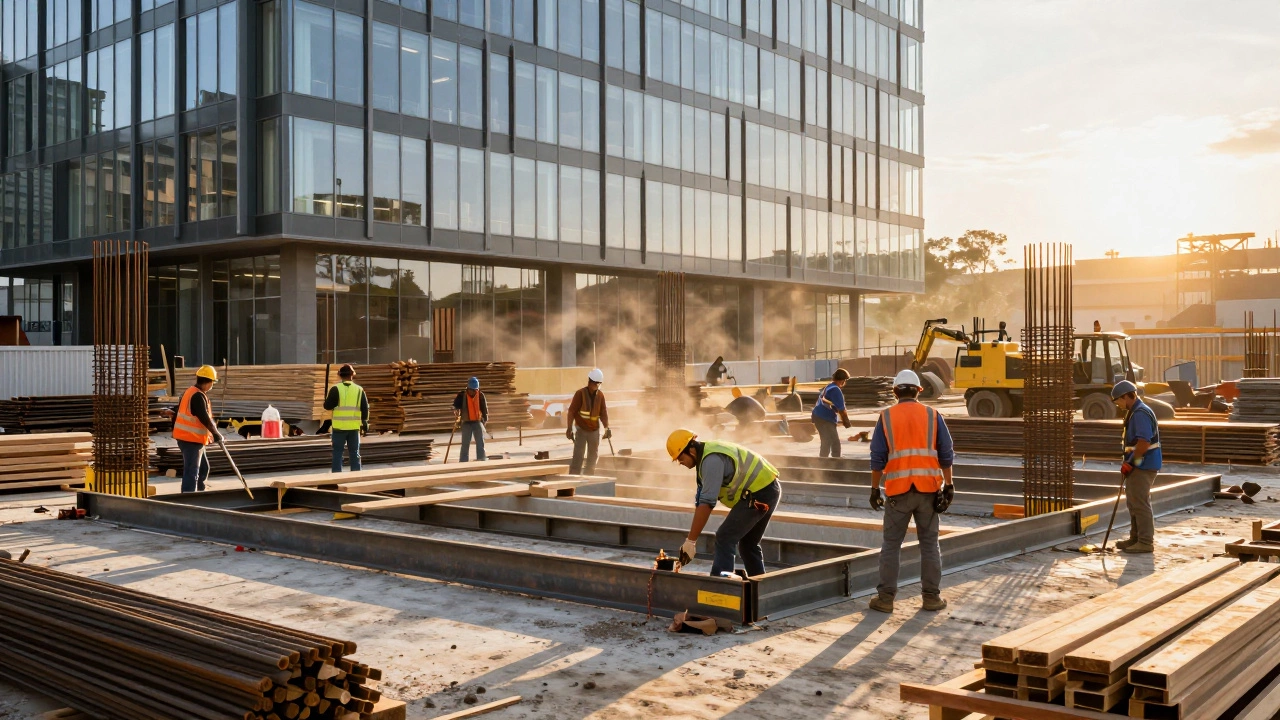
Commercial Construction Cost Estimator
Estimate the total project cost including hard costs (labor/materials), soft costs (permits/insurance), and potential change order reserves.
Imagine you’ve just signed a contract to build a new retail store or renovate an office space. The price looks solid, the timeline seems clear, and everyone is excited. Then, halfway through the project, the contractor sends a bill for "unforeseen site conditions" or "design changes." Suddenly, your budget is bleeding out. This happens because many clients don’t understand exactly what is covered under a standard commercial construction agreement.
In residential building, things are often simpler. You buy a house, and it comes with certain expectations. But in the commercial world, the rules of engagement are stricter, more complex, and heavily dependent on the specific language in your contract. If you’re not careful, you might pay twice for the same work or end up responsible for costs that should have been the builder’s risk.
This guide breaks down exactly what is typically included in commercial construction projects, what falls outside those boundaries, and how to protect yourself from surprise expenses. We’ll look at labor, materials, permits, insurance, and the tricky area of change orders.
The Core Components: Labor and Materials
At its most basic level, a commercial construction contract covers two main things: labor and materials. However, the devil is in the details. When we say "materials," do we mean every single screw, nail, and sheet of drywall? Or does the client need to supply the light fixtures and flooring?
In a typical General Contracting agreement, the contractor provides all necessary labor and materials to complete the work as defined in the plans and specifications. This includes:
- Skill Labor: Carpenters, electricians, plumbers, welders, and heavy equipment operators.
- Raw Materials: Concrete, steel, lumber, glass, insulation, and roofing membranes.
- Finished Fixtures: Unless specified otherwise, items like HVAC units, elevators, and built-in cabinetry are usually supplied by the contractor.
However, there is a common pitfall here known as "owner-furnished materials." Sometimes, a business owner wants to buy their own carpeting or custom furniture to save money or maintain brand consistency. If you plan to supply any part of the build, this must be explicitly stated in the contract. If it isn’t, the contractor will assume they are responsible for sourcing and installing everything, and you may face delays if your deliveries don’t match their schedule.
Permits, Fees, and Regulatory Compliance
One of the biggest questions clients ask is: "Who pays for the permits?" In most standard commercial contracts, such as those based on AIA (American Institute of Architects) documents, the contractor is responsible for obtaining and paying for building permits, inspection fees, and utility connection charges.
Why? Because the contractor is the one executing the work and needs to ensure it meets local codes. They also handle the logistics of scheduling inspections. However, there are exceptions. If the project requires special environmental studies, historical preservation approvals, or zoning variances, these are often considered "pre-construction" costs that fall on the owner. Always check who is liable for permit fees related to design changes versus initial construction.
Another critical component is compliance with safety regulations. In New Zealand, for example, the Health and Safety at Work Act places significant duties on both the principal contractor and the business owner. The cost of providing safety gear, site fencing, and security personnel is typically covered under the general conditions of the contract, but it’s worth verifying that these line items aren’t being stripped out to lower the bid price.
Insurance and Risk Management
Money doesn’t just go into bricks and mortar; a significant portion goes into protecting the project from disaster. A robust commercial construction contract outlines who carries which insurance policies. This is non-negotiable.
The contractor should carry General Liability Insurance to cover third-party injuries or property damage caused by their work. They should also have Workers’ Compensation insurance for their employees. But what about the building itself while it’s being constructed?
This is where Builder’s Risk Insurance (also known as Course of Construction Insurance) comes in. This policy covers physical loss or damage to the structure during the building phase-think fire, theft, vandalism, or storm damage. Who buys this? It depends on the contract type. In some agreements, the owner purchases it; in others, the contractor includes it in their overhead. If neither party has it, you are exposed to massive financial risk. A single fire could wipe out months of progress and leave you holding the bag for millions in repairs.
The Gray Area: Change Orders and Unforeseen Conditions
If there is one thing that causes more disputes than any other in commercial construction, it is the change order. A change order is a formal amendment to the original contract that adjusts the price, timeline, or scope of work. But what triggers a valid change order?
Not every surprise is a freebie for the owner. Here is how to distinguish between what is covered and what costs extra:
| Scenario | Typically Covered (No Extra Cost) | Typically Extra (Change Order) |
|---|---|---|
| Design Errors | If the architect’s plans were wrong, the owner may bear the cost unless the contractor spotted the error and failed to report it. | If the owner decides to move a wall after construction starts, this is a direct change order. |
| Site Conditions | Normal soil variations anticipated in the geotechnical report. | Discovering underground rock, contaminated soil, or undocumented utilities not shown in surveys. |
| Material Prices | In a Fixed-Price contract, the contractor absorbs minor price fluctuations. | In a Cost-Plus contract, you pay the actual market rate, even if it spikes. |
| Delays | Weather delays that are normal for the season and region. | Delays caused by the owner failing to provide access or make decisions on time. |
Understanding the difference between a "Fixed-Price" (Lump Sum) contract and a "Cost-Plus" contract is vital. In a Fixed-Price deal, the contractor guarantees a total cost. If they underestimated the amount of concrete needed, that’s their problem, not yours. The scope is strictly covered. In a Cost-Plus arrangement, you pay for every hour of labor and every dollar of material, plus a fee for the contractor’s management. This offers transparency but shifts the financial risk to you. Make sure you know which model you are signing.
Soft Costs: Design, Management, and Financing
When people think of construction costs, they think of hard costs-the physical act of building. But there are "soft costs" that are often overlooked. Are these covered under the construction contract? Usually, no.
Architectural Services, engineering fees, legal fees, and financing costs are typically paid directly by the owner to third parties. However, some large general contractors offer "Design-Build" services. In a Design-Build model, one entity handles both the design and the construction. In this case, the architectural fees might be bundled into the overall contract price. If you are hiring a separate architect and a separate contractor, ensure your contract clearly states that the contractor is only responsible for executing the designs provided, not creating them.
Project management is another soft cost. While the contractor manages the site, the owner often hires a Construction Manager to oversee the entire process, coordinate subcontractors, and protect the owner’s interests. These fees are separate from the construction budget and should be budgeted accordingly.
Warranties and Post-Completion Coverage
What happens when the building is finished and handed over? The construction contract doesn’t just end; it transitions into warranty periods. Most commercial contracts include a one-year warranty on workmanship and materials. This means if a window leaks or a door hinge breaks within the first year, the contractor fixes it for free.
However, manufacturers often provide longer warranties for specific components. An HVAC system might have a five-year compressor warranty, while roofing membranes can last ten years or more. It is crucial that the contractor transfers these manufacturer warranties to the owner upon completion. If the contractor disappears before handing over the paperwork, you lose that protection. Include a clause in your contract requiring the submission of all warranties and operation manuals as a condition for final payment.
How to Protect Your Investment
To ensure you know exactly what is covered, follow these practical steps before breaking ground:
- Review the Scope of Work Line-by-Line: Don’t just read the summary. Look at the exclusions list. What is specifically not included? This is often more important than what is included.
- Define Change Order Procedures: Agree on a process for approving changes. Require written estimates before any extra work begins. Verbal agreements are nightmares to enforce.
- Verify Insurance Certificates: Don’t take their word for it. Ask for certificates of insurance that name your company as an additional insured.
- Clarify Site Cleanup: Does the contract cover daily cleanup or just final removal? Daily cleanup keeps the site safe and efficient, but it costs money. Know who is picking up the trash.
- Understand Payment Schedules: Ensure payments are tied to milestones (e.g., foundation poured, framing complete) rather than arbitrary dates. This gives you leverage if work stalls.
Commercial construction is a high-stakes game. By understanding what is covered under your contract-from labor and materials to permits and warranties-you shift from being a passive payer to an active partner. This knowledge prevents disputes, keeps your budget intact, and ensures your project finishes on time and to standard.
Is it better to use a fixed-price or cost-plus contract for commercial construction?
It depends on your risk tolerance and the clarity of your plans. A fixed-price (lump sum) contract is best when the design is complete and detailed, as it caps your costs. The contractor bears the risk of underestimating. A cost-plus contract is better for fast-track projects or when the scope is unclear, as it allows flexibility but exposes you to higher costs if prices rise or inefficiencies occur.
Who is responsible for obtaining building permits in a commercial project?
In most standard commercial contracts, the general contractor is responsible for obtaining and paying for building permits, inspection fees, and utility connections. However, pre-construction permits like zoning variances or environmental clearances are often the owner's responsibility. Always verify this in your specific agreement.
What is Builder’s Risk Insurance, and do I need it?
Builder’s Risk Insurance covers physical damage to the structure during construction, such as from fire, theft, or storms. Yes, you absolutely need it. Without it, you are financially liable for rebuilding the project if a disaster strikes before completion. Check your contract to see if the contractor includes this or if you must purchase it separately.
Are design errors covered under the construction contract?
Generally, no. If the architect’s plans contain errors, the cost to fix them is usually borne by the owner, unless the contractor was negligent in not identifying obvious issues. To mitigate this, consider professional liability insurance for your architect and a thorough review of plans before construction begins.
What should I do if unforeseen site conditions arise during construction?
Stop work immediately in the affected area and notify your contractor and architect. Document the condition with photos. Review your contract to see if the site investigation report mentioned these conditions. If they were truly unforeseen, this will likely result in a change order for additional time and cost. Do not proceed without a written agreement on how to handle the extra expense.
Author
Damon Blackwood
I'm a seasoned consultant in the services industry, focusing primarily on project management and operational efficiency. I have a passion for writing about construction trends, exploring innovative techniques, and the impact of technology on traditional building practices. My work involves collaborating with construction firms to optimize their operations, ensuring they meet the industry's evolving demands. Through my writing, I aim to educate and inspire professionals in the construction field, sharing valuable insights and practical advice to enhance their projects.