Commercial Construction Cost Estimator
Project Configuration
Estimated Total Construction Cost
Cost Breakdown
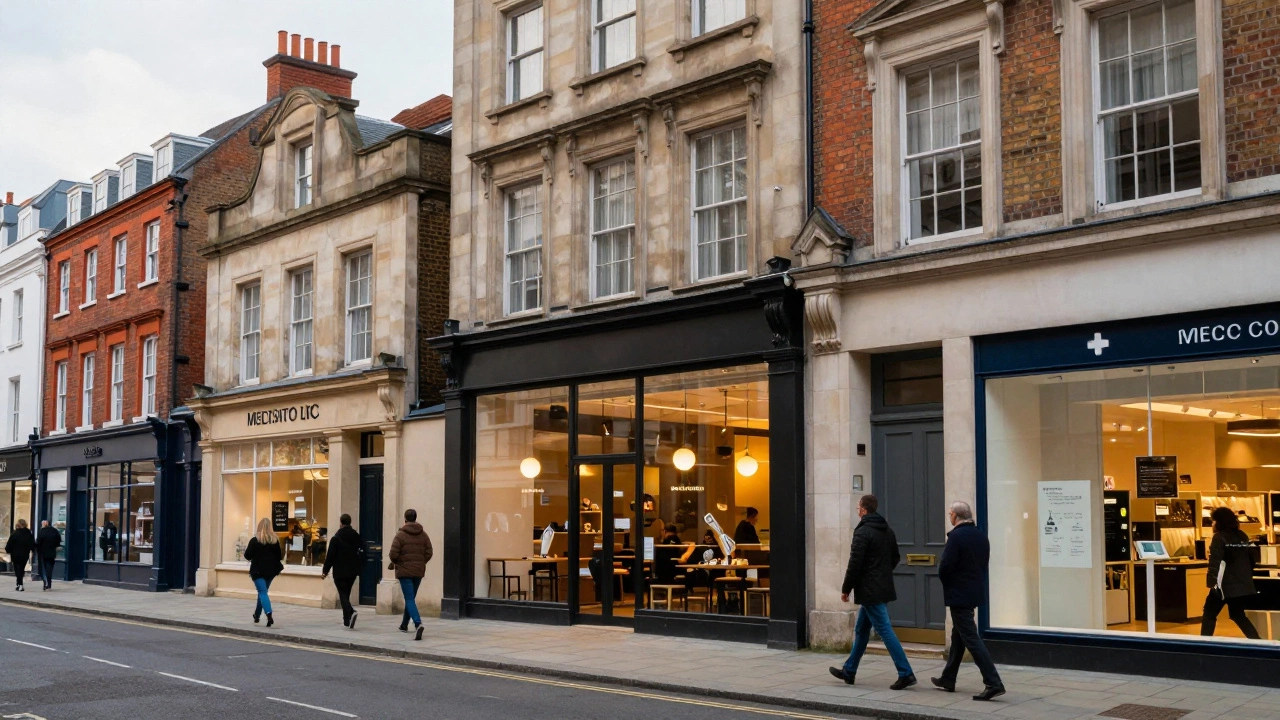
Imagine walking down your main street. You pass a coffee shop, a bank, a medical clinic, and a large office tower. These structures look different, serve different purposes, and follow completely different rules than the house next door. But they all share one label: commercial building. Understanding what exactly falls under this definition isn't just academic-it’s crucial if you are planning to build, invest, or manage property. The distinction dictates everything from insurance premiums to safety inspections.
In the world of construction, "commercial" is a broad bucket that catches almost any structure designed for business activity rather than personal residence. It’s not just about skyscrapers in city centers. It includes strip malls, warehouses, hotels, and even some mixed-use developments. Getting this definition right helps you navigate zoning laws, understand construction costs, and ensure your project meets legal standards.
Quick Summary: Key Takeaways
- A commercial building is any structure used for business activities, excluding residential living spaces (though mixed-use exists).
- Key types include office buildings, retail spaces, industrial facilities, hospitality venues, and institutional structures like schools.
- Construction differs significantly from residential due to stricter fire codes, accessibility requirements (ADA), and structural demands.
- Zoning laws strictly dictate where commercial buildings can be built, often separating them from purely residential neighborhoods.
- Costs are generally higher per square foot due to complex systems (HVAC, elevators) and specialized materials.
The Core Definition: Business vs. Living
At its simplest, a commercial building is a structure intended for business use, generating income through rent, sales, or services. If people pay to enter, work inside, or buy something there, it’s likely commercial. This stands in contrast to residential buildings, which are designed for people to live in. While a single-family home is residential, an apartment complex with five or more units often crosses into commercial territory for financing and code purposes.
The line can blur with mixed-use developments. Think of a building with shops on the ground floor and apartments above. The lower levels are commercial; the upper levels are residential. However, for construction and permitting, the entire structure often undergoes commercial-level scrutiny because of the public access required for the retail portion.
Why does this matter? Because the government regulates these spaces differently. Your bedroom doesn’t need a fire sprinkler system in most jurisdictions. A hotel room absolutely does. The stakes are higher when hundreds of strangers occupy a space daily.
Major Types of Commercial Buildings
Not all commercial buildings are created equal. They fall into several distinct categories, each with unique construction challenges and design priorities.
- Office Buildings: Ranging from small professional suites to high-rise corporate towers. These prioritize aesthetics, natural light, and efficient HVAC systems to keep employees comfortable. Glass facades and open-plan interiors are common here.
- Retail Spaces: Stores, shopping malls, and restaurants. These require heavy foot traffic management, robust electrical systems for lighting and displays, and often special ventilation for kitchens. Visibility from the street is key.
- Industrial Facilities: Warehouses, factories, and distribution centers. Function trumps form here. High ceilings, wide loading docks, and reinforced floors to handle heavy machinery define these structures. Energy efficiency is often secondary to durability.
- Hospitality Venues: Hotels, motels, and resorts. These combine residential comfort with commercial scale. They need extensive plumbing, multiple elevators, and soundproofing between rooms. Safety exits must be plentiful and clearly marked.
- Institutional Structures: Schools, hospitals, and libraries. Though sometimes categorized separately, they operate commercially in terms of construction complexity. Hospitals, for instance, require specialized air filtration and backup power systems.
Each type influences the choice of materials. An office might use drywall and carpet, while a warehouse uses concrete block and epoxy flooring. Knowing the specific subtype helps contractors estimate costs accurately.
Commercial vs. Residential Construction: Key Differences
If you’ve ever watched a house being built, you know it’s a relatively straightforward process. Commercial construction is a different beast entirely. The differences aren’t just cosmetic; they’re structural and regulatory.
| Feature | Residential | Commercial |
|---|---|---|
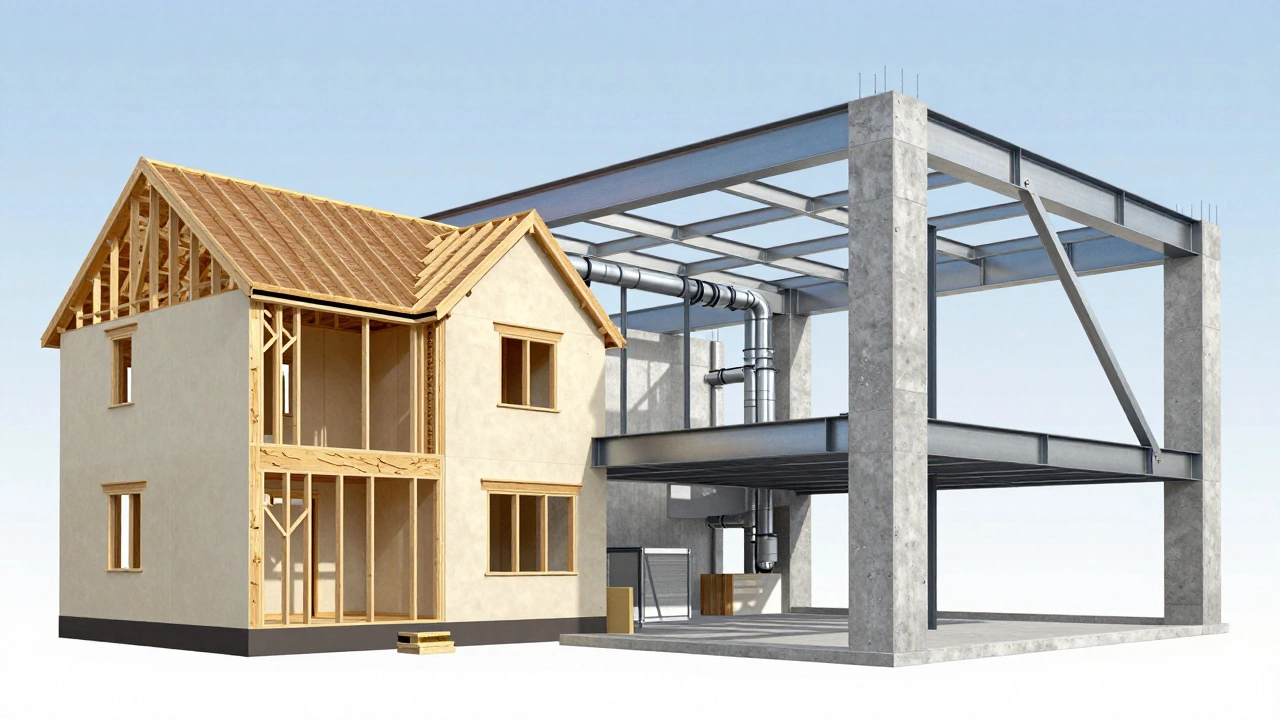
| Materials | Wood framing, vinyl siding | Steel, concrete, masonry |
| Timeline | Months | Often years, with strict milestones |
| Codes | Local residential codes | IBC (International Building Code), ADA, OSHA |
| Systems | Simple HVAC, standard wiring | Complex MEP (Mechanical, Electrical, Plumbing) |
| Permitting | Relatively simple | Multi-agency approvals, environmental reviews |
One major difference is the framing. Houses are usually wood-framed. Commercial buildings, especially those over three stories, rely on steel or reinforced concrete. This provides greater strength, fire resistance, and stability against wind and seismic forces. In Wellington, New Zealand, for example, seismic resilience is a critical factor in commercial design, requiring flexible joint connections that wouldn’t be necessary in a suburban home.
Another huge factor is the MEP systems. Mechanical, Electrical, and Plumbing systems in commercial buildings are intricate networks. A single office tower might have dozens of HVAC zones, elevator shafts, and water pressure pumps working in tandem. Coordinating these trades requires detailed blueprints and constant communication among engineers.
Building Codes and Safety Regulations
You can’t just build a commercial space wherever you want. Governments enforce strict codes to protect the public. The International Building Code (IBC) is the primary model code adopted by many jurisdictions for regulating commercial construction. It covers everything from the thickness of walls to the width of hallways.
Fire safety is paramount. Commercial buildings must have automatic sprinkler systems, fire alarms, and multiple exit routes. The number of exits depends on the occupant load-the maximum number of people expected in the space at once. A small boutique needs fewer exits than a cinema.
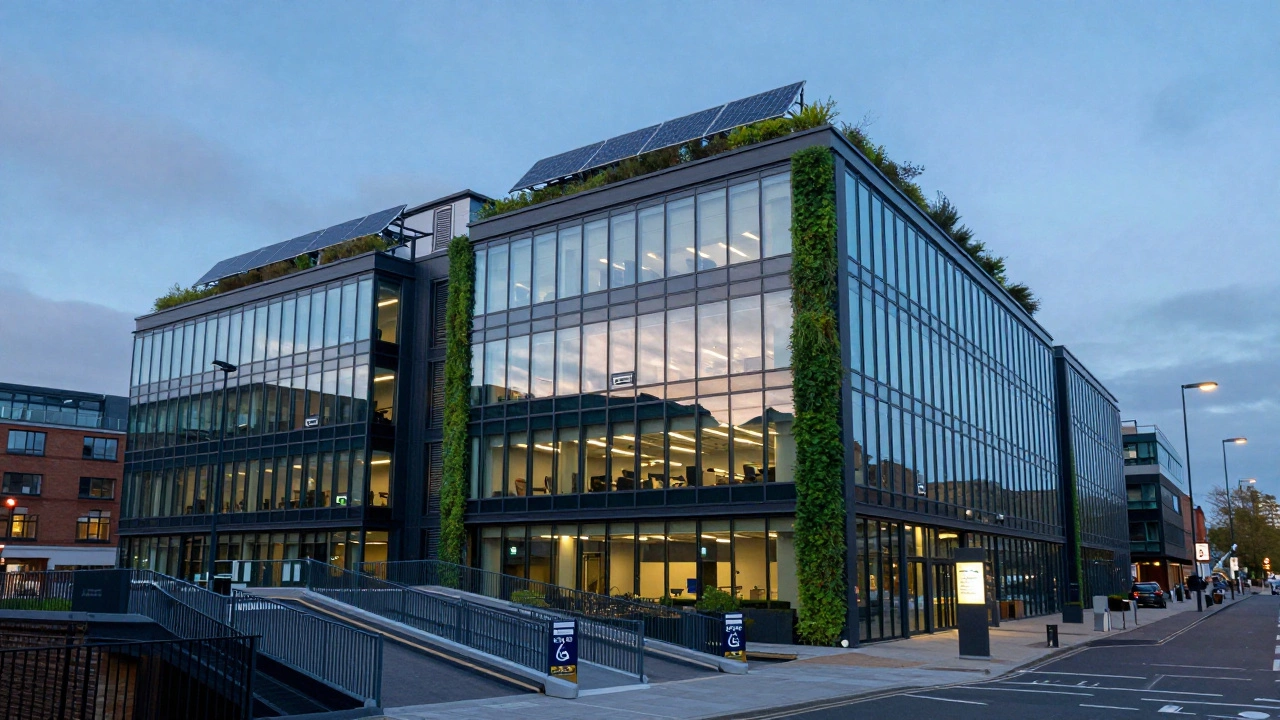
Accessibility is another non-negotiable requirement. In the US, the Americans with Disabilities Act (ADA) mandates ramps, accessible restrooms, and adequate turning radiuses for wheelchairs. Other countries have similar laws. Ignoring these results in costly retrofits or lawsuits. Designing for accessibility from the start saves money and ensures inclusivity.
Energy efficiency codes are also tightening. Modern commercial buildings must meet specific insulation and window performance standards to reduce carbon footprints. This often means investing in high-performance glazing and smart building management systems that monitor energy use in real-time.
Zoning Laws and Location Constraints
Before breaking ground, you need to check the zoning map. Zoning laws divide land into districts: residential, commercial, industrial, and agricultural. You can’t build a factory in a residential zone, nor a high-rise office in a historic preservation district without special variances.
Commercial zoning often allows for higher density and taller structures than residential zones. However, it may come with restrictions on parking ratios, signage size, and operating hours. For instance, a restaurant might need additional ventilation permits if located near homes.
Mixed-use zoning is becoming more popular in urban areas. It encourages walkable communities by combining shops and housing. Developers love this flexibility, but it requires careful negotiation with city planners to balance noise, traffic, and privacy concerns.
Understanding local zoning prevents expensive mistakes. Imagine pouring a foundation only to find out the lot isn’t zoned for your intended business. That’s a nightmare scenario every developer tries to avoid.
Cost Factors and Budgeting
Commercial construction is expensive. Costs vary wildly based on location, size, and complexity. On average, commercial buildings cost more per square foot than homes. Why? Because of the premium materials, specialized labor, and extensive permitting fees.
Here are the main cost drivers:
- Site Work: Clearing land, grading, and installing utilities can account for 10-20% of the budget. Poor soil conditions may require deep pilings, adding significant expense.
- Structural Systems: Steel and concrete are pricier than wood. High-rises need advanced engineering, driving up design and material costs.
- Interior Finishes: Retail spaces demand attractive finishes to attract customers. Offices need durable, low-maintenance materials. Industrial spaces might skip finishes altogether to save money.
- MEP Systems: Complex HVAC, elevators, and security systems add substantial cost. A hospital’s medical gas system, for example, is incredibly expensive to install.
- Soft Costs: Architectural fees, legal fees, permits, and insurance can equal 15-25% of the hard construction costs.
To manage budgets, developers often use phased construction. They complete the shell first, then fit out individual tenant spaces later. This spreads out cash flow and reduces risk if market conditions change.
Environmental Impact and Sustainability
Modern commercial construction faces pressure to go green. Sustainable building practices reduce long-term operating costs and appeal to eco-conscious tenants. Certifications like LEED (Leadership in Energy and Environmental Design) recognize projects that excel in sustainability.
Key sustainable strategies include:
- Green Materials: Using recycled steel, low-VOC paints, and sustainably sourced wood.
- Energy Efficiency: Installing solar panels, LED lighting, and smart thermostats.
- Water Conservation: Low-flow fixtures and rainwater harvesting systems.
- Waste Reduction: Recycling construction debris instead of sending it to landfills.
While upfront costs may be higher, green buildings often command higher rents and resale values. Tenants appreciate lower utility bills and healthier indoor air quality. Over time, the investment pays off.
Frequently Asked Questions
Is a garage considered a commercial building?
It depends on usage. If you run a repair shop or auto dealership from the garage, it’s commercial. If it’s just for storing cars, it’s likely residential or accessory to a home. Zoning determines the classification.
Can I convert a residential house into a commercial office?
Yes, but it’s challenging. You’ll need to rezone the property, upgrade electrical and plumbing systems to commercial standards, and ensure compliance with fire and accessibility codes. Many cities restrict this in purely residential neighborhoods.
What is the biggest cost in commercial construction?
Labor and materials typically make up the bulk of costs. Specifically, structural steel, concrete, and MEP (mechanical, electrical, plumbing) systems are the most expensive components. Soft costs like permits and design fees also add up significantly.
How long does it take to build a commercial building?
Timelines vary widely. A small retail store might take 6-12 months. A large office tower can take 3-5 years. Delays often occur due to weather, supply chain issues, or permit approvals.
Do commercial buildings need earthquake protection?
In seismic zones like California or New Zealand, yes. Commercial buildings must meet strict structural codes to withstand earthquakes. This includes base isolators, reinforced joints, and flexible piping systems to prevent collapse and injury.
Author
Damon Blackwood
I'm a seasoned consultant in the services industry, focusing primarily on project management and operational efficiency. I have a passion for writing about construction trends, exploring innovative techniques, and the impact of technology on traditional building practices. My work involves collaborating with construction firms to optimize their operations, ensuring they meet the industry's evolving demands. Through my writing, I aim to educate and inspire professionals in the construction field, sharing valuable insights and practical advice to enhance their projects.